
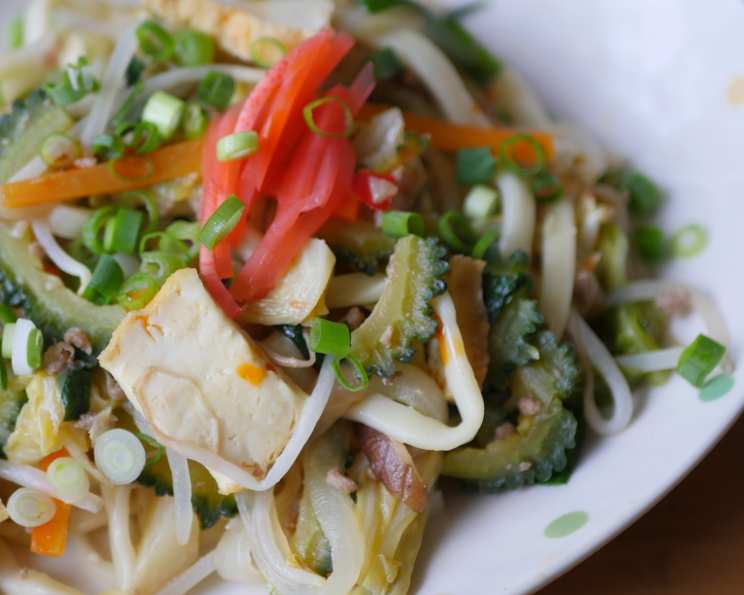
Okinawa Stir-Fried Soba Noodles (Yakisoba) with Bitter Melon
The first time I tried Okinawa Soba Yakisoba, I was wandering through a bustling market in Naha, the capital of Okinawa. The aroma of savory pork, mingled with the distinct bitterness of goya (bitter melon), filled the air. I watched as a street vendor expertly tossed the noodles in a wok, the vibrant green of the goya contrasting beautifully with the rich colors of the other vegetables. That first bite was an explosion of flavor – salty, savory, bitter, and utterly unforgettable. I knew I had to learn how to recreate this taste of Okinawa at home.
Recipe Overview
- Prep Time: 30 minutes
- Cook Time: 15 minutes
- Total Time: 45 minutes
- Servings: 2-3
- Dietary Type: Adaptable (can be made vegetarian/vegan)
Ingredients
- 1/3 piece bitter melon
- 1 teaspoon salt (for soaking bitter melon)
- 100 g cabbage
- 1/2 piece onion
- 1/3 piece carrot
- 2 pieces dried shiitake mushrooms, hydrated
- 100 g bean sprouts
- 50 g garlic chives
- 100 g deep-fried tofu (atsuage)
- 1 tablespoon vegetable oil
- 100 g miso pork (or substitute with sliced pork)
- 1/4 teaspoon pepper
- 1/4 teaspoon salt (for seasoning)
- 2 tablespoons awamori (or substitute with sake or dry sherry)
- 200 g okinawa soba noodles (wheat noodles)
- 5 g red pickled ginger (beni shoga)
- 10 g chopped green onions
- Chili oil (layu) (optional)
Equipment Needed
- Cutting board
- Knife
- Large bowl
- Wok or large frying pan
- Tongs or spatula
Instructions
- Begin by preparing the bitter melon. Cut the bitter melon lengthwise, then scoop out the seeds. Slice it thinly.
- Place the sliced bitter melon in a large bowl and cover with water. Add 1 teaspoon of salt and let it soak for about 30 minutes. This process helps to reduce the bitterness. After soaking, drain the bitter melon thoroughly.
- Prepare the remaining vegetables. Cut the cabbage into large, bite-sized pieces. Thinly slice the onion. Slice the carrot into flat, thin strips.
- Hydrate the dried shiitake mushrooms by soaking them in water for about 20 minutes. Once hydrated, squeeze out the excess water and remove the tough stems. Slice the mushroom caps into thin strips. You can use fresh shiitake mushrooms if preferred.
- Cut the garlic chives into approximately 5-centimeter pieces. Chop the green onions. Slice the atsuage (deep-fried tofu) into small, bite-sized pieces.
- Heat a wok or large frying pan over medium heat. Add the vegetable oil.
- Stir-fry the miso pork quickly, as it is already cooked. If using raw pork, ensure it is cooked thoroughly before adding the other ingredients. Break up any large clumps of the miso pork as you stir-fry.
- Add the cabbage to the pan and stir-fry until it begins to soften. This will usually take around 3-5 minutes.
- Next, add the bitter melon, onion, carrot, and shiitake mushrooms. Stir-fry until the bitter melon is cooked and slightly tender, about 5-7 minutes.
- Season with 1/4 teaspoon of salt and 1/4 teaspoon of pepper. Pour in 2 tablespoons of awamori (or sake/dry sherry). Mix well to combine all the ingredients and deglaze the pan, scraping up any flavorful bits stuck to the bottom. Taste and adjust the salt to your preference.
- Add the bean sprouts, atsuage, and garlic chives to the pan. Stir-fry for 1-2 minutes, until the bean sprouts are slightly softened but still crisp.
- Add the cooked okinawa soba noodles to the pan. Toss well to ensure all the ingredients are thoroughly combined and the noodles are coated with the sauce. Continue to stir-fry for another 2-3 minutes until everything is heated through.
- Transfer the yakisoba to a serving plate. Garnish with chopped green onions and red pickled ginger. Drizzle with chili oil (layu) if desired. Serve immediately.
Expert Tips & Tricks
- Bitter Melon Bitterness: Soaking the bitter melon in salted water is crucial for reducing its intense bitterness. If you prefer a milder flavor, you can even blanch the bitter melon in boiling water for a minute or two after soaking.
- Noodle Perfection: Ensure your Okinawa soba noodles are cooked al dente before adding them to the stir-fry. Overcooked noodles will become mushy.
- Miso Pork Boost: Using miso pork adds a depth of umami to the dish. If you can’t find it, marinate regular pork slices in a mixture of miso paste, soy sauce, and a little sugar for at least 30 minutes before cooking.
- Wok Hei (Breath of the Wok): To achieve that signature smoky flavor, ensure your wok or pan is very hot before adding the ingredients. Stir-fry quickly and continuously to prevent burning.
- Vegetable Variation: Feel free to add other vegetables like bell peppers, bamboo shoots, or spinach based on your preference and what’s available.
Serving & Storage Suggestions
Serve the Okinawa Soba Yakisoba immediately after cooking for the best flavor and texture. The vibrant colors and aroma make it a visually appealing and satisfying meal.
Leftovers can be stored in an airtight container in the refrigerator for up to 2 days. Reheat in a pan or microwave until heated through. Note that the noodles may become slightly softer upon reheating.
It is not recommended to freeze the yakisoba, as the noodles and vegetables can lose their texture upon thawing.
Nutritional Information
| Nutrient | Amount per Serving | % Daily Value |
|---|---|---|
| Calories | 558.8 kcal | N/A |
| Calories from Fat | 127 g | 23% |
| Total Fat | 14.1 g | 21% |
| Saturated Fat | 2.9 g | 14% |
| Cholesterol | 42 mg | 14% |
| Sodium | 2290.3 mg | 95% |
| Total Carbohydrate | 82.4 g | 27% |
| Dietary Fiber | 2.5 g | 10% |
| Sugars | 4.3 g | 17% |
| Protein | 33.8 g | 67% |
Variations & Substitutions
- Vegetarian/Vegan: Replace the miso pork with extra firm tofu or tempeh. Ensure to use a plant-based miso paste.
- Gluten-Free: While traditional Okinawa soba noodles are made from wheat, you can experiment with gluten-free rice noodles or buckwheat soba noodles.
- Spicy Kick: Add a generous amount of chili oil or a pinch of red pepper flakes for a spicier dish.
- Seafood Option: Substitute the pork with shrimp, squid, or scallops for a seafood version.
- Seasonal Vegetables: Adapt the recipe to use seasonal vegetables. In the summer, try adding okra or eggplant. In the fall, consider using kabocha squash or mushrooms.
FAQs (Frequently Asked Questions)
Q: Can I use regular soba noodles instead of Okinawa soba noodles?
A: While Okinawa soba noodles have a unique chewy texture, you can substitute with regular soba noodles or even udon noodles if needed. The taste will be slightly different, but the dish will still be delicious.
Q: Is the bitter melon really that bitter?
A: Yes, bitter melon has a distinctively bitter flavor. Soaking it in salted water helps to reduce the bitterness, but it will still have a slightly bitter taste. If you are very sensitive to bitter flavors, you can use less bitter melon or blanch it before adding it to the stir-fry.
Q: Can I make this dish ahead of time?
A: While it is best to serve the yakisoba immediately, you can prepare the vegetables and cook the pork ahead of time. Store them separately in the refrigerator and combine them with the noodles just before serving.
Q: What is awamori and can I substitute it?
A: Awamori is a distilled spirit native to Okinawa, made from long-grain indica rice. It adds a unique flavor to the dish. If you cannot find awamori, you can substitute with sake, dry sherry, or even a splash of rice vinegar.
Q: How do I know when the bitter melon is cooked?
A: The bitter melon should be slightly tender but still have a bit of bite. Avoid overcooking it, as it can become mushy. Taste it during cooking to check for doneness.
Final Thoughts
Okinawa Soba Yakisoba is more than just a dish; it’s a culinary journey to the beautiful islands of Okinawa. The combination of savory pork, vibrant vegetables, and the unique bitterness of goya creates a flavor profile that is both intriguing and satisfying. Don’t be afraid to experiment with different vegetables and seasonings to create your own version of this Okinawan classic. Gather your ingredients, fire up your wok, and transport yourself to the sun-kissed shores of Okinawa with every delicious bite. I encourage you to try this recipe, share your experiences, and perhaps pair it with a refreshing glass of iced tea or a crisp Okinawan beer. Kanpai!