
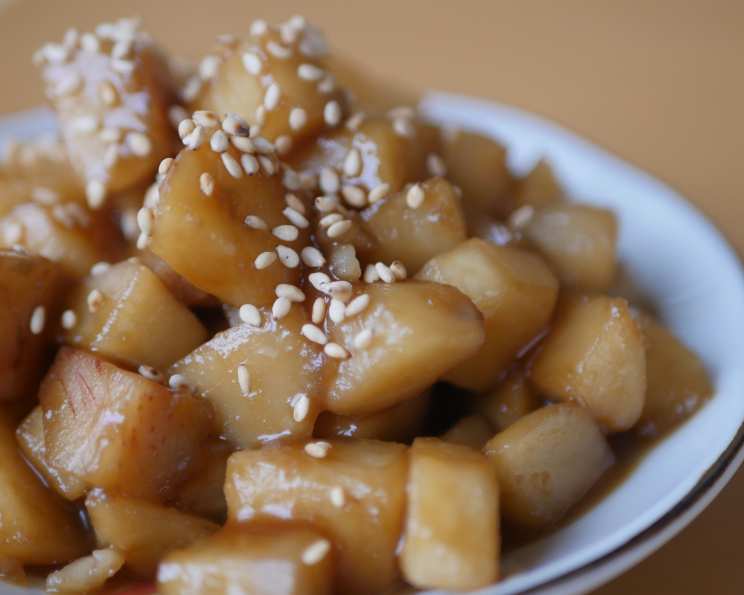
Okinawan Sweetened Taro Roots: A Taste of Island Comfort
The scent of simmering sugar always takes me back to my grandmother’s kitchen on Okinawa. I remember being a small child, perched on a stool, watching her transform humble taro roots into a glistening, sweet treat. The gentle hum of the Okinawan music on the radio, the sticky sweetness coating my fingers as I snuck a taste – these are the memories infused in every bite of this simple yet profound dessert. It’s more than just food; it’s a taste of home, a connection to my heritage, and a spoonful of pure, unadulterated comfort.
Recipe Overview
- Prep Time: 15 minutes
- Cook Time: 25 minutes
- Total Time: 40 minutes
- Servings: 3-4
- Dietary Type: Vegetarian
Ingredients
- 500 g baby taro roots
- 1 pinch salt
- 1 cup water
- ¼ cup sugar
- 2 tablespoons awamori (Okinawan rice liquor)
- 2 tablespoons mirin (sweet rice wine)
- ½ tablespoon butter
- ½ teaspoon toasted sesame seeds
Equipment Needed
- Large saucepan
- Small bowl
- Strainer
- Serving plate
Instructions
-
Begin by thoroughly washing the baby taro roots. Then, carefully peel them using a vegetable peeler or a paring knife.
-
Once peeled, slice the taro roots into uniform cubes, approximately 2-3 centimeters in size. Consistent sizing will ensure even cooking.
-
Place the cubed taro roots into a large saucepan. Add the water and a pinch of salt.
-
Bring the water to a boil over high heat. As soon as it boils, cover the saucepan, reduce the heat to low, and simmer for about 15 minutes, or until the taro roots are tender and easily pierced with a fork.
-
While the taro roots are simmering, prepare the sweetening mixture. In a small bowl, combine the sugar, awamori, and mirin. Mix well with a spoon or whisk until the sugar is completely dissolved. This ensures a smooth, even coating for the taro.
-
After the taro roots have simmered for 15 minutes, check for tenderness. If they are soft, carefully strain them to remove all the cooking water. Then, transfer the strained taro roots to a clean bowl.
-
While the taro roots are still hot, immediately add the butter and pour the sugar mixture over them. Mix gently but thoroughly until the butter is completely melted and the taro roots are evenly coated with the sweet sauce.
-
Return the sweetened taro roots to the same saucepan. Turn the heat to high and cook uncovered, stirring occasionally, until the liquid evaporates and the taro roots are coated in a sticky, glossy glaze. This step intensifies the flavor and creates the signature Okinawan sweetness. Be careful not to burn the sugar; lower the heat if necessary.
-
Once the liquid has evaporated and the taro roots are beautifully glazed, remove them from the pan and transfer them to a serving plate.
-
Before serving, sprinkle the sweetened taro roots generously with toasted sesame seeds. This adds a nutty aroma and a pleasing textural contrast.
Expert Tips & Tricks
- For a richer flavor, try using brown sugar instead of white sugar. The molasses in brown sugar adds a deeper caramel note that complements the earthy flavor of the taro.
- If you can’t find awamori, you can substitute it with sake or even a splash of dry sherry.
- Toasting the sesame seeds is crucial for maximizing their flavor. Simply toast them in a dry pan over medium heat until they become fragrant and lightly golden.
- Don’t overcrowd the pan when cooking the taro roots in the final step. Overcrowding can cause the taro to steam instead of caramelize. Work in batches if necessary.
- For a more intense flavor, you can marinate the cooked taro roots in the sugar mixture for a few hours before the final cooking step.
Serving & Storage Suggestions
Serve Okinawan Sweetened Taro Roots warm or at room temperature. They make a delightful dessert on their own or as an accompaniment to green tea. Leftovers can be stored in an airtight container in the refrigerator for up to 3 days. To reheat, gently warm in a pan over low heat or microwave in short intervals until heated through. The texture may soften slightly upon reheating. These are best enjoyed fresh!
Nutritional Information
| Nutrient | Amount per Serving | % Daily Value |
|---|---|---|
| Calories | 285 kcal | 14% |
| Total Fat | 3g | 4% |
| Saturated Fat | 1.5g | 8% |
| Cholesterol | 5mg | 2% |
| Sodium | 160mg | 7% |
| Total Carbohydrate | 62g | 22% |
| Dietary Fiber | 7g | 25% |
| Sugars | 18g | 36% |
| Protein | 3g | 6% |
Note: Nutritional information is an estimate and may vary based on specific ingredients and preparation methods.
Variations & Substitutions
- For a vegan version, substitute the butter with coconut oil or a vegan butter alternative.
- Add a pinch of ground ginger or cinnamon to the sugar mixture for a warming spice note.
- Experiment with different types of sesame seeds, such as black sesame seeds, for a visual contrast and slightly different flavor.
- If baby taro roots are unavailable, you can use regular taro roots, just be sure to peel and cube them into smaller pieces for even cooking.
- Try adding a splash of lime juice at the end of cooking for a bright, citrusy flavor.
FAQs (Frequently Asked Questions)
Q: What is awamori and can I skip it?
A: Awamori is a traditional Okinawan distilled rice liquor. While it adds a unique flavor, you can substitute it with sake, dry sherry, or even skip it entirely, increasing the mirin by a tablespoon.
Q: How do I know when the taro roots are cooked through?
A: The taro roots are done when they are easily pierced with a fork and feel tender. Avoid overcooking them, as they can become mushy.
Q: Can I make this recipe ahead of time?
A: You can cook the taro roots and prepare the sugar mixture ahead of time. Store them separately in the refrigerator and combine them when you’re ready to finish the dish.
Q: What can I serve this with?
A: Okinawan Sweetened Taro Roots are delicious served with green tea, roasted pork, or as a side dish to any meal.
Q: How do I toast sesame seeds?
A: Simply place sesame seeds in a dry pan over medium heat, stirring constantly until they become fragrant and lightly golden brown. Watch them carefully as they can burn quickly.
Final Thoughts
I sincerely hope you’ll try this recipe for Okinawan Sweetened Taro Roots. It’s a simple dish with a profound history and a flavor that truly evokes the warmth and beauty of Okinawa. Feel free to experiment with variations and make it your own! I’d love to hear your feedback and how you enjoyed this sweet taste of the islands. Perhaps pair it with a steaming cup of sanpincha (Okinawan jasmine tea) for a truly authentic experience. Kuikwareshōri! (Bon appétit!)