
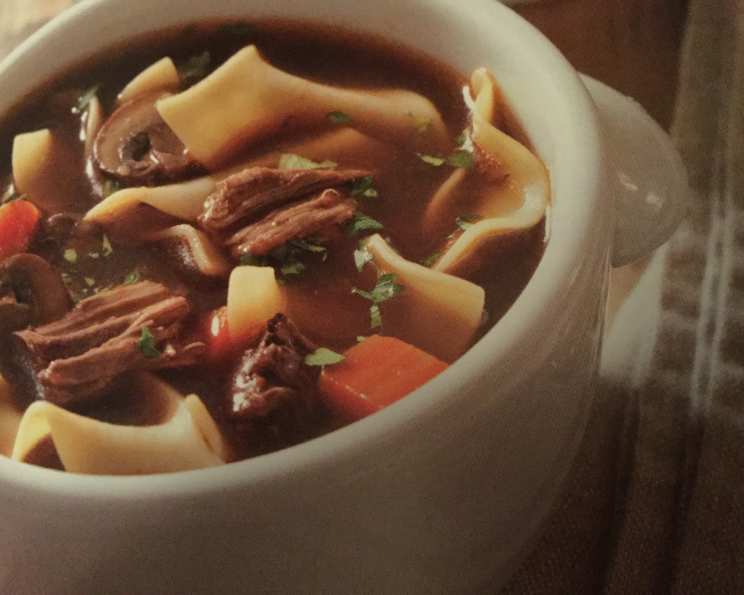
Old-Fashioned Beef and Noodle Soup
The aroma alone takes me back. I can almost see my grandmother standing over her ancient, speckled slow cooker, the kitchen window steamed with condensation on a blustery autumn afternoon. The savory scent of simmering beef and vegetables would mingle with the earthy perfume of drying herbs hanging from the rafters. That soup, a masterpiece of simple ingredients and slow, loving attention, was the embodiment of comfort and home. This recipe, while not hers exactly, captures the essence of that memory: a hearty, deeply satisfying bowl of old-fashioned goodness.
Recipe Overview
- Prep Time: 20 minutes
- Cook Time: 9-11 hours on LOW or 5-7 hours on HIGH
- Total Time: 9 hours 20 minutes to 11 hours 20 minutes
- Servings: 8
- Dietary Type: Not Gluten-Free, Dairy-Free Optional (ensure broth is dairy-free)
Ingredients
- 2 onions, minced
- 4 garlic cloves, minced
- 1 tablespoon tomato paste
- 1 tablespoon vegetable oil
- 2 teaspoons minced fresh thyme (or 1/2 teaspoon dried)
- 6 cups beef broth
- 1 lb cremini mushrooms, trimmed and sliced 1/2 inch thick
- 3 carrots, peeled and chopped medium
- 2 celery ribs, chopped medium
- 2 tablespoons soy sauce
- 2 bay leaves
- 1 1⁄2 lbs beef blade steak, trimmed
- Salt
- Pepper
- 3 ounces wide egg noodles (about 2 cups)
- 2 tablespoons minced fresh parsley
Equipment Needed
- Microwave-safe bowl
- Slow cooker
- Cutting board
- Large spoon
- Large pot
Instructions
-
Begin by preparing the aromatic base. In a microwave-safe bowl, combine the minced onions, minced garlic, tomato paste, vegetable oil, and thyme. Microwave this mixture, stirring occasionally, until the onions are softened, which should take about 5 minutes. This quick microwave step jumpstarts the flavor development.
-
Transfer the softened onion mixture to your slow cooker. This will be the foundation upon which the soup’s rich flavors are built.
-
Next, add the remaining vegetables and flavor enhancers to the slow cooker. Stir in the beef broth, sliced cremini mushrooms, chopped carrots, chopped celery, soy sauce, and bay leaves. The mushrooms will add an earthy depth, while the carrots and celery contribute sweetness and texture. The soy sauce provides a savory umami note.
-
Season the beef blade steak generously with salt and pepper. This crucial step ensures that the beef is flavorful from the inside out. Nestle the seasoned beef into the slow cooker, submerging it in the broth and vegetable mixture.
-
Cover the slow cooker and set it to either LOW for 9-11 hours or HIGH for 5-7 hours. The long, slow cooking process is key to tenderizing the beef and allowing the flavors to meld together beautifully. Resist the urge to lift the lid frequently, as this releases heat and extends the cooking time.
-
Once the beef is cooked and fork-tender, carefully transfer it to a cutting board. Allow it to cool slightly before shredding it into bite-size pieces. This makes it easier to handle and prevents you from burning your fingers.
-
Skim any excess fat from the surface of the soup in the slow cooker using a large spoon. This step is optional but helps to create a cleaner, more palatable broth. Letting the soup settle for about 5 minutes before skimming makes the fat easier to remove.
-
Remove and discard the bay leaves from the slow cooker. They have imparted their flavor, and are no longer needed.
-
While the beef was cooking, or shortly before you plan to serve the soup, cook the egg noodles. Bring a large pot of salted water to a rolling boil. Add the wide egg noodles and cook according to package directions until tender, then drain thoroughly. Salting the water is important because it seasons the noodles as they cook.
-
Stir the cooked egg noodles and shredded beef into the soup in the slow cooker. Let it sit until heated through, about 5 minutes, allowing the noodles to absorb some of the flavorful broth.
-
Finally, stir in the minced fresh parsley. Season the soup with additional salt and pepper to taste. Serve immediately and enjoy!
Expert Tips & Tricks
- Browning the Beef: For an even deeper, richer flavor, consider searing the beef blade steak in a hot skillet before adding it to the slow cooker. Sear each side for 2-3 minutes until browned. This adds a caramelized note that enhances the overall taste of the soup.
- Vegetable Variations: Feel free to experiment with different vegetables. Parsnips, turnips, or even diced potatoes would be delicious additions.
- Thickening the Soup: If you prefer a thicker soup, you can whisk together a tablespoon of cornstarch with a tablespoon of cold water and stir it into the soup during the last 30 minutes of cooking.
- Make-Ahead Tip: The soup base (everything except the noodles and parsley) can be made a day or two in advance and stored in the refrigerator. This allows the flavors to develop even further. Add the noodles and parsley just before serving.
- Dried vs Fresh Thyme: If using dried thyme instead of fresh, remember that dried herbs have a more concentrated flavor. Use about half the amount called for in the recipe.
Serving & Storage Suggestions
Serve the Old-Fashioned Beef and Noodle Soup hot, garnished with an extra sprinkle of fresh parsley, if desired. A crusty loaf of bread or some buttery crackers make excellent accompaniments.
Leftovers can be stored in an airtight container in the refrigerator for up to 3-4 days. For longer storage, freeze the soup in individual portions for up to 2-3 months. Thaw overnight in the refrigerator before reheating.
To reheat, gently warm the soup in a saucepan over medium heat, stirring occasionally, until heated through. You can also reheat it in the microwave.
Nutritional Information
| Nutrient | Amount per Serving | % Daily Value |
|---|---|---|
| Calories | 260 kcal | N/A |
| Calories from Fat | N/A | 41% |
| Total Fat | 11.7g | 18% |
| Saturated Fat | 3.9g | 19% |
| Cholesterol | 65.2mg | 21% |
| Sodium | 1031.2mg | 42% |
| Total Carbohydrate | 16.4g | 5% |
| Dietary Fiber | 2.2g | 8% |
| Sugars | 4g | 15% |
| Protein | 22.4g | 44% |
Note: Nutritional information is an estimate and may vary based on specific ingredients and portion sizes.
Variations & Substitutions
- Gluten-Free Option: Use gluten-free noodles instead of traditional egg noodles.
- Vegetarian/Vegan Option: Replace the beef with a plant-based beef substitute or hearty vegetables like butternut squash and lentils. Use vegetable broth instead of beef broth. Omit the egg noodles, or use a vegan noodle alternative.
- Spicy Kick: Add a pinch of red pepper flakes or a dash of your favorite hot sauce to the soup for a little heat.
- Herb Variations: Experiment with different herbs like rosemary, oregano, or marjoram for a unique flavor profile.
- Wine Addition: For an even richer flavor, add a 1/2 cup of dry red wine to the slow cooker along with the beef broth.
FAQs (Frequently Asked Questions)
Q: Can I use a different cut of beef?
A: Yes, you can substitute beef blade steak with chuck roast or brisket. These cuts also benefit from slow cooking and become incredibly tender.
Q: Do I have to microwave the onions and garlic first?
A: No, you can skip the microwaving step and add the raw onions and garlic directly to the slow cooker. However, microwaving them beforehand helps to soften them and release their flavors more quickly.
Q: Can I add potatoes to this soup?
A: Absolutely! Diced potatoes would be a great addition. Add them to the slow cooker along with the carrots and celery.
Q: How do I prevent the noodles from becoming mushy?
A: To prevent mushy noodles, cook them separately and add them to the soup just before serving. This ensures that they retain their texture.
Q: Can I make this soup in an Instant Pot?
A: Yes, you can adapt this recipe for an Instant Pot. Sear the beef first using the sauté function. Then add the remaining ingredients (except the noodles and parsley), seal the lid, and cook on high pressure for 45 minutes, followed by a natural pressure release for 15 minutes. Add the cooked noodles and parsley after releasing the pressure.
Final Thoughts
This Old-Fashioned Beef and Noodle Soup is more than just a meal; it’s a hug in a bowl. It’s a reminder of simpler times, of cozy kitchens filled with the aroma of slow-cooked goodness. I encourage you to try this recipe, to adapt it to your own tastes, and to share it with the people you love. After all, a warm bowl of soup is best enjoyed in good company. Let me know what you think and what variations you try – I always love hearing from fellow food enthusiasts! Perhaps you’ll find it pairs wonderfully with a robust red wine on a chilly evening. Happy cooking!