
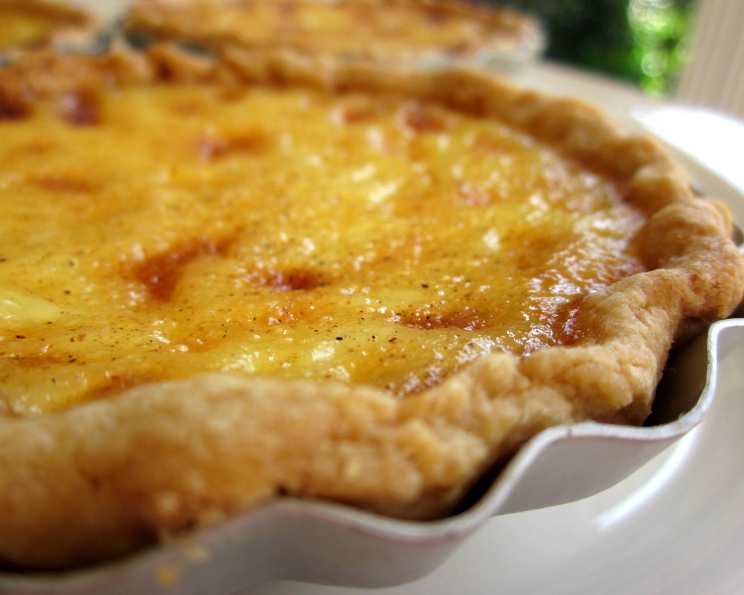
Old Fashioned Custard Pie: A Slice of Sweet Nostalgia
There’s a certain magic in the simplicity of a well-made custard pie. My grandmother, bless her heart, wasn’t one for fussy desserts. Her kitchen was a realm of practical magic, where butter was always real, and love was the secret ingredient in everything. I remember watching her deftly crimp the edges of the pie crust, a sprinkle of flour dusting her apron, a soft hum escaping her lips. The warm, comforting aroma of vanilla and nutmeg baking in the oven is a sense memory that instantly transports me back to her cozy kitchen, filled with love and laughter.
Recipe Overview
- Prep Time: 10 minutes
- Cook Time: 40 minutes
- Total Time: 50 minutes
- Servings: 8
- Yield: 1 9-inch pie
- Dietary Type: Vegetarian
Ingredients
- 9 inches unbaked pie shell
- 2 1/2 cups whole milk, scalded (or 2 1/2 cups half-and-half cream, scalded)
- 3 eggs, lightly beaten
- 3/4 cup sugar
- 1/4 teaspoon salt
- 1 teaspoon real vanilla extract
- Ground nutmeg, to taste
Equipment Needed
- Large Bowl
- Whisk
- Saucepan (for scalding milk)
- Sieve
- 9-inch Pie Dish
- Oven
Instructions
- Preheat your oven to 400 degrees Fahrenheit. This initial high heat helps to set the crust and prevent a soggy bottom.
- In a large bowl, whisk together the eggs, sugar, and salt. Whisk until the mixture is light and slightly frothy. This step is crucial for creating a smooth and creamy custard.
- In a saucepan, scald the milk (or half-and-half). Scalding means heating it until it just begins to simmer around the edges, but not boiling. This process enhances the flavor and helps create a smoother texture. Let the milk cool slightly before the next step to temper the eggs.
- Slowly whisk the scalded milk (or half-and-half) into the egg mixture, a little at a time. This is called “tempering” the eggs. It’s important to add the warm milk gradually to prevent the eggs from cooking and scrambling. Whisk constantly as you pour.
- Stir in the vanilla extract. Ensure it is real vanilla extract for the best flavor.
- Pour the custard mixture, through a sieve, into the unbaked pie shell. This step removes any lumps or cooked egg bits, ensuring a silky-smooth final product.
- Sprinkle the top generously with ground nutmeg. The nutmeg adds a warm, aromatic spice that complements the custard perfectly.
- Bake for approximately 40 minutes, or until a knife inserted near the center comes out clean. The filling will look wobbly, but it will set up as it cools. Check the pie after 30 minutes; if the crust is browning too quickly, tent it loosely with foil.
- Chill the pie thoroughly before serving. This allows the custard to fully set and develop its flavor. Ideally, chill for at least 2-3 hours, or even overnight.
Expert Tips & Tricks
- Preventing a Soggy Crust: To avoid a soggy crust, you can blind bake the pie crust for 10-15 minutes before adding the filling. This involves pre-baking the crust partially filled with pie weights or dried beans.
- Achieving a Smooth Custard: Tempering the eggs properly is key to a smooth, lump-free custard. Adding the warm milk too quickly can cause the eggs to scramble, resulting in a grainy texture.
- Doneness Test: A slight wobble in the center of the pie is perfectly normal when it’s done. The custard will continue to set as it cools.
- Using a Water Bath (Bain-Marie): For an even more delicate and creamy texture, consider baking the pie in a water bath. Place the pie dish inside a larger baking pan and fill the outer pan with hot water, reaching halfway up the sides of the pie dish. This gentle heat helps to cook the custard more evenly.
- Make Ahead Tip: Custard pie is the perfect make-ahead dessert! It can be prepared a day or two in advance and stored in the refrigerator until ready to serve.
Serving & Storage Suggestions
Serve the Old Fashioned Custard Pie chilled, ideally with a generous dollop of freshly whipped cream or a scoop of vanilla ice cream. A sprinkle of extra nutmeg on top adds a nice touch.
To store leftover pie, cover it loosely with plastic wrap or foil and refrigerate. It will keep in the refrigerator for up to 3-4 days. While custard pie is best enjoyed cold, you can gently warm a slice in the microwave for a few seconds if desired, although the texture may change slightly. Due to the high dairy content, freezing is not recommended as it can affect the custard’s texture.
Nutritional Information
(Estimated values, may vary based on specific ingredients and serving size)
| Nutrient | Amount per Serving | % Daily Value |
|---|---|---|
| Calories | 280 kcal | 14% |
| Total Fat | 14g | 18% |
| Saturated Fat | 8g | 40% |
| Cholesterol | 80mg | 27% |
| Sodium | 200mg | 9% |
| Total Carbohydrate | 30g | 11% |
| Dietary Fiber | 0g | 0% |
| Sugars | 20g | – |
| Protein | 5g | 10% |
Variations & Substitutions
- Gluten-Free Crust: Use a store-bought or homemade gluten-free pie crust to make this pie suitable for those with gluten sensitivities.
- Dairy-Free Option: Substitute the whole milk with a non-dairy milk alternative like almond milk or oat milk. Be aware that the flavor and texture will be slightly different. For an even richer dairy-free option, use full-fat coconut milk (from a can).
- Spice Variations: Experiment with different spices like cinnamon, cardamom, or a pinch of cloves for a unique flavor profile.
- Citrus Zest: Add a teaspoon of lemon or orange zest to the custard mixture for a bright, citrusy note.
- Bourbon Vanilla: For an extra touch of decadence, use bourbon vanilla extract instead of regular vanilla extract.
FAQs (Frequently Asked Questions)
Q: How do I prevent my pie crust from shrinking during baking?
A: Blind baking the crust with pie weights helps prevent shrinking. Also, docking the bottom of the crust (poking it with a fork) allows steam to escape.
Q: My custard pie cracked on top. What did I do wrong?
A: Overbaking or baking at too high a temperature can cause cracking. Reduce the oven temperature slightly or bake the pie in a water bath to prevent this.
Q: Can I use sweetened condensed milk instead of regular milk?
A: While you can, it will significantly change the flavor and sweetness level. You’ll need to drastically reduce the amount of sugar in the recipe.
Q: How can I tell if my custard pie is done without cutting into it?
A: The pie is done when a knife inserted near the center comes out clean, or with just a few moist crumbs clinging to it. The center should still have a slight wobble.
Q: Why is my custard pie grainy?
A: A grainy texture usually indicates that the eggs were overcooked. Be sure to temper the eggs slowly and avoid overbaking the pie.
Final Thoughts
This Old Fashioned Custard Pie is more than just a dessert; it’s a taste of home, a slice of nostalgia, a testament to the enduring power of simple pleasures. Whether you’re a seasoned baker or a novice in the kitchen, I encourage you to try this recipe. Share it with loved ones, and let the warmth and sweetness of this classic pie fill your home with joy. Feel free to experiment with variations and make it your own. And, of course, I’d love to hear about your baking adventures and any special touches you add!