
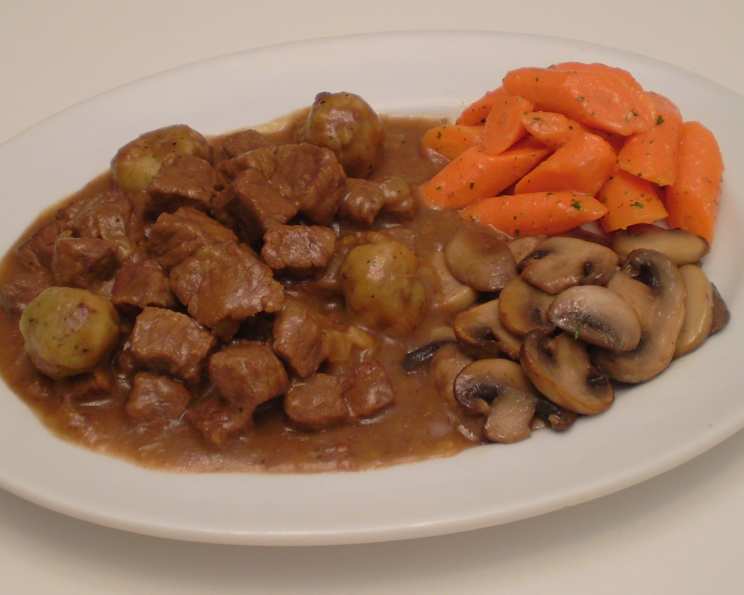
Unearthing a Culinary Treasure: Stuvet Oksekød – A Danish Stew
The scent alone transports me back to my grandmother’s kitchen – a cozy, sun-drenched space where the aroma of simmering stews was as comforting as her warm embrace. I remember sitting at her worn wooden table, watching her meticulously prepare this very dish, Stuvet Oksekød, her hands moving with a practiced grace honed over decades of love and tradition. Each spoonful was a taste of home, a memory etched in my heart. Now, having discovered this recipe in my mother’s vintage cookbook, it’s my turn to bring this beloved dish back to life.
Recipe Overview
- Prep Time: 30 minutes
- Cook Time: 2 hours 35 minutes
- Total Time: 3 hours 5 minutes
- Servings: 6
- Yield: 6-8 servings
- Dietary Type: Not Gluten-Free
Ingredients
- 3 tablespoons butter
- 2 onions, chopped
- 1 cup flour
- 2 cups beef broth or 2 cups beef stock
- 2 1/2 lbs top round steaks or 2 1/2 lbs bottom round steaks, cut into small squares
- 2 tablespoons vinegar
- 1 teaspoon salt
- 1/4 teaspoon white pepper
- 3/4 teaspoon baking powder
- 1/2 teaspoon salt
- 1 tablespoon minced parsley
- 1/4 teaspoon marjoram
- 1 pinch pepper
- 3 tablespoons butter (for dumplings)
- 2 tablespoons ice water (for dumplings)
Equipment Needed
- Large heavy skillet or Dutch oven
- Mixing bowl
Instructions
- Begin by preparing the base of the stew. In a large, heavy skillet or Dutch oven, melt 3 tablespoons of butter over low heat.
- Add the 2 chopped onions to the melted butter and brown them for about 10 minutes, stirring occasionally, until they are softened and slightly caramelized. This low and slow browning is key to developing a rich, flavorful foundation for the stew.
- Sprinkle 3 tablespoons of flour over the browned onions. Stir constantly to ensure the flour is evenly distributed and forms a smooth roux. This step will help thicken the stew.
- Slowly add the 2 cups of beef broth or beef stock, stirring continuously to prevent any lumps from forming. Continue stirring until the mixture comes to a boil.
- While the sauce is coming to a boil, prepare the meat. Place the 2 1/2 lbs of cubed steak in a separate heavy skillet.
- Sprinkle the 2 tablespoons of vinegar over the meat. The vinegar will help tenderize the meat and add a subtle tang to the stew.
- Pour the prepared sauce from the first skillet over the meat.
- Add 1 teaspoon of salt and 1/4 teaspoon of white pepper to the mixture. Mix everything together thoroughly to ensure the meat is evenly coated with the sauce and seasonings.
- Cover the skillet tightly with a lid.
- Cook the stew over very low heat for 2 hours, allowing the meat to become incredibly tender and the flavors to meld together beautifully. Stir occasionally to prevent sticking.
- While the stew simmers, prepare the dumplings. In a mixing bowl, sift together 3/4 teaspoon of baking powder, the remaining flour from the cup you used earlier, and 1/2 teaspoon of salt. This ensures the baking powder is evenly distributed for light and fluffy dumplings.
- Add 1 tablespoon of minced parsley, 1/4 teaspoon of marjoram, and a pinch of pepper to the dry ingredients. Mix well to combine.
- Cut in 3 tablespoons of cold butter into the dry ingredients using a pastry blender or your fingertips until the mixture resembles coarse crumbs.
- Gradually add 2 tablespoons of ice water, tossing lightly with a fork until a ball of dough forms. Be careful not to overmix the dough, as this will result in tough dumplings.
- Shape the dough into small balls.
- After the stew has simmered for 2 hours, gently drop the dumpling balls into the simmering stew, spacing them evenly.
- Replace the lid on the skillet and continue to cook the stew over low heat for another 35 minutes. The dumplings should puff up and become cooked through.
- To serve, arrange the meat on a serving platter and surround it with the cooked dumplings.
- Pour the remaining liquid from the skillet over the meat and dumplings. Serve immediately and enjoy!
Expert Tips & Tricks
- For an even richer flavor, brown the meat cubes in the skillet before adding the vinegar and sauce.
- If you prefer a thicker stew, mix a tablespoon of cornstarch with a little cold water to make a slurry, and stir it into the stew during the last 15 minutes of cooking.
- Don’t overcrowd the skillet when browning the onions. Brown them in batches if necessary, to ensure they caramelize properly.
- For extra tender meat, consider using a slow cooker. Brown the onions and meat as directed, then transfer everything to a slow cooker and cook on low for 6-8 hours. Add the dumplings during the last hour of cooking.
- For a more rustic touch, use freshly chopped herbs instead of dried ones.
Serving & Storage Suggestions
Serve Stuvet Oksekød hot, straight from the skillet or arranged beautifully on a platter. It pairs perfectly with a side of boiled potatoes or crusty bread to soak up the delicious gravy.
Leftovers can be stored in an airtight container in the refrigerator for up to 3 days. To reheat, gently warm the stew in a saucepan over low heat, stirring occasionally, until heated through. You can also reheat it in the microwave, but be careful not to overcook the dumplings.
While technically you could freeze the stew, the texture of the dumplings might change upon thawing. It’s best enjoyed fresh or reheated within a few days.
Nutritional Information
| Nutrient | Amount per Serving | % Daily Value |
|---|---|---|
| Calories | 650 kcal | 33% |
| Total Fat | 35g | 54% |
| Saturated Fat | 18g | 90% |
| Cholesterol | 160mg | 53% |
| Sodium | 1100mg | 46% |
| Total Carbohydrate | 25g | 8% |
| Dietary Fiber | 2g | 8% |
| Sugars | 3g | – |
| Protein | 50g | 100% |
Note: Nutritional information is an estimate and may vary based on specific ingredients and portion sizes.
Variations & Substitutions
- Gluten-Free: Substitute the all-purpose flour with a gluten-free flour blend for both the stew and the dumplings. Make sure the beef broth is also gluten-free.
- Vegetarian: While this recipe is traditionally made with beef, you could try substituting it with hearty mushrooms or lentils for a vegetarian version. Adjust the cooking time accordingly.
- Spiced Up: Add a pinch of smoked paprika or a bay leaf to the stew for a deeper, more complex flavor.
- Herby Delight: Experiment with different herbs in the dumplings. Fresh dill, thyme, or chives would all be delicious additions.
- Richness: Stir in a tablespoon of heavy cream or sour cream at the very end of cooking for an extra creamy and decadent finish.
FAQs (Frequently Asked Questions)
Q: Can I use a different cut of beef?
A: While top or bottom round steaks are recommended for their tenderness, you can use other cuts of beef suitable for stewing, such as chuck roast. Just adjust the cooking time as needed to ensure the meat is fork-tender.
Q: Can I make the dumplings ahead of time?
A: It’s best to make the dumplings just before adding them to the stew. If you make them ahead of time, they may become dense and lose their fluffy texture.
Q: The stew seems too thin. How can I thicken it?
A: Mix a tablespoon of cornstarch with a little cold water to make a slurry, and stir it into the stew during the last 15 minutes of cooking. This will help thicken the sauce.
Q: My dumplings are sinking to the bottom of the stew. What am I doing wrong?
A: Make sure the stew is simmering gently, not boiling vigorously. Also, avoid opening the lid too frequently while the dumplings are cooking, as this can cause them to deflate.
Q: Can I add vegetables to the stew?
A: Absolutely! Carrots, potatoes, and parsnips would all be delicious additions. Add them to the stew about an hour before the end of cooking time, so they have enough time to soften.
Final Thoughts
This Stuvet Oksekød recipe is more than just a dish; it’s a piece of history, a connection to family, and a warm hug on a cold day. I encourage you to try it, embrace the process, and savor the delightful flavors that have been passed down through generations. Don’t be afraid to adapt the recipe to your own tastes and preferences. I’d love to hear about your experience and any variations you create. Skål!