
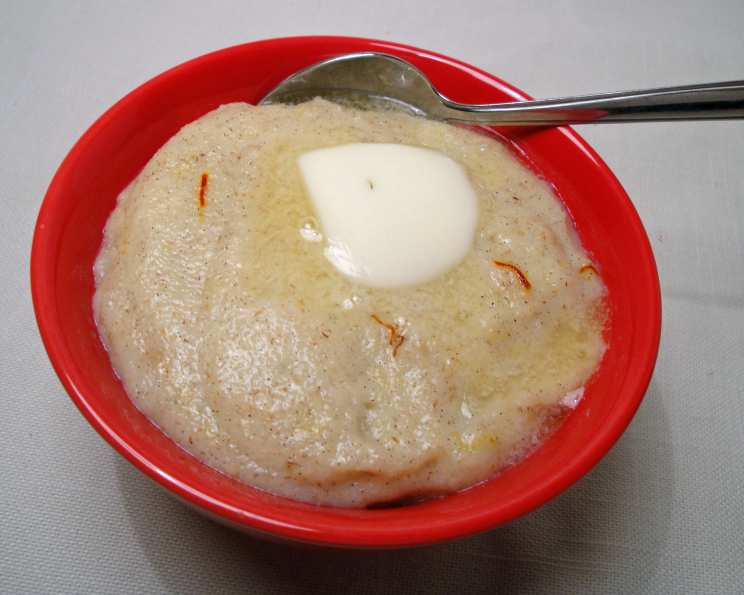
Omani Khabeesa: A Taste of Sweet Memories
My grandmother, a woman who measured love in cardamom pods and simmered memories into every dish, used to make Khabeesa on cool desert evenings. The aroma, a heady blend of sweet milk, fragrant cardamom, and the whisper of rosewater, would drift through the courtyard, beckoning us children. We’d gather around her worn wooden table, eager for a taste of the warm, comforting porridge that felt like a hug in a bowl. Every spoonful was a story – a tale of her childhood in Muscat, of spice caravans, and of a life lived under the warm Omani sun. This recipe is more than just instructions; it’s a link to those cherished moments, a fragrant echo of my grandmother’s love.
Recipe Overview
- Prep Time: 5 minutes
- Cook Time: 12 minutes
- Total Time: 17 minutes
- Servings: 4
- Yield: 4 servings
- Dietary Type: Vegetarian
Ingredients
- ¾ cup farina (khabeesa or “Cream of Wheat”)
- 5 cups whole milk
- ¼ cup sugar
- 1 tablespoon ground cardamom
- 2 tablespoons butter
- 2 tablespoons rose water (optional)
- 1 pinch saffron threads
Equipment Needed
- Saucepan
- Whisk
Instructions
-
In a medium saucepan, combine the farina, whole milk, sugar, ground cardamom, butter, rose water (if using), and saffron threads. Use a whisk to ensure all ingredients are well incorporated and there are no lumps of farina. The saffron will slowly release its color, giving the Khabeesa a beautiful golden hue.
-
Place the saucepan over medium-high heat. Continuously whisk the mixture to prevent the farina from sticking to the bottom of the pan and burning.
-
Bring the mixture to a boil, still whisking constantly. Be patient; this may take a few minutes. Once it reaches a boil, immediately reduce the heat to the lowest setting.
-
Simmer the Khabeesa for 10 minutes, stirring occasionally to prevent sticking. The mixture will thicken significantly as the farina absorbs the milk. Adjust the simmering time slightly if you prefer a thinner or thicker consistency.
-
Remove the saucepan from the heat. The Khabeesa will continue to thicken as it cools.
-
Serve the Khabeesa warm, topped with a pat of butter if desired.
Expert Tips & Tricks
- For a richer flavor, use full-fat milk instead of lower-fat varieties. The higher fat content will contribute to a creamier texture and more decadent taste.
- Don’t skip the whisking! Continuous whisking, especially in the beginning, is crucial for preventing lumps. If lumps do form, try using an immersion blender after cooking to smooth out the texture.
- Toast the farina in a dry pan over medium heat for a few minutes before adding the other ingredients. This adds a nutty flavor dimension to the final dish. Be careful not to burn the farina.
- If you want to add a touch of elegance, garnish with chopped pistachios or a drizzle of honey before serving.
- Infuse the milk with cardamom overnight for a more intense cardamom flavor. Simply heat the milk with the cardamom, let it cool, and refrigerate it overnight. Strain the milk before using it in the recipe.
- For a dairy-free version, substitute almond milk or coconut milk for the whole milk. Keep in mind that this may slightly alter the flavor and consistency of the Khabeesa.
- If you find the Khabeesa is too thick, add a splash more milk to thin it out. If it’s too thin, simmer for a few more minutes, stirring constantly, to allow it to thicken.
- If you don’t have rose water on hand, you can omit it, but it does add a lovely floral aroma that complements the cardamom and saffron.
Serving & Storage Suggestions
Khabeesa is best served warm, straight from the saucepan. A small pat of butter melting on top adds richness and flavor. It’s also delicious with a sprinkle of ground cinnamon or a drizzle of honey.
Leftover Khabeesa can be stored in an airtight container in the refrigerator for up to 3 days. Reheat gently on the stovetop over low heat, adding a splash of milk if needed to loosen the consistency. You can also reheat it in the microwave, stirring frequently to ensure even heating.
Freezing is not recommended, as the texture of the Khabeesa may change upon thawing.
Nutritional Information
| Nutrient | Amount per Serving | % Daily Value |
|---|---|---|
| Calories | 411.8 kcal | N/A |
| Calories from Fat | 143g | 35% |
| Total Fat | 15.9 g | 24% |
| Saturated Fat | 9.4 g | 46% |
| Cholesterol | 45.8 mg | 15% |
| Sodium | 183.2 mg | 7% |
| Total Carbohydrate | 53.9 g | 17% |
| Dietary Fiber | 1.1 g | 4% |
| Sugars | 27.9 g | N/A |
| Protein | 13.3 g | 26% |
Note: Nutritional information is an estimate and may vary based on specific ingredients and preparation methods.
Variations & Substitutions
- Spiced Khabeesa: Add a pinch of ground nutmeg, ginger, or cloves to the mixture for a warmer, spicier flavor.
- Nutty Khabeesa: Stir in a handful of chopped almonds, walnuts, or cashews for added texture and flavor.
- Fruity Khabeesa: Add chopped dates, raisins, or dried apricots to the mixture for a touch of sweetness and chewy texture.
- Citrus Khabeesa: Add a teaspoon of orange or lemon zest to the mixture for a bright, citrusy flavor.
- Chocolate Khabeesa: Stir in a tablespoon of cocoa powder and a tablespoon of chocolate chips for a chocolatey twist.
- Rose water alternative: Orange blossom water can be used as a substitute.
FAQs (Frequently Asked Questions)
Q: Can I use different types of milk for this recipe?
A: Yes, you can substitute whole milk with almond milk, soy milk, or coconut milk. The flavor and consistency may slightly differ, but it will still be delicious.
Q: How do I prevent lumps from forming in the Khabeesa?
A: The key is to whisk constantly, especially at the beginning, to ensure the farina is well incorporated into the milk.
Q: Can I make this recipe ahead of time?
A: Yes, you can make the Khabeesa ahead of time and store it in the refrigerator for up to 3 days. Reheat it gently on the stovetop or in the microwave, adding a splash of milk if needed to loosen the consistency.
Q: What is saffron, and why is it used in this recipe?
A: Saffron is a spice derived from the Crocus sativus flower. It adds a subtle flavor and a beautiful golden color to the Khabeesa. It is optional but highly recommended.
Q: Can I reduce the amount of sugar in this recipe?
A: Yes, you can adjust the amount of sugar to your liking. Start with a smaller amount and add more to taste. You can also use a natural sweetener like honey or maple syrup.
Final Thoughts
I hope this recipe for Omani Khabeesa brings a touch of warmth and sweetness to your kitchen. It’s a simple dish, but its flavors are complex and comforting, evoking memories of my grandmother’s loving embrace. Whether you enjoy it as a cozy breakfast or a comforting dessert, I encourage you to try this recipe and share your own memories and experiences with it. Perhaps it will even inspire you to create new traditions and cherished moments with your loved ones. Let me know what you think!