
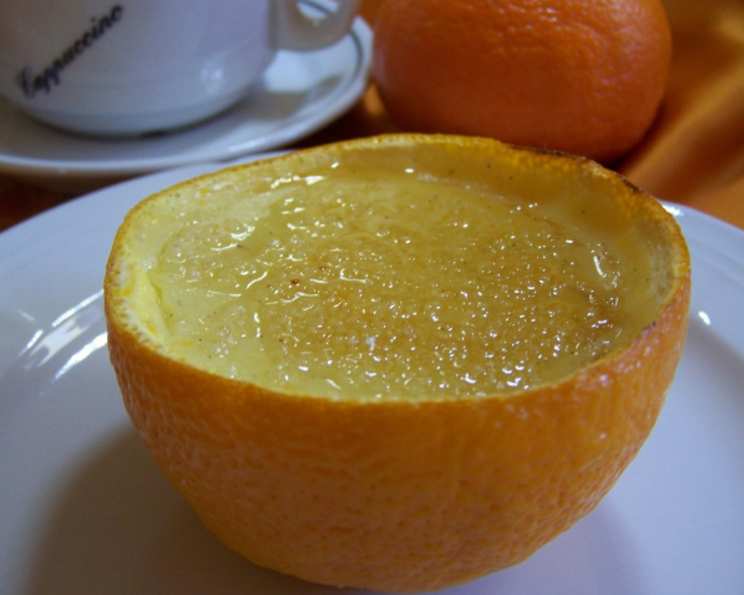
Orange Catalonian Cream: A Taste of Sunshine in Every Bite
The memory is etched in my mind: a bustling Barcelona market, the air thick with the scent of citrus and spices. An elderly woman, her hands gnarled with time, offered me a small terracotta dish filled with a shimmering custard, its surface caramelized to a deep amber. The first bite was pure magic – the bright tang of orange, the comforting warmth of cinnamon, and the shattering crunch of the burnt sugar. It was my first encounter with Crema Catalana, and I’ve been chasing that perfect moment ever since. This recipe, inspired by that unforgettable experience, brings the warmth and vibrancy of Catalonia to your own kitchen.
Recipe Overview
- Prep Time: 20 minutes
- Cook Time: 15 minutes
- Total Time: 35 minutes (plus chilling time)
- Servings: 12
- Dietary Type: Gluten-Free
Ingredients
- 6 cups milk
- 2 – 2 1⁄2 inches cinnamon sticks
- 1 vanilla bean, split lengthwise
- 2 large oranges, zest of, grated
- 1⁄8 teaspoon salt
- 1⁄4 cup cornstarch
- 1⁄4 cup cold milk
- 8 large egg yolks, room temperature
- 2 cups superfine sugar
- 12 teaspoons superfine sugar, for brûléeing
Equipment Needed
- Large saucepan
- Small bowl
- Large bowl
- Whisk
- Strainer
- 12 ovenproof ½ cup ramekins
- Broiler
- Roasting pan
- Ice
Instructions
- In a large saucepan, combine the milk, cinnamon sticks, vanilla bean (split lengthwise), grated orange zest, and salt. Bring the mixture to a simmer over medium-high heat.
- Once simmering, reduce the heat to low and simmer gently for 5-6 minutes, allowing the flavors to infuse into the milk. Keep an eye to prevent scalding.
- While the milk is simmering, prepare the cornstarch slurry. In a small bowl, whisk together the cornstarch and cold milk until completely smooth. Ensure there are no lumps, as these can affect the final texture of the cream.
- In a large bowl, whisk the egg yolks with 2 cups of superfine sugar until the mixture becomes light and creamy. This step is crucial for creating a smooth and airy custard. Continue whisking until the mixture ribbons when you lift the whisk.
- Blend the cornstarch mixture into the yolk mixture, whisking continuously to ensure it’s fully incorporated. This prevents the cornstarch from cooking unevenly.
- Remove the cinnamon sticks and vanilla bean from the hot milk. Strain the infused milk into another large saucepan to remove any stray bits of zest or spice.
- Gradually stir about 1 cup of the hot milk into the yolk mixture, whisking constantly. This process, called tempering, gently raises the temperature of the yolks, preventing them from scrambling when added to the rest of the hot milk. Blend well until completely combined.
- Gradually whisk the yolk mixture into the hot milk in the saucepan and blend well. Ensure even combination, whisking continuously to prevent lumps from forming.
- Place the saucepan over medium heat and cook, stirring constantly, until the mixture thickens and almost boils, about 10 minutes. Be patient and persistent – the mixture will thicken quite suddenly. The cream is ready when it coats the back of a spoon and a line drawn through it with your finger holds its shape.
- Divide the cream evenly among 12 ovenproof ½ cup ramekins.
- Let the ramekins cool to room temperature.
- Once cooled, preheat your broiler.
- Sprinkle 1 teaspoon of superfine sugar evenly over each ramekin of orange cream.
- Set the ramekins in a roasting pan lined with ice. The ice bath helps to keep the custard cool while the sugar caramelizes under the broiler.
- Broil until the sugar is a rich, golden-brown, watching carefully to prevent burning. This usually takes just a few minutes. Rotate the pan if necessary to ensure even browning.
- Cool the caramelized ramekins, then refrigerate for at least 2 hours, or preferably overnight, until ready to serve. This allows the custard to set completely and the flavors to meld.
Expert Tips & Tricks
- For an extra burst of flavor, try adding a tablespoon of orange liqueur to the milk while it simmers.
- If you don’t have superfine sugar, you can pulse regular granulated sugar in a food processor until it’s finer.
- Don’t over-broil! The sugar can burn quickly, resulting in a bitter taste. Keep a close eye on the ramekins and remove them from the broiler as soon as they reach a deep golden-brown color.
- If your custard develops any lumps during cooking, you can strain it through a fine-mesh sieve to smooth it out.
- For a smoother texture, use a high-quality vanilla bean and scrape the seeds directly into the milk.
Serving & Storage Suggestions
Serve the Orange Catalonian Cream chilled, straight from the refrigerator. The contrast between the cold custard and the brittle caramelized sugar is a delightful sensory experience. Garnish with a few segments of fresh orange or a sprig of mint for an elegant presentation.
Leftover Orange Catalonian Cream can be stored in the refrigerator for up to 3 days. Cover the ramekins tightly with plastic wrap to prevent them from absorbing any odors. While freezing is not recommended (as it can affect the texture of the custard), the chilled leftovers will maintain their deliciousness for a few days when properly stored. Reheating is not recommended.
Nutritional Information
| Nutrient | Amount per Serving | % Daily Value |
|---|---|---|
| Calories | 269.6 kcal | N/A |
| Calories from Fat | 66 g | 25% |
| Total Fat | 7.4 g | 11% |
| Saturated Fat | 3.9 g | 19% |
| Cholesterol | 143.7 mg | 47% |
| Sodium | 91.6 mg | 3% |
| Total Carbohydrate | 46.2 g | 15% |
| Dietary Fiber | 0 g | 0% |
| Sugars | 37.6 g | 150% |
| Protein | 5.8 g | 11% |
Variations & Substitutions
- Lemon Catalonian Cream: Substitute the orange zest with lemon zest for a brighter, more tart flavor.
- Spiced Catalonian Cream: Add a pinch of ground nutmeg or cardamom to the milk along with the cinnamon and vanilla for a warmer, more complex flavor profile.
- Chocolate Catalonian Cream: Stir in 2 ounces of melted dark chocolate into the custard base after cooking.
- Dairy-Free Catalonian Cream: Substitute the milk with full-fat coconut milk for a rich and creamy dairy-free version. Note that this will alter the flavor profile.
- Lower Sugar: Reduce the amount of superfine sugar in the custard base by 1/4 to 1/2 cup. Note that the custard might not set as firmly.
FAQs (Frequently Asked Questions)
Q: Can I make this ahead of time?
A: Absolutely! In fact, it’s best to make the Orange Catalonian Cream at least 2 hours in advance, or even the day before, to allow the flavors to meld and the custard to set completely.
Q: Why is the ice bath necessary when brûléeing the sugar?
A: The ice bath helps to keep the custard cool while you caramelize the sugar under the broiler. This prevents the custard from overheating and curdling.
Q: My sugar burned too quickly. What did I do wrong?
A: The broiler might be too hot, or the ramekins might be too close to the heat source. Try moving the rack further down in the oven and keeping a close eye on the sugar as it caramelizes.
Q: Can I use a kitchen torch instead of a broiler to caramelize the sugar?
A: Yes, a kitchen torch works perfectly well. Use a sweeping motion to evenly caramelize the sugar, being careful not to overheat any one spot.
Q: What if I don’t have ramekins?
A: You can use any ovenproof dish of similar size. Just make sure it’s heat-safe and can withstand the heat of the broiler.
Final Thoughts
I encourage you to try this Orange Catalonian Cream recipe and experience the magic of Catalonia for yourself. The bright citrus notes, the creamy texture, and the satisfying crunch of the caramelized sugar make it a dessert that’s sure to impress. Feel free to experiment with different variations and flavors to create your own signature version. Share your creations and feedback – I’d love to hear how it turns out! Consider pairing this delightful dessert with a crisp white wine or a glass of chilled sherry for a truly authentic Spanish experience.