
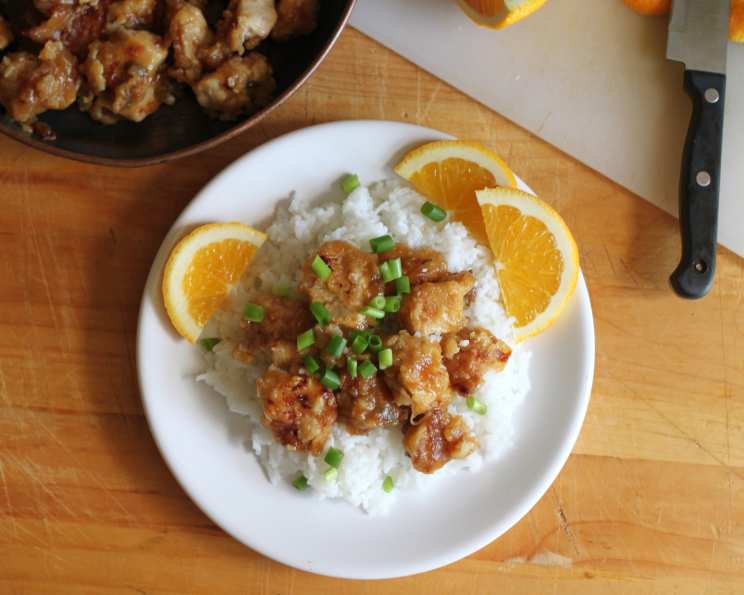
Restaurant-Style Orange Chicken: A Culinary Journey
The scent of citrus and soy, mingling with the sizzle of hot oil – that’s the aroma that instantly transports me back to my college days. Late-night study sessions fueled by bottomless plates of orange chicken were a ritual. We’d laugh, debate philosophy, and inevitably spill sticky sauce on our textbooks, all while savoring that perfect blend of sweet, tangy, and savory. While my textbooks might be long gone, my love for this iconic dish remains a constant, and I’ve dedicated myself to recreating that experience in my own kitchen.
Recipe Overview
- Prep Time: 2 hours 20 minutes
- Cook Time: 25 minutes
- Total Time: 2 hours 45 minutes
- Servings: 4-6
- Yield: Varies
- Dietary Type: Varies based on rice selection (can be gluten-free with tamari and gluten-free cornstarch)
Ingredients
For the Sauce:
- 1 cup water
- ½ cup orange juice
- ¼ cup freshly squeezed lemon juice
- ⅓ cup rice vinegar
- 2 ½ tablespoons soy sauce (or tamari for gluten-free)
- 1 tablespoon grated orange zest
- 1 cup packed brown sugar
- ½ teaspoon minced fresh gingerroot
- ½ teaspoon minced garlic
- 2 tablespoons chopped green onions
- ¼ teaspoon red pepper flakes
- 3 tablespoons cornstarch (ensure gluten-free if needed)
- 2 tablespoons water
For the Chicken:
- 2 lbs boneless, skinless chicken breasts, cut into ½ inch pieces
- 1 cup all-purpose flour (or gluten-free all-purpose flour blend)
- ¼ teaspoon salt
- ¼ teaspoon pepper
- 3 tablespoons olive oil
- 3 tablespoons cornstarch
- 2 tablespoons water
Equipment Needed
- Large saucepan
- Small bowl
- Resealable plastic bags (2)
- Large skillet
- Paper towels
- Aluminum foil
Instructions
- Begin by preparing the sauce. In a large saucepan, combine the water, orange juice, lemon juice, rice vinegar, and soy sauce. Place the saucepan over medium-high heat.
- Add the orange zest, brown sugar, ginger, garlic, red pepper flakes, and chopped green onions to the saucepan. Stir well to combine.
- In a small bowl, whisk together 3 tablespoons of cornstarch and 2 tablespoons of cold water until smooth. This is your cornstarch slurry.
- Pour the cornstarch slurry into the sauce in the saucepan. Stir constantly to prevent lumps from forming.
- Bring the sauce to a boil, continuing to stir. Once boiling, remove the saucepan from the heat.
- Allow the sauce to cool for approximately 10 to 15 minutes. This will allow the flavors to meld and the sauce to thicken slightly.
- While the sauce is cooling, prepare the chicken marinade. Place the chicken pieces into a resealable plastic bag.
- Once the sauce has cooled slightly, pour 1 cup of the sauce into the bag with the chicken. Reserve the remaining sauce for later.
- Seal the bag tightly, ensuring that the chicken is well-coated with the sauce. Refrigerate the bag for at least 2 hours, or preferably longer, to allow the chicken to marinate. The longer it marinates, the more flavorful it will be.
- In a separate resealable plastic bag, combine the flour, salt, and pepper. Mix well to ensure even distribution.
- Remove the marinated chicken from the refrigerator. Add the chicken pieces to the bag with the flour mixture. Seal the bag and shake vigorously to coat the chicken evenly. Ensure each piece is well-covered.
- Heat the olive oil in a large skillet over medium heat. Make sure the skillet is hot before adding the chicken.
- Carefully place the coated chicken pieces into the hot skillet, ensuring not to overcrowd the pan. Work in batches if necessary.
- Brown the chicken on both sides, turning occasionally, until golden brown and cooked through. This should take approximately 5-7 minutes per side.
- Remove the browned chicken from the skillet and place it on paper towels to drain excess oil. Cover the chicken with aluminum foil to keep it warm.
- Wipe out the skillet to remove any browned bits or leftover oil.
- Add the reserved sauce to the skillet. Bring the sauce to a boil over medium-high heat.
- In a small bowl, mix together the remaining 3 tablespoons of cornstarch and 2 tablespoons of water to create another cornstarch slurry.
- Stir the cornstarch slurry into the boiling sauce. This will help thicken the sauce to the desired consistency.
- Reduce the heat to medium-low. Add the cooked chicken pieces to the sauce.
- Simmer the chicken in the sauce for about 5 minutes, stirring occasionally, until the chicken is heated through and well-coated with the sauce.
- Serve immediately over fried rice or steamed white rice.
Expert Tips & Tricks
- For extra crispy chicken, consider double-dredging it in the flour mixture. This creates a thicker coating that will crisp up nicely in the skillet.
- If you want a thicker sauce, add a little more cornstarch slurry, a teaspoon at a time, until you reach your desired consistency. Be sure to stir constantly to avoid lumps.
- To elevate the presentation, garnish with a sprinkle of sesame seeds and extra chopped green onions before serving.
- For a spicier kick, add a pinch more red pepper flakes to the sauce or even a dash of chili oil.
- If you don’t have fresh ginger or garlic on hand, you can substitute with powdered versions, but reduce the amount to about 1/4 teaspoon each.
- To prevent the chicken from sticking to the skillet, ensure the pan is well-heated before adding the oil, and don’t overcrowd the pan.
- Marinating the chicken overnight will significantly enhance the flavor.
- If the sauce becomes too thick, add a tablespoon or two of water to thin it out.
Serving & Storage Suggestions
Serve the orange chicken hot over a bed of steamed rice or fried rice. It’s also delicious with a side of steamed broccoli or stir-fried vegetables.
Leftovers can be stored in an airtight container in the refrigerator for up to 3-4 days. To reheat, gently warm the chicken in a skillet over low heat or in the microwave. Add a splash of water or orange juice to the skillet when reheating to prevent the chicken from drying out. The sauce will thicken upon cooling, so you may need to add a little water when reheating. While freezing is possible, the texture of the chicken may change slightly, becoming a bit softer.
Nutritional Information
| Nutrient | Amount per Serving | % Daily Value |
|---|---|---|
| Calories | 744.7 kcal | N/A |
| Calories from Fat | 148 g | 20% |
| Total Fat | 16.5 g | 25% |
| Saturated Fat | 2.8 g | 13% |
| Cholesterol | 145.3 mg | 48% |
| Sodium | 1057.8 mg | 44% |
| Total Carbohydrate | 94.6 g | 31% |
| Dietary Fiber | 1.5 g | 5% |
| Sugars | 56.7 g | 226% |
| Protein | 53.1 g | 106% |
Note: Nutritional information is an estimate and may vary based on specific ingredients and portion sizes.
Variations & Substitutions
- Gluten-Free: Use tamari instead of soy sauce and a gluten-free all-purpose flour blend for the chicken coating. Ensure the cornstarch is certified gluten-free.
- Spicy Orange Chicken: Add a pinch of cayenne pepper to the flour mixture or a drizzle of chili oil to the finished dish.
- Healthier Orange Chicken: Bake the chicken instead of frying it to reduce the fat content. Preheat your oven to 400°F (200°C) and bake for 20-25 minutes, or until cooked through. You can also use a sugar substitute in the sauce to reduce the sugar content.
- Lemon Chicken: Substitute the orange juice and zest with lemon juice and zest for a tangy lemon chicken.
- Chicken Thighs: Use boneless, skinless chicken thighs instead of breasts for a richer, more flavorful dish.
FAQs (Frequently Asked Questions)
Q: Can I make this orange chicken ahead of time?
A: Yes, you can prepare the sauce and marinate the chicken ahead of time. Store the sauce in an airtight container in the refrigerator for up to 3 days. Marinate the chicken for at least 2 hours, or up to overnight, in the refrigerator.
Q: How do I keep the chicken crispy?
A: To keep the chicken crispy, avoid overcrowding the skillet when frying. Cook in batches if necessary. Also, don’t add the chicken to the sauce until just before serving.
Q: Can I use frozen orange juice concentrate?
A: While fresh orange juice is preferred for the best flavor, you can use frozen orange juice concentrate in a pinch. Just be sure to dilute it according to the package directions.
Q: What if my sauce is too thin?
A: If your sauce is too thin, you can thicken it by adding a little more cornstarch slurry (1 teaspoon cornstarch mixed with 1 tablespoon water) to the simmering sauce.
Q: Can I freeze leftover orange chicken?
A: While you can freeze leftover orange chicken, the texture of the chicken may change slightly upon thawing. The sauce may also become a bit watery.
Final Thoughts
Now it’s your turn! Gather your ingredients, channel your inner chef, and embark on your own orange chicken adventure. Don’t be afraid to experiment with the variations and substitutions to find your perfect combination of flavors. And most importantly, have fun in the kitchen! I’m confident you’ll create a restaurant-worthy dish that will impress your family and friends. And don’t forget to share your feedback and photos – I’d love to see your culinary creations! Perhaps pair it with a crisp Sauvignon Blanc or a light, refreshing Asian beer for the perfect complement. Happy cooking!