
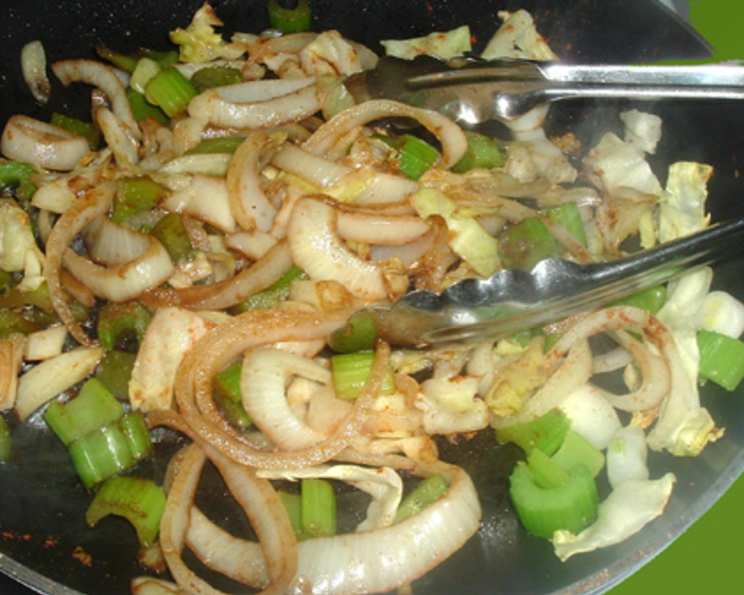
Oriental Cabbage: A Symphony of Simple Flavors
The aroma of sizzling cabbage, punctuated by the sharp tang of soy sauce, instantly transports me back to my grandmother’s cozy kitchen. She wasn’t one for elaborate dishes, but her “Oriental Cabbage,” as she called it, was a staple, a comforting bowl of vibrant vegetables that somehow managed to be both incredibly simple and deeply satisfying. It wasn’t fancy, but it was hers, a dish born of resourcefulness and love, and a testament to how even the humblest ingredients can create something truly special. It was a taste of home, a reminder of warmth and family, and a dish I’ve cherished and adapted ever since.
Recipe Overview
- Prep Time: 15 minutes
- Cook Time: 10 minutes
- Total Time: 25 minutes
- Servings: 4
- Dietary Type: Vegetarian, Vegan, Gluten-Free (check soy sauce)
Ingredients
- 1 lb cabbage, coarsely chopped
- 4 celery ribs, coarsely chopped
- 1 green pepper, coarsely chopped
- 1 large onion, cut in rings
- 2 tablespoons oil (vegetable, canola, or peanut oil work well)
- 3 tablespoons soy sauce (use tamari for gluten-free)
- 1/4 teaspoon paprika
Equipment Needed
- Large skillet or wok
- Cutting board
- Knife
- Stirring spoon
Instructions
-
Prepare the Vegetables: Thoroughly wash and coarsely chop the cabbage, celery ribs, and green pepper. Slice the onion into rings. Aim for roughly uniform sizes for even cooking.
-
Sauté the Vegetables: Heat the oil in a large skillet or wok over low heat. Once the oil is shimmering, add the chopped cabbage, celery, green pepper, and onion rings to the pan.
-
Cook Until Tender-Crisp: Sauté the vegetables over low heat for approximately 10 minutes, stirring occasionally. The goal is to soften the vegetables while still retaining some of their crispness. The cook time is dependent on your personal preference. Some prefer a well done cabbage.
-
Add Flavor: Pour the soy sauce over the sautéed vegetables. Sprinkle the paprika evenly over the mixture.
-
Combine and Serve: Stir the vegetables thoroughly to ensure they are evenly coated with the soy sauce and paprika. Continue to heat and stir for another minute or two to allow the flavors to meld together.
-
Serve Immediately: Serve the Oriental Cabbage hot as a side dish or as a light meal.
Expert Tips & Tricks
- Don’t Overcrowd the Pan: Sauté the vegetables in batches if necessary to avoid overcrowding the pan. Overcrowding can lower the temperature of the pan and result in steamed, rather than sautéed, vegetables.
- Adjust the Soy Sauce: Taste the cabbage after adding the soy sauce and adjust the amount to your liking. Some soy sauces are saltier than others.
- Add a Touch of Heat: For a spicier version, add a pinch of red pepper flakes along with the paprika.
- Use Fresh Ingredients: Fresh, high-quality vegetables will yield the best flavor and texture.
- Spice it up!: Add a dash of sesame oil right at the end for a deeper, richer flavor. But remember a little sesame oil goes a long way.
Serving & Storage Suggestions
Serve Oriental Cabbage hot as a flavorful side dish alongside grilled chicken, fish, or tofu. It also makes a satisfying light meal on its own.
Leftovers can be stored in an airtight container in the refrigerator for up to 3 days. To reheat, simply microwave or sauté in a pan until heated through. Note that the vegetables may soften slightly upon reheating.
This dish is best enjoyed fresh, as the cabbage can lose some of its texture after being stored. It is not recommended to freeze this dish.
Nutritional Information
| Nutrient | Amount per Serving | % Daily Value |
|---|---|---|
| Calories | 123 kcal | 6% |
| Total Fat | 7.1g | 10% |
| Saturated Fat | 0.9g | 4% |
| Cholesterol | 0mg | 0% |
| Sodium | 809mg | 33% |
| Total Carbohydrate | 13.5g | 4% |
| Dietary Fiber | 4.4g | 17% |
| Sugars | 7.4g | 29% |
| Protein | 4g | 7% |
Note: Nutritional information is an estimate and may vary based on specific ingredients and serving sizes.
Variations & Substitutions
- Protein Boost: Add some cooked tofu, edamame, or chickpeas for a protein-rich meal.
- Different Vegetables: Experiment with other vegetables such as carrots, bean sprouts, or mushrooms.
- Sweet and Sour: Add a touch of rice vinegar and brown sugar for a sweet and sour flavor profile.
- Ginger and Garlic: Add minced ginger and garlic to the skillet along with the other vegetables for extra flavor.
- Gluten-Free: Use tamari instead of soy sauce to make the dish gluten-free.
- Low Sodium: Use low-sodium soy sauce.
FAQs (Frequently Asked Questions)
Q: Can I use pre-shredded cabbage for this recipe?
A: Yes, you can use pre-shredded cabbage to save time. However, freshly chopped cabbage tends to have a better texture and flavor.
Q: Can I make this dish ahead of time?
A: While you can chop the vegetables ahead of time, it’s best to cook the dish fresh for the best texture and flavor. If you do make it ahead of time, store it in an airtight container in the refrigerator and reheat before serving.
Q: How do I prevent the cabbage from becoming too soggy?
A: Avoid overcrowding the pan and cook the cabbage over low heat to allow it to soften without steaming. Make sure you are constantly stirring the contents to evenly cook the cabbage.
Q: Can I use a different type of onion?
A: Yes, you can use any type of onion you prefer. Yellow onions, white onions, or even red onions will work well.
Q: Can I add other seasonings to this dish?
A: Absolutely! Feel free to experiment with other seasonings such as garlic powder, onion powder, or sesame seeds.
Final Thoughts
I truly encourage you to give this Oriental Cabbage recipe a try. It’s a testament to the beauty of simple ingredients and the power of home cooking. This dish will not only fill your belly but also warm your heart. Feel free to experiment with the recipe and make it your own! I would love to hear your feedback, pairings, and delicious variations on it!