
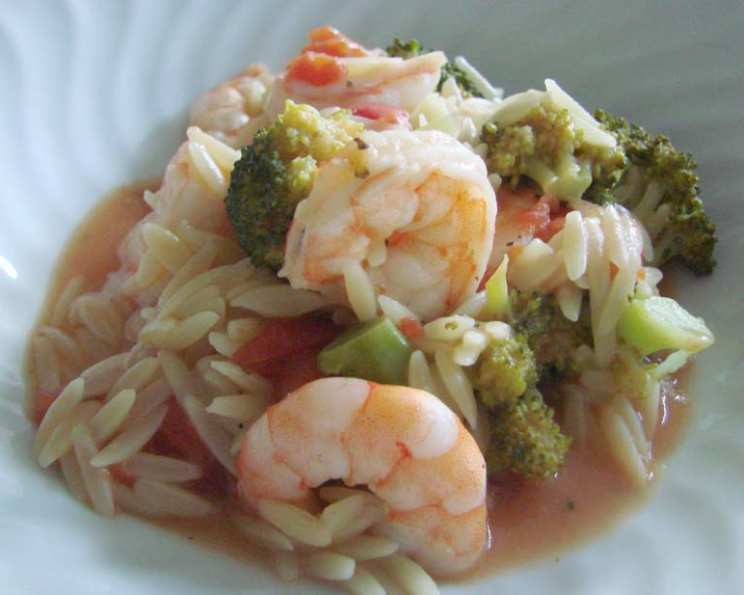
Orzo Shrimp Stew: A Taste of Home
The aroma of the sea mingled with sweet basil always transports me back to my grandmother’s kitchen. Every summer, we’d gather at her seaside cottage, the salt air thick with anticipation for the shrimp stew she’d simmer on her ancient stove. It wasn’t fancy, but it was our dish – a comforting medley of tender shrimp, plump orzo, and garden-fresh vegetables, each spoonful a reminder of sun-drenched days and the warmth of family. This recipe captures the heart of those cherished memories, offering a simple yet satisfying bowl of home.
Recipe Overview
- Prep Time: 15 minutes
- Cook Time: 9-10 minutes
- Total Time: 24-25 minutes
- Servings: 4
- Dietary Type: Pescatarian
Ingredients
- 2 ½ cups reduced-sodium chicken broth
- 5 cups broccoli florets
- 1 (14 ½ ounce) can diced tomatoes, undrained
- 1 cup uncooked orzo pasta
- 1 lb uncooked medium shrimp, peeled and deveined
- ¾ teaspoon salt
- ¼ teaspoon pepper
- 2 teaspoons dried basil
- 2 tablespoons butter
Equipment Needed
- Large nonstick skillet or saucepan
- Measuring cups and spoons
- Ladle (optional, for serving)
Instructions
-
In a large nonstick skillet or saucepan, bring the reduced-sodium chicken broth to a boil over high heat. Using reduced-sodium broth helps to control the overall saltiness of the stew, allowing the flavors of the shrimp and vegetables to shine.
-
Add the broccoli florets, diced tomatoes (undrained), and uncooked orzo pasta to the boiling broth. The tomatoes, with their juice, contribute acidity and body to the stew.
-
Reduce the heat to low; simmer, uncovered, for 5 minutes, stirring occasionally. This simmering stage allows the orzo to begin cooking and the broccoli to soften slightly. Stirring prevents the orzo from sticking to the bottom of the pan.
-
Add the uncooked medium shrimp, salt, and pepper. Ensure the shrimp are evenly distributed throughout the stew.
-
Cover and cook for 4-5 minutes or until the shrimp turn pink and are cooked through, and the orzo is tender. It’s crucial not to overcook the shrimp, as they will become rubbery. The internal temperature of the shrimp should reach 145°F (63°C). Check the orzo for doneness – it should be al dente, with a slight bite.
-
Stir in the dried basil and butter. The basil adds a touch of herbaceousness, while the butter enriches the stew, creating a silky texture and adding a subtle layer of flavor. Stir until the butter is fully melted and incorporated.
Expert Tips & Tricks
- Don’t overcook the shrimp! This is the most common mistake. As soon as they turn pink and opaque, they’re done.
- For a richer flavor, consider using shrimp stock instead of chicken broth. You can also use a combination of the two.
- To enhance the basil flavor, add a handful of fresh basil leaves just before serving.
- If you prefer a thicker stew, you can mix a tablespoon of cornstarch with two tablespoons of cold water and stir it into the stew during the last minute of cooking.
- A squeeze of lemon juice at the end can brighten the flavors and add a touch of acidity.
- For a spicier version, add a pinch of red pepper flakes along with the salt and pepper.
- If you want to make it a one-pot meal with vegetables, consider adding chopped zucchini, bell peppers, or spinach during the last few minutes of cooking.
- To ensure even cooking, use shrimp of similar size.
- Always devein your shrimp – this removes the digestive tract and any potential unpleasant flavors.
Serving & Storage Suggestions
Serve the Orzo Shrimp Stew immediately while it’s hot. Garnish with fresh basil or parsley for added visual appeal and flavor. A crusty bread, such as sourdough or baguette, is perfect for soaking up the flavorful broth. A side salad with a light vinaigrette can also complement the richness of the stew.
Leftovers can be stored in an airtight container in the refrigerator for up to 3 days. When reheating, do so gently over low heat to prevent the shrimp from becoming overcooked. You can also reheat it in the microwave, but be careful not to overheat it. Adding a splash of broth or water can help to prevent the orzo from drying out during reheating. Freezing is not recommended, as the texture of the orzo and shrimp may change upon thawing.
Nutritional Information
| Nutrient | Amount per Serving | % Daily Value |
|---|---|---|
| Calories | 404 kcal | N/A |
| Calories from Fat | 87 g | 22% |
| Total Fat | 9.8 g | 15% |
| Saturated Fat | 4.5 g | 22% |
| Cholesterol | 188.1 mg | 62% |
| Sodium | 939.4 mg | 39% |
| Total Carbohydrate | 45.6 g | 15% |
| Dietary Fiber | 3 g | 11% |
| Sugars | 4.8 g | 19% |
| Protein | 35.1 g | 70% |
Note: Nutritional information is an estimate and may vary based on specific ingredients and preparation methods.
Variations & Substitutions
- Gluten-Free: Use gluten-free orzo pasta.
- Vegetarian: Omit the shrimp and add more vegetables, such as mushrooms or diced carrots.
- Spicy: Add a pinch of red pepper flakes or a dash of hot sauce.
- Dairy-Free: Replace the butter with olive oil or a dairy-free butter substitute.
- Seafood Medley: Add other types of seafood, such as scallops or mussels, along with the shrimp.
- Lemon Herb: Add the zest and juice of one lemon and a tablespoon of chopped fresh herbs like parsley and dill at the end of cooking.
- Mediterranean Twist: Add Kalamata olives, feta cheese, and a sprinkle of oregano.
FAQs (Frequently Asked Questions)
Q: Can I use frozen shrimp?
A: Yes, you can use frozen shrimp. Just make sure to thaw them completely before adding them to the stew. Pat them dry with paper towels to remove any excess moisture.
Q: Can I make this stew ahead of time?
A: While it’s best served fresh, you can prepare the stew a few hours in advance. Keep it refrigerated and gently reheat before serving. Be mindful that the orzo may absorb some of the liquid, so you might need to add a little more broth when reheating.
Q: What if I don’t have orzo pasta?
A: You can substitute other small pasta shapes, such as ditalini or small shells. Just adjust the cooking time accordingly.
Q: Can I use fresh tomatoes instead of canned?
A: Yes, you can use fresh tomatoes. You’ll need about 1 ½ pounds of fresh tomatoes, diced.
Q: How do I know when the shrimp is cooked through?
A: The shrimp is cooked through when it turns pink and opaque. It should also feel firm to the touch. Avoid overcooking, as this will make the shrimp rubbery.
Final Thoughts
This Orzo Shrimp Stew is more than just a recipe; it’s a hug in a bowl, a taste of simple pleasures and shared moments. I encourage you to gather your ingredients, invite your loved ones, and create your own cherished memories around this comforting dish. Feel free to experiment with the variations and substitutions to make it your own signature recipe. And please, don’t hesitate to share your feedback and culinary adventures – I’m always eager to hear how this stew brings joy to your table! Consider pairing it with a crisp Sauvignon Blanc for a truly delightful experience. Happy cooking!