
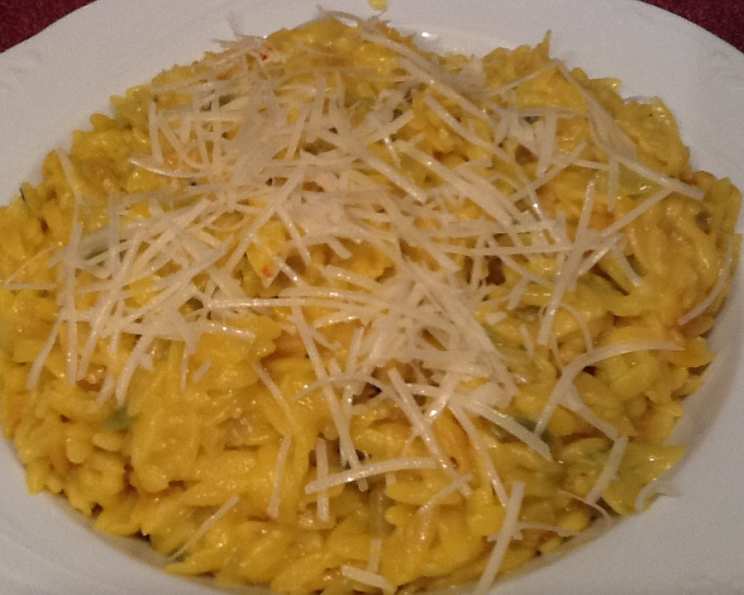
Orzo With Saffron and Romano Cheese: A Taste of Tuscan Sunshine
My grandmother, Nonna Emilia, always said that the simplest dishes are often the most sublime. I remember her tiny kitchen, filled with the aroma of simmering broths and freshly grated cheese. One afternoon, she tossed together a humble pasta dish with just a few ingredients – saffron, Romano, and a whisper of lemon. It was a revelation. The vibrant yellow hue, the delicate perfume of saffron, the salty bite of the cheese… it was pure, unadulterated comfort on a plate. This orzo recipe reminds me of that moment, of Nonna Emilia’s effortless grace and the magic she created with so little.
Recipe Overview
- Prep Time: 25 minutes
- Cook Time: 26 minutes
- Total Time: 51 minutes
- Servings: 6
- Yield: About 8 cups
- Dietary Type: Vegetarian
Ingredients
- ½ teaspoon crumbled saffron threads
- 1 tablespoon butter
- 1 tablespoon olive oil
- ⅓ cup shallot, finely minced
- 12 ounces dried orzo pasta
- 2 teaspoons fresh thyme leaves
- 2 teaspoons grated lemon peel
- 2 cups chicken stock
- ½ cup dry white wine (Note: For a non-alcoholic version, substitute chicken stock.)
- 2 tablespoons lemon juice
- ½ cup grated pecorino romano cheese (or ½ cup grated Parmesan cheese)
- Salt, to taste
- Freshly ground pepper, to taste
Equipment Needed
- Glass measuring cup
- Sauté pan
- Measuring spoons and cups
- Wooden spoon or spatula
- Lid for sauté pan
Instructions
-
First, we bloom the saffron to release its full flavor and color. In a glass measuring cup, combine the crumbled saffron threads and 1 cup of hot water. Let this steep for at least 20 minutes. The water will transform into a vibrant golden hue, and the aroma will fill your kitchen.
-
While the saffron is blooming, prepare the other ingredients. Mince the shallot finely, measure out the orzo, chop the fresh thyme, and grate the lemon peel and Romano cheese. Having everything prepped and ready to go makes the cooking process smoother and more enjoyable.
-
Now, it’s time to build the flavor base. In a sauté pan over medium heat, melt the butter along with the olive oil. The combination of butter and olive oil adds richness and prevents the butter from burning.
-
Once the butter is foamy, add the finely minced shallots to the pan. Cook until the shallots become translucent, about 1 minute. Be careful not to brown them; you want them to soften and release their delicate sweetness.
-
Stir in the dried orzo pasta, fresh thyme leaves, and grated lemon peel. Sauté the mixture, stirring often, until the orzo turns a beautiful golden brown color, about 5 minutes. Keep a close eye on the pasta and reduce the heat if necessary to prevent it from burning. Toasting the orzo adds a nutty depth of flavor to the dish.
-
Pour in the chicken stock, dry white wine, and the saffron-infused water (including the saffron threads). Bring the mixture to a boil, then immediately reduce the heat to maintain a gentle simmer.
-
Cover the pan tightly with a lid and cook until the liquid is completely absorbed and the orzo is tender and al dente, about 20 minutes. Resist the urge to lift the lid too often, as this will release steam and prolong the cooking time.
-
Once the orzo is cooked through and the liquid has been absorbed, remove the pan from the heat. Just before serving, stir in the lemon juice and the grated pecorino romano cheese (or Parmesan cheese).
-
Season the orzo with salt and freshly ground pepper to taste. Be generous with the pepper; it complements the richness of the cheese and the delicate flavor of the saffron.
-
Serve the orzo hot, garnished with a sprinkle of extra grated cheese and a sprig of fresh thyme, if desired.
Expert Tips & Tricks
- Bloom the Saffron: Don’t skip the step of blooming the saffron in hot water. This allows the threads to release their color and flavor more fully, resulting in a more vibrant and aromatic dish.
- Toast the Orzo: Toasting the orzo before adding the liquid adds a nutty flavor dimension and helps prevent it from becoming mushy. Keep a close watch and stir frequently to ensure it doesn’t burn.
- Wine Substitution: If you prefer not to use wine, substitute it with an equal amount of chicken stock. You can also add a splash of white grape juice for a touch of sweetness.
- Cheese Choice: Pecorino Romano has a sharper, saltier flavor than Parmesan. Choose whichever cheese you prefer or have on hand. Both work beautifully in this dish.
- Make Ahead: You can prepare the orzo up to a day in advance. Cool it completely and store it in an airtight container in the refrigerator. Reheat gently on the stovetop with a splash of chicken stock to loosen it up.
Serving & Storage Suggestions
This orzo dish is delicious served as a side dish alongside grilled chicken, fish, or roasted vegetables. It also makes a satisfying vegetarian main course. For a more complete meal, toss in some cooked shrimp, asparagus, or sun-dried tomatoes.
Leftovers can be stored in an airtight container in the refrigerator for up to 3 days. Reheat gently on the stovetop or in the microwave. Add a splash of chicken stock or water if needed to rehydrate the orzo. The dish is best enjoyed fresh, but leftovers are still quite tasty. Freezing is not recommended as the texture of the orzo may change.
Nutritional Information
| Nutrient | Amount per Serving | % Daily Value |
|---|---|---|
| Calories | 301.5 kcal | N/A |
| Calories from Fat | 54 g | 18% |
| Total Fat | 6 g | 9% |
| Saturated Fat | 1.9 g | 9% |
| Cholesterol | 7.5 mg | 2% |
| Sodium | 137 mg | 5% |
| Total Carbohydrate | 48 g | 15% |
| Dietary Fiber | 1.9 g | 7% |
| Sugars | 3.1 g | N/A |
| Protein | 9.8 g | 19% |
Note: Nutritional information is an estimate and may vary depending on specific ingredients and preparation methods.
Variations & Substitutions
- Vegan Option: Substitute the butter with vegan butter or olive oil. Use vegetable broth instead of chicken stock, and omit the cheese. You can add nutritional yeast for a cheesy flavor.
- Gluten-Free Option: Use gluten-free orzo pasta.
- Vegetable Additions: Add chopped vegetables such as zucchini, bell peppers, or spinach to the orzo during the last few minutes of cooking.
- Herb Variations: Experiment with different herbs such as rosemary, sage, or parsley.
FAQs (Frequently Asked Questions)
Q: Can I use vegetable broth instead of chicken stock?
A: Absolutely! Vegetable broth works perfectly well and makes the dish vegetarian. It will alter the flavor slightly, but still be delicious.
Q: How do I prevent the orzo from sticking to the pan?
A: Stir the orzo frequently, especially during the toasting process. Make sure there is enough liquid in the pan while it simmers.
Q: Can I use pre-grated cheese?
A: While convenient, pre-grated cheese often contains cellulose, which can prevent it from melting smoothly. Freshly grated cheese is always the best option.
Q: How can I tell if the orzo is cooked properly?
A: The orzo should be tender and slightly chewy, or al dente. Taste it to check for doneness. If it’s still too firm, add a little more liquid and continue cooking.
Q: Can I make this recipe in a rice cooker?
A: Yes, you can! Sauté the shallots, orzo, thyme, and lemon peel in the rice cooker pot. Then add the remaining ingredients and cook according to the rice cooker’s instructions for white rice.
Final Thoughts
This Orzo with Saffron and Romano Cheese is more than just a recipe; it’s a little taste of sunshine, a warm hug on a plate, and a reminder that the simplest pleasures are often the most profound. I encourage you to try it, experiment with your favorite variations, and share it with those you love. Don’t be afraid to adjust the seasonings to your liking and make it your own. And if you do, I’d love to hear about your experience! Perhaps pair it with a crisp glass of Pinot Grigio for an unforgettable meal. Buon appetito!