
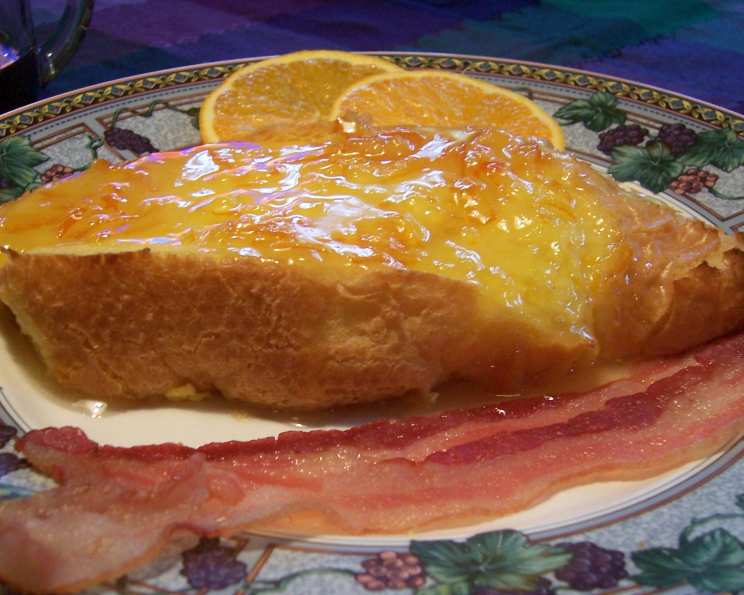
Overnight Orange French Toast: A Citrus-Kissed Breakfast Delight
The scent of orange zest and warm vanilla always transports me back to Sunday mornings at my grandmother’s house. She had a knack for making the simplest moments feel extraordinary, and her orange-infused French toast was the star of the show. The aroma would fill the air, a promise of sunshine and sweet indulgence, drawing everyone to the kitchen with eager anticipation. Each bite was a burst of citrusy brightness, a reminder of family, love, and the simple joy of a perfectly prepared breakfast.
Recipe Overview
- Prep Time: 15 minutes
- Cook Time: 15 minutes
- Total Time: Overnight + 30 minutes
- Servings: 8
- Dietary Type: Vegetarian
Ingredients
- 3 tablespoons freshly grated orange zest
- 2 cups fresh orange juice
- 1/4 cup sugar
- 1/2 teaspoon vanilla extract
- 2 tablespoons triple sec
- 6 large eggs
- 1/2 cup half-and-half
- 8 slices challah or 8 slices dense bakery bread, 1 inch thick, cut on the diagonal
- 3 tablespoons butter, melted
Sauce:
- 3 tablespoons butter
- 2 tablespoons orange marmalade
- 1 tablespoon triple sec
Accompaniment:
- Pure maple syrup
Equipment Needed
- 13×9 inch glass baking dish
- Whisk
- Large baking pan
- Slotted spatula
Instructions
-
In a large bowl, whisk together the freshly grated orange zest, fresh orange juice, sugar, vanilla extract, triple sec, eggs, half-and-half, and a pinch of salt. Ensure all ingredients are fully incorporated and the sugar is dissolved.
-
Arrange the bread slices in a single layer in a 13×9 inch glass baking dish. If the bread slices are very large, you may need to cut them to fit snugly in the dish.
-
Pour the orange-infused egg mixture evenly over the bread slices, making sure to turn each slice to ensure it’s thoroughly coated. This step is crucial for the bread to absorb the flavors overnight.
-
Cover the baking dish tightly with plastic wrap or a lid and chill in the refrigerator overnight. This allows the bread to soak up all the delicious citrusy custard.
-
The next morning, preheat your oven to 400°F (200°C). While the oven is preheating, brush a large baking pan generously with some of the melted butter.
-
Using a slotted spatula, carefully arrange the soaked bread slices in a single layer on the prepared baking pan, leaving at least 2 inches between each slice. This space is important for even browning and preventing the slices from steaming instead of baking.
-
Bake the French toast in the middle of the preheated oven for 5 minutes.
-
Rotate the pan and bake for another 5 minutes. Rotating the pan helps ensure even cooking, especially in ovens with hot spots.
-
Rotate the pan again and continue to bake until the bread is puffed and golden brown, about 5 minutes more. The internal temperature should reach 160°F. Keep a close eye on the French toast to prevent burning.
-
While the French toast is baking, prepare the sauce. In a small saucepan, cook the butter, orange marmalade, and triple sec over low heat, stirring constantly, until the butter is completely melted and the sauce is smooth and slightly thickened.
-
Once the French toast is done, drizzle generously with the warm orange marmalade sauce.
-
Serve immediately with pure maple syrup, if desired.
Expert Tips & Tricks
- For extra richness, substitute heavy cream for the half-and-half.
- If you don’t have challah bread, brioche or even a good quality sourdough will work well. Just make sure it’s a dense, sturdy bread that can stand up to soaking overnight.
- If you want to add some texture, sprinkle chopped pecans or walnuts over the French toast before baking.
- Don’t overcrowd the baking pan. Baking in batches is better than having soggy French toast.
- If the tops are browning too quickly, tent the pan with foil during the last few minutes of baking.
- To ensure the bread is fully soaked, gently press down on the slices after pouring the egg mixture over them.
- For a deeper orange flavor, use orange zest from multiple oranges.
Serving & Storage Suggestions
Serve the Overnight Orange French Toast immediately while it’s warm and golden brown. The orange marmalade sauce adds a beautiful glaze and a burst of flavor, but a simple dusting of powdered sugar or a dollop of whipped cream would also be delicious. Don’t forget the pure maple syrup!
Leftovers can be stored in an airtight container in the refrigerator for up to 3 days. To reheat, bake in a preheated oven at 350°F (175°C) for about 10 minutes, or until heated through. You can also reheat individual slices in the microwave, but the texture may be slightly softer. Freezing is not recommended, as the texture of the bread can become soggy.
Nutritional Information
| Nutrient | Amount per Serving | % Daily Value |
|---|---|---|
| Calories | 663.4 kcal | N/A |
| Calories from Fat | 299 g | 45% |
| Total Fat | 33.3 g | 51% |
| Saturated Fat | 16.7 g | 83% |
| Cholesterol | 415 mg | 138% |
| Sodium | 640.7 mg | 26% |
| Total Carbohydrate | 73.3 g | 24% |
| Dietary Fiber | 2.6 g | 10% |
| Sugars | 31 g | N/A |
| Protein | 19.1 g | 38% |
Variations & Substitutions
- Gluten-Free: Use gluten-free challah or brioche bread.
- Dairy-Free: Substitute almond milk or oat milk for the half-and-half. Use a dairy-free butter alternative.
- Booze-Free: Omit the triple sec or substitute with orange extract.
- Spiced Orange: Add a pinch of cinnamon, nutmeg, or cardamom to the egg mixture for a warm, spiced flavor.
- Berry Orange: Add fresh or frozen berries (such as blueberries, raspberries, or strawberries) to the baking dish along with the bread.
- Lemon Orange: Replace half of the orange juice with lemon juice for a tangy twist.
- Seasonal Fruit: During the fall, use apple cider instead of orange juice, and add diced apples to the soaking mixture. In the summer, peaches or nectarines work beautifully.
FAQs (Frequently Asked Questions)
Q: Can I use regular white bread for this recipe?
A: While you can use regular white bread, it won’t hold up as well as challah or brioche. These denser breads absorb the custard better and create a richer, more satisfying French toast.
Q: Can I make this recipe without the alcohol?
A: Absolutely! Simply omit the triple sec or substitute it with a teaspoon of orange extract. You’ll still get a delicious orange flavor.
Q: How do I know when the French toast is done?
A: The French toast is done when it’s puffed and golden brown and the internal temperature reaches 160°F. You can also gently press down on the center of a slice; it should feel firm and set.
Q: Can I prepare this ahead of time and bake it later?
A: The recipe is designed for overnight soaking, which is necessary to let the bread absorb all the flavors. You can prepare it up to 24 hours in advance and keep it refrigerated until ready to bake.
Q: What can I do if my French toast is soggy?
A: Make sure you’re using a dense bread and that you’re not overcrowding the baking pan. Also, ensure your oven is at the correct temperature and that you’re baking the French toast long enough for it to cook through.
Final Thoughts
This Overnight Orange French Toast is more than just a breakfast recipe; it’s an invitation to create cherished memories. The bright citrus flavors, combined with the comforting warmth of freshly baked bread, make it a perfect dish for special occasions or simply a cozy weekend morning. Gather your loved ones, brew a pot of coffee, and enjoy the simple pleasure of sharing a delicious meal together. Don’t hesitate to experiment with the variations and make it your own signature dish. I’d love to hear what you think, so share your experience and photos with me!