
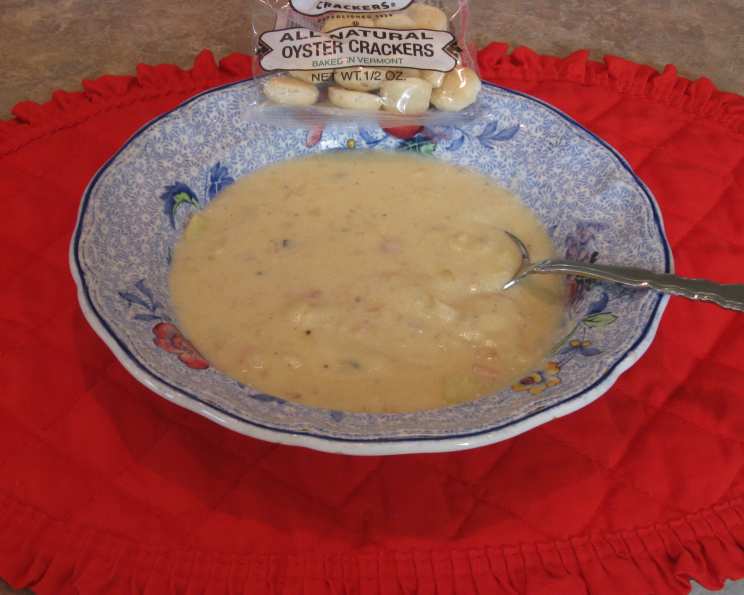
Oyster House Clam Chowder: A Taste of the Coast
The first time I tasted truly exceptional clam chowder, I was shivering on a windswept pier in Maine. The salty air nipped at my face, but one spoonful of that creamy, briny elixir warmed me from the inside out. It wasn’t just the temperature; it was the depth of flavor, the perfectly cooked clams, and the feeling of pure, unadulterated comfort that made it unforgettable. That chowder set a new standard, and ever since, I’ve been chasing that perfect bowl. This Oyster House Clam Chowder recipe comes remarkably close, capturing the essence of coastal indulgence in every spoonful.
Recipe Overview
- Prep Time: 30 minutes
- Cook Time: 35 minutes
- Total Time: 65 minutes
- Servings: 12
- Yield: Approximately 1 gallon
- Dietary Type: Not Gluten-Free
Ingredients
- 2 lbs potatoes, diced
- 64 ounces clam juice
- 4 lbs freshly cooked clams or 4 lbs frozen clams, diced
- 4 ounces salt pork
- 2 small onions, diced
- 8 ounces butter
- 2 ounces flour
- 32 ounces half-and-half, scalded
- Salt to taste
- Pepper to taste
- Hot pepper sauce to taste
- Worcestershire sauce to taste
- Oyster crackers, for garnish
Equipment Needed
- Large stockpot or Dutch oven
- Large skillet
- Cutting board
- Sharp knife
- Wooden spoon or spatula
Instructions
- In a large stockpot or Dutch oven, combine the diced potatoes and clam juice. Bring the mixture to a boil over medium-high heat.
- Reduce the heat to medium and simmer until the potatoes are tender, about 15-20 minutes. The potatoes should be easily pierced with a fork.
- Add the diced clams (along with any surplus clam juice from the cooked or thawed clams) to the pot.
- Cook until the clams are heated through and tender, about 5 minutes. Be careful not to overcook the clams, as they can become tough. Set the mixture aside.
- While the clams and potatoes are cooking, prepare the base for the chowder. Skin the salt pork and then dice it into small pieces.
- In a large skillet, sauté the diced salt pork over medium heat until it is rendered and crispy. This should take about 8-10 minutes.
- Add the diced onions to the skillet with the rendered salt pork. Sauté the onions until they are translucent and softened, about 5 minutes.
- Add the butter to the skillet. Melt the butter and cook it slightly, allowing it to bubble gently for about 1 minute.
- Sprinkle the flour over the butter and onion mixture. Whisk constantly to create a roux. If the mixture appears too loose, add a little more flour (a teaspoon at a time) until it thickens to a paste-like consistency.
- Cook the roux until it is lightly colored, about 2-3 minutes, stirring constantly to prevent burning. This step is crucial for developing a rich, nutty flavor.
- Bring the clam, potato, and clam juice mixture back to a boil over medium heat.
- Gradually add the cooked flour and salt pork mixture to the boiling clam chowder, stirring constantly to ensure it is fully incorporated and to prevent lumps from forming. The sauce will begin to thicken as the roux is added, so stir frequently.
- Bring the chowder to a rolling boil for 1-2 minutes, stirring constantly.
- Gradually add the scalded half-and-half to the chowder, stirring until it reaches your desired consistency. Scalding the half-and-half prevents curdling.
- Season the chowder to taste with salt, pepper, hot pepper sauce, and Worcestershire sauce. Start with small amounts of each seasoning and adjust as needed.
- Serve hot, garnished with oyster crackers.
Expert Tips & Tricks
- Don’t overcook the clams: Overcooked clams become rubbery and unpleasant. Cook them just until they are heated through.
- Scald the half-and-half: This prevents curdling when it’s added to the hot chowder. Simply heat the half-and-half in a saucepan until it’s steaming but not boiling.
- Make ahead: The chowder can be made a day in advance. The flavors will meld together even more overnight. Just be sure to store it properly in the refrigerator.
- Adjust the thickness: If you prefer a thicker chowder, add a slurry of cornstarch and water (1 tablespoon cornstarch mixed with 2 tablespoons cold water) to the boiling chowder until it reaches your desired consistency.
- Add bacon: For a smokier flavor, substitute bacon for salt pork.
- Spice it up: A dash of cayenne pepper or a few drops of your favorite hot sauce will add a nice kick.
Serving & Storage Suggestions
Serve the Oyster House Clam Chowder hot in bowls, garnished with oyster crackers. A sprinkle of fresh parsley or chives adds a pop of color. It pairs perfectly with crusty bread or a side salad.
Leftover chowder can be stored in an airtight container in the refrigerator for up to 3 days. Reheat gently on the stovetop over medium heat, stirring occasionally, until heated through. Avoid boiling when reheating, as this can cause the half-and-half to separate. You can also reheat individual portions in the microwave.
While freezing is not recommended due to the potential for texture changes in the clams and potatoes, it can be done. If freezing, allow the chowder to cool completely before transferring it to freezer-safe containers. Thaw in the refrigerator overnight before reheating.
Nutritional Information
| Nutrient | Amount per Serving | % Daily Value |
|---|---|---|
| Calories | 569.4 kcal | N/A |
| Calories from Fat | 301 g | 53% |
| Total Fat | 33.5 g | 51% |
| Saturated Fat | 18.1 g | 90% |
| Cholesterol | 128.2 mg | 42% |
| Sodium | 911.5 mg | 37% |
| Total Carbohydrate | 41.7 g | 13% |
| Dietary Fiber | 2.6 g | 10% |
| Sugars | 6.2 g | N/A |
| Protein | 25.2 g | 50% |
Note: Nutritional information is an estimate and may vary based on specific ingredients and portion sizes.
Variations & Substitutions
- Gluten-Free: Substitute the all-purpose flour with a gluten-free all-purpose flour blend. Ensure your oyster crackers are also gluten-free.
- Dairy-Free: Replace the half-and-half with a plant-based alternative such as oat milk or cashew cream. Be mindful that this will alter the flavor and richness of the chowder.
- Vegetarian (Clam-Free): While not technically clam chowder, you can create a delicious seafood-inspired vegetable chowder. Substitute the clams with hearty vegetables like corn, carrots, and celery, and use vegetable broth instead of clam juice. Add a teaspoon of kelp granules for a subtle “sea” flavor.
- Spicy Chowder: Add a pinch of cayenne pepper or a few dashes of your favorite hot sauce for an extra kick.
- Smoked Seafood Chowder: Incorporate smoked haddock or smoked salmon for a smoky depth of flavor.
FAQs (Frequently Asked Questions)
Q: Can I use canned clams instead of fresh or frozen?
A: While fresh or frozen clams are preferred for their superior flavor and texture, canned clams can be used in a pinch. Drain them well and be mindful of their salt content.
Q: How do I prevent the half-and-half from curdling?
A: Scalding the half-and-half before adding it to the hot chowder helps prevent curdling. Also, avoid boiling the chowder after adding the half-and-half.
Q: Can I make this chowder in a slow cooker?
A: Yes, you can adapt this recipe for a slow cooker. Sauté the salt pork and onions as directed, then transfer them to the slow cooker along with the potatoes, clam juice, and flour. Cook on low for 6-8 hours, or on high for 3-4 hours, until the potatoes are tender. Add the clams and scalded half-and-half during the last 30 minutes of cooking.
Q: How can I tell if the clams are cooked properly?
A: Cooked clams should be tender and heated through. Avoid overcooking, as this will make them tough and rubbery.
Q: What is the best way to thicken the chowder?
A: The roux of butter and flour is the primary thickening agent. If you prefer a thicker chowder, you can add a slurry of cornstarch and water (1 tablespoon cornstarch mixed with 2 tablespoons cold water) to the boiling chowder until it reaches your desired consistency.
Final Thoughts
This Oyster House Clam Chowder is more than just a recipe; it’s an invitation to experience the comforting flavors of the coast. Don’t be intimidated by the ingredient list or the number of steps. Each one contributes to the overall richness and depth of flavor. Gather your ingredients, put on some good music, and enjoy the process of creating a truly memorable meal. I encourage you to experiment with variations and substitutions to make it your own. And most importantly, share your culinary creation with those you love. Maybe with a crisp glass of white wine and good conversation? Bon appétit!