
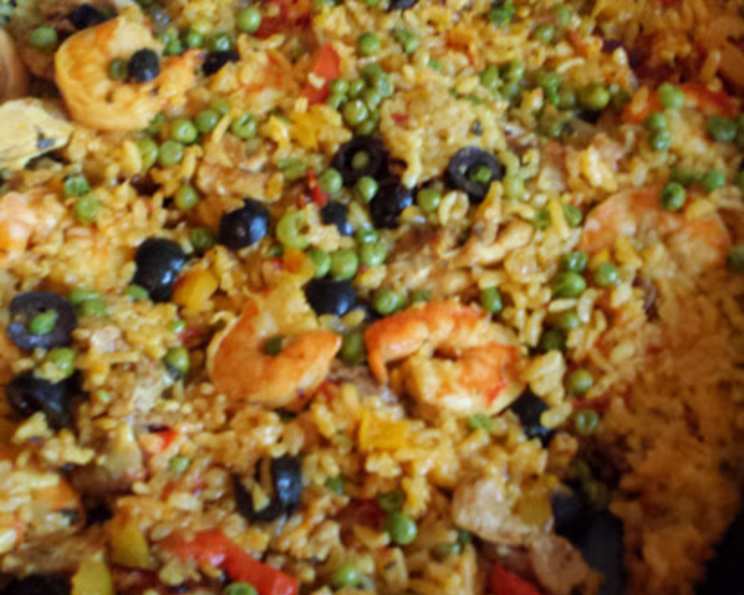
Paella, Ala Electric Skillet: A Culinary Journey Made Easy
The aroma of paella always transports me back to my grandmother’s sun-drenched kitchen in Valencia. I can almost feel the warmth on my skin as she expertly layered saffron-infused rice, succulent seafood, and vibrant vegetables into her enormous paella pan. While I may not have her traditional setup, this electric skillet version captures the heart of that cherished dish, making it accessible and achievable for any home cook.
Recipe Overview
- Prep Time: 30 minutes
- Cook Time: 40 minutes
- Total Time: 1 hour 10 minutes
- Servings: 8-10
- Yield: One large skillet of paella
- Dietary Type: Varies (can be made gluten-free)
Ingredients
- 2 (14 ounce) cans chicken broth
- ¾ cup white wine
- ¼ cup vermouth
- 1 teaspoon turmeric
- 2 teaspoons paprika
- 1 lb boneless skinless chicken thighs, cut into strips
- ½ lb Italian sausage, we prefer the hot type (2 links)
- 1 tablespoon olive oil
- 1 large green bell pepper, cut into thin slices
- 1 large red bell pepper, cut into thin slices
- 1 large white onion, halved and sliced thin
- 2 jalapeno peppers, seeded and chopped
- 5 cloves garlic, minced
- 1 teaspoon thyme
- 1 teaspoon oregano
- ½ teaspoon ground coriander
- 2 cups rice (short grain works best)
- 1 lb medium shrimp, raw, shells and tails removed
- 4 roma tomatoes, chopped
- 1 ½ cups fresh green beans or 1 ½ cups frozen green beans, sliced into ½ inch pieces
- ½ cup black olives, sliced
Equipment Needed
- Large electric skillet with lid
- Saucepan
- Knife
- Cutting board
- Spatula
Instructions
-
In a saucepan, combine the chicken broth, white wine, vermouth, turmeric, and paprika. Bring the mixture to a simmer, stirring occasionally to ensure the spices are well distributed. This saffron-infused liquid will be the heart and soul of your paella.
-
Remove the Italian sausage from its casings. Break the sausage into dime-sized pieces. Heat your electric skillet to medium-high heat and brown the sausage until cooked through. Remove the browned sausage from the skillet and set aside.
-
Add the chicken strips to the skillet and brown them on all sides. Ensure they are cooked through. Once browned, remove the chicken from the skillet and set aside with the sausage.
-
Pour the olive oil into the now-empty skillet. Add the sliced onions, green bell pepper, red bell pepper, and minced garlic to the skillet. Sauté the vegetables until they are tender and the onions become translucent. Be careful not to overcook the garlic, as it can become bitter. Aim for a softened, aromatic base.
-
Now, stir the thyme, oregano, and ground coriander into the hot wine mixture in the saucepan. This infuses the broth with an additional layer of flavor.
-
Return the browned chicken and sausage to the electric skillet with the sautéed vegetables. Pour the hot wine and spice mixture over the meat and vegetables. Stir gently to blend all the ingredients.
-
Bring the mixture to a low boil for 2-3 minutes, allowing the flavors to meld together. Then, add the rice to the skillet. Stir gently to spread the rice evenly across the bottom of the skillet.
-
Arrange the shrimp, chopped tomatoes, green beans, and sliced black olives on top of the rice mixture. Use a spatula to gently “tuck” the shrimp into the rice mixture, ensuring they are partially submerged in the liquid. DO NOT STIR the mixture after this point! This is crucial for developing the socarrat, the prized crispy rice crust on the bottom.
-
Allow the paella to boil for 4-5 minutes, uncovered. Then, cover the electric skillet with its lid, making sure the vent is closed to trap the steam.
-
Turn the heat down to a low setting, between 225-250 degrees Fahrenheit, and simmer the paella for 20 minutes. It is absolutely essential that you DO NOT LIFT THE COVER OR STIR during this time. The steam and gentle heat will cook the rice and seafood perfectly.
-
After 20 minutes, turn the heat OFF completely. Let the paella rest for 10 minutes, still covered. Again, DO NOT LIFT THE COVER OR STIR! This resting period allows the flavors to fully develop and the rice to absorb any remaining liquid.
-
Finally, after the resting period, you can lift the cover and admire your creation! Serve immediately and enjoy the delicious flavors of your homemade paella.
Expert Tips & Tricks
- Socarrat Perfection: To encourage a good socarrat, you can increase the heat slightly during the last few minutes of cooking, but watch carefully to prevent burning. Listen for a faint crackling sound – that’s the socarrat forming!
- Seafood Safety: Don’t overcook the shrimp! They should be pink and opaque. Overcooked shrimp will be rubbery.
- Spice Level: Adjust the amount of jalapeno peppers to suit your preferred spice level. For a milder dish, remove the seeds and membranes entirely.
- Stock Options: If you don’t have chicken broth, seafood broth or vegetable broth can be used as a substitute.
- Rice Choice: Using a short-grain rice like Bomba rice is ideal for paella, as it absorbs liquid well and maintains its shape. If you can’t find Bomba rice, use another short-grain variety.
Serving & Storage Suggestions
Serve your paella hot, straight from the skillet. Garnish with fresh parsley or a squeeze of lemon for added brightness. Paella is a fantastic dish for sharing, perfect for gatherings with friends and family.
Leftovers can be stored in an airtight container in the refrigerator for up to 3 days. To reheat, gently warm the paella in a skillet over low heat, adding a splash of broth or water if needed to prevent drying. Alternatively, you can reheat it in the microwave. Note that the texture of the rice may change slightly upon reheating. Freezing is not recommended as it affects the texture of the rice.
Nutritional Information
| Nutrient | Amount per Serving | % Daily Value |
|---|---|---|
| Calories | 477 kcal | N/A |
| Total Fat | 14.4 g | 22% |
| Saturated Fat | 4 g | 20% |
| Cholesterol | 135 mg | 45% |
| Sodium | 1109 mg | 46% |
| Total Carbohydrate | 49.8 g | 16% |
| Dietary Fiber | 3.4 g | 13% |
| Sugars | 4.6 g | N/A |
| Protein | 31.3 g | 62% |
Note: Nutritional information is an estimate and may vary based on specific ingredients and portion sizes.
Variations & Substitutions
- Seafood Fiesta: Add mussels, clams, or calamari for a more diverse seafood paella.
- Vegetarian Delight: Omit the chicken and sausage and add more vegetables like artichoke hearts, asparagus, or mushrooms. Use vegetable broth instead of chicken broth.
- Spicy Kick: Add a pinch of cayenne pepper or a dash of hot sauce for extra heat.
- Saffron Infusion: While turmeric provides color, a pinch of saffron threads will add a more authentic paella flavor. Steep the saffron threads in the warm broth mixture for at least 15 minutes before adding it to the skillet.
FAQs (Frequently Asked Questions)
Q: Can I make this paella ahead of time?
A: While paella is best served immediately, you can prep the ingredients in advance. Chop the vegetables, measure out the spices, and prepare the broth mixture ahead of time to save time during cooking.
Q: Can I use frozen shrimp in this recipe?
A: Yes, you can use frozen shrimp. Make sure to thaw them completely before adding them to the paella. Pat them dry to remove excess moisture.
Q: What if I don’t have vermouth?
A: If you don’t have vermouth, you can substitute it with dry sherry or simply use more white wine.
Q: How do I know when the paella is done?
A: The rice should be tender and have absorbed most of the liquid. The shrimp should be pink and opaque. Listen for a faint crackling sound, which indicates the formation of the socarrat.
Q: Can I use a different type of rice?
A: While short-grain rice is recommended, you can use medium-grain rice like Arborio rice if you can’t find short-grain. Avoid using long-grain rice, as it won’t absorb the liquid as well.
Final Thoughts
So, there you have it – a delicious and accessible paella recipe adapted for the convenience of an electric skillet. Don’t be intimidated by the list of ingredients; the process is surprisingly straightforward. Gather your ingredients, put on some music, and enjoy the journey of creating this vibrant and flavorful dish. I encourage you to try it out, experiment with your favorite ingredients, and share your culinary creations with loved ones. Buen provecho!