
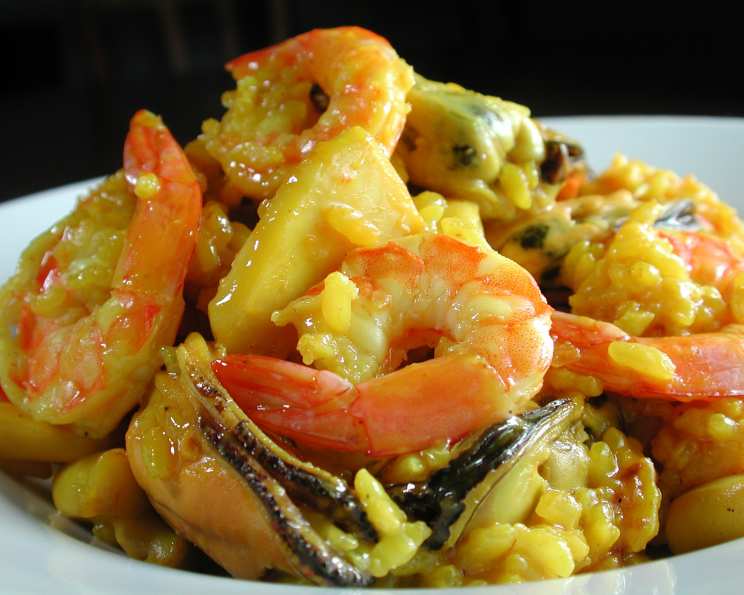
Paella Marinara: A Taste of the Spanish Coast
The scent of the sea, mingling with saffron and garlic, always transports me back to a tiny taverna I stumbled upon in Barcelona. Sunlight streamed through the open doorway as I watched the chef, a weathered man with knowing eyes, expertly build a paella over an open fire. Each layer he added – the glistening rice, the plump shrimp, the briny mussels – seemed to whisper stories of the Mediterranean. That first bite, bursting with flavor, was an epiphany. It wasn’t just a meal; it was a journey. And it’s a journey I’ve tried to recreate in my own kitchen ever since.
Recipe Overview
- Prep Time: 20 minutes
- Cook Time: 30 minutes
- Total Time: 50 minutes
- Servings: 5
- Yield: 1 Paella
- Dietary Type: Gluten-Free
Ingredients
- 1 lb fresh shrimp, peeled and deveined
- 1 lb squid, cleaned and cut into rings
- 1 lb mussels, scrubbed and debearded
- 2 cups short-grain rice (such as Bomba or Arborio)
- 1 onion, minced
- 1 tablespoon tomato paste
- ½ green pepper, diced
- ½ red pepper, diced
- 2 garlic cloves, minced
- 3 tablespoons olive oil
- ½ teaspoon saffron threads
- Salt, to taste
- Pepper, to taste
- 5 cups water
Equipment Needed
- Large Paella Pan or Wide Skillet
- Cutting Board
- Sharp Knife
- Large Spoon
Instructions
- Heat half of the olive oil (1.5 tablespoons) in a large paella pan or wide skillet over medium heat.
- Add the minced onion and minced garlic to the pan. Stir frequently for about 3 minutes, until the onion becomes translucent and fragrant. Be careful not to burn the garlic.
- Add the diced green pepper and diced red pepper to the pan. Stir in the tomato paste. Continue to stir and cook for another 2-3 minutes, allowing the peppers to soften slightly and the tomato paste to caramelize a bit, deepening its flavor.
- Add the squid rings, rice, saffron threads, salt, and pepper to the pan. Stir everything together to coat the rice and squid with the vegetable mixture. Cook for 2-3 minutes, allowing the rice to lightly toast. This step is crucial for developing the characteristic paella flavor.
- Pour in the warm water (5 cups). Ensure the water is evenly distributed. Bring the mixture to a gentle simmer.
- Add the remaining olive oil (1.5 tablespoons) over the surface of the paella.
- Once the water is mostly absorbed and the rice is beginning to appear at the surface (about 15-20 minutes), gently nestle the shrimp and mussels into the rice. The mussels should be arranged hinge-side down so they open properly.
- Continue to cook, uncovered, without stirring, for about 10 minutes more, or until the mussels have opened and the shrimp are pink and cooked through. The rice should be tender and most of the liquid should be absorbed. A crispy bottom layer, called the socarrat, should start to form. Listen for a faint crackling sound. This is a desired characteristic of good paella. Discard any mussels that do not open.
- Remove the paella from the heat and let it rest for 5-10 minutes before serving. This allows the flavors to meld and the rice to settle.
Expert Tips & Tricks
- Use the right rice: Short-grain rice like Bomba or Arborio is essential for paella. They absorb liquid well without becoming mushy.
- Don’t stir! Resist the urge to stir the paella after adding the rice and water. Stirring releases starch and can make the paella gluey.
- Achieving Socarrat: The socarrat, the crispy caramelized rice at the bottom of the pan, is a sign of a perfectly cooked paella. To achieve this, increase the heat slightly during the last few minutes of cooking. Listen carefully for the crackling sound.
- Saffron Infusion: For a more intense saffron flavor, you can infuse the saffron threads in a small amount of warm water or broth for about 30 minutes before adding them to the paella.
- Make-Ahead Prep: You can chop the vegetables and clean the seafood ahead of time to streamline the cooking process.
Serving & Storage Suggestions
Serve the Paella Marinara hot, directly from the pan. Garnish with fresh parsley or lemon wedges for a burst of freshness. A side of crusty bread is perfect for soaking up the flavorful juices.
Leftovers can be stored in an airtight container in the refrigerator for up to 2 days. To reheat, gently warm the paella in a skillet over low heat with a splash of water or broth to prevent it from drying out. Reheating in the microwave is also an option, but the texture of the rice may be slightly different. Freezing is not recommended as it can affect the texture of the seafood and rice.
Nutritional Information
| Nutrient | Amount per Serving | % Daily Value |
|---|---|---|
| Calories | 603.9 kcal | N/A |
| Calories from Fat | 115 g | 19% |
| Total Fat | 12.8 g | 19% |
| Saturated Fat | 2.1 g | 10% |
| Cholesterol | 351.8 mg | 117% |
| Sodium | 850.3 mg | 35% |
| Total Carbohydrate | 74.7 g | 24% |
| Dietary Fiber | 3.2 g | 12% |
| Sugars | 2.1 g | N/A |
| Protein | 43.2 g | 86% |
Note: Nutritional information is an estimate and may vary based on specific ingredients and preparation methods.
Variations & Substitutions
- Vegetarian Paella: Omit the seafood and add more vegetables like artichoke hearts, mushrooms, and asparagus.
- Chicken and Chorizo Paella: Substitute the seafood with chicken thighs and chorizo sausage for a heartier dish.
- Spicy Paella: Add a pinch of chili flakes or a chopped chili pepper to the paella for a spicy kick.
- Seafood Medley: Feel free to add other types of seafood such as clams, scallops, or lobster.
- Rice Substitution: While short-grain rice is best, you can use medium-grain rice like Calrose in a pinch.
- Broth instead of water: For an even richer flavor, substitute the water with seafood or chicken broth.
FAQs (Frequently Asked Questions)
Q: Can I use frozen shrimp and squid?
A: Yes, you can use frozen shrimp and squid, but make sure to thaw them completely and pat them dry before adding them to the paella. Fresh seafood is always preferred for the best flavor and texture.
Q: How do I know when the paella is done?
A: The paella is done when the rice is tender, the seafood is cooked through, and most of the liquid has been absorbed. You should also hear a faint crackling sound from the bottom of the pan, indicating the formation of the socarrat.
Q: What if my mussels don’t open?
A: Discard any mussels that do not open during cooking. They are likely not safe to eat.
Q: Can I make paella in the oven?
A: Yes, you can finish cooking the paella in the oven if your stovetop doesn’t distribute heat evenly. Preheat your oven to 350°F (175°C) and transfer the paella to the oven once the rice has absorbed most of the liquid.
Q: What is saffron and can I substitute it?
A: Saffron is a spice derived from the Crocus sativus flower. It adds a distinctive flavor, color, and aroma to paella. It is quite expensive. A pinch is all you need. While there’s no perfect substitute, turmeric can be used for color, but it won’t replicate the unique flavor of saffron.
Final Thoughts
Paella Marinara is more than just a recipe; it’s an experience. It’s a celebration of flavors, textures, and the joy of sharing a meal with loved ones. Don’t be intimidated by the process. Embrace the journey, experiment with different ingredients, and most importantly, have fun! I encourage you to try this recipe and bring a taste of the Spanish coast to your own kitchen. And when you do, I’d love to hear about your experience and any variations you create. Perhaps serve it with a crisp glass of Albariño for the perfect Mediterranean pairing. ¡Buen provecho!