
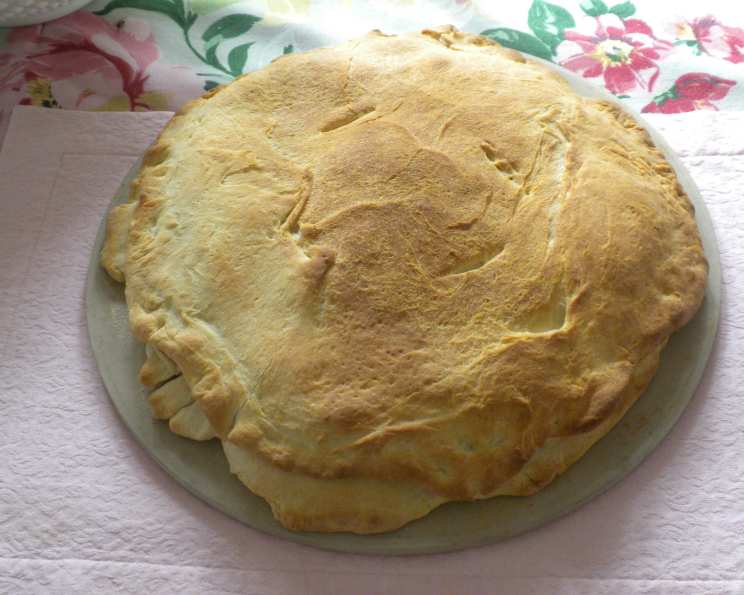
Pagac: A Taste of Carpatho-Rusyn Tradition
The memory still warms me like a cozy kitchen on a winter’s day. I was a child, perched on a stool, watching my grandmother meticulously layer a savory filling between two sheets of dough. The aroma of browned butter and onions filled the air, a promise of the comforting, hearty Pagac that would soon emerge from the oven. Each bite was a taste of heritage, a connection to generations past. This recipe, adapted from a cherished cookbook, seeks to recapture that magic and share a taste of Carpatho-Rusyn tradition with you.
Recipe Overview
- Prep Time: 1 hour
- Cook Time: 32-40 minutes
- Total Time: 3 hours
- Servings: 8-10
- Yield: 1 large flatbread
- Dietary Type: Vegetarian (can be made vegan with substitutions)
Ingredients
For the Dough:
- ¾ cup milk, scalded
- 1 teaspoon salt
- 4 tablespoons sugar
- 3 tablespoons Crisco shortening
- 3 cups flour
- 1 egg, slightly beaten
- 1 package (about 2 ¼ teaspoons) cake yeast
- ¼ cup lukewarm water
For the Pagac Filling:
- 5 medium potatoes, peeled, chopped, and boiled
- 1 teaspoon salt
- 4 ounces American cheese, cut into pieces
- 4 ounces sharp cheddar cheese, cut into pieces
- 2 small onions, chopped
- 2 tablespoons butter
- ½ cup butter, browned
Equipment Needed
- Large mixing bowl
- Measuring cups and spoons
- Saucepan
- Cookie sheet or pizza stone
- Rolling pin
- Potato masher
Instructions
-
Begin by preparing the dough. Scald the milk in a saucepan. This means heating it until it just begins to simmer, with tiny bubbles forming around the edges. Remove from heat and pour the hot milk over the salt, sugar, and shortening in a large mixing bowl. Stir until the salt, sugar, and shortening are dissolved.
-
Cool the milk mixture to lukewarm. This is crucial, as hot liquid will kill the yeast. Test the temperature by dipping a finger into the mixture; it should feel comfortably warm, not hot.
-
Add the slightly beaten egg to the cooled milk mixture and stir to combine.
-
In a separate small bowl, dissolve the cake yeast in the lukewarm water. Let it stand for about 5 minutes, or until it becomes foamy. This indicates that the yeast is active and ready to use.
-
Add the dissolved yeast mixture to the milk mixture and stir well.
-
Gradually add about half of the flour (approximately 1 ½ cups) to the wet ingredients. Beat the mixture vigorously until it forms a smooth batter. This step is important for developing gluten and creating a light, airy dough.
-
Add the remaining flour gradually, continuing to beat well after each addition. The dough will become thicker and more difficult to stir.
-
Turn the dough out onto a lightly floured board. Knead the dough for about 5 minutes, until it becomes smooth and elastic. Add more flour if the dough is too sticky, but be careful not to add too much, as this can make the pagac tough.
-
Place the kneaded dough in a greased bowl, turning it to coat all sides with grease. This will prevent the dough from drying out as it rises.
-
Cover the bowl with a clean cloth or plastic wrap and let it rise in a warm place until it has doubled in bulk, about 2 hours. The rising time may vary depending on the temperature of your kitchen.
-
While the dough is rising, prepare the filling. Peel, chop, and boil the potatoes in salted water until they are tender. Drain the potatoes well.
-
While the potatoes are still hot, drain them well and cut the American and cheddar cheeses into pieces and add them to the drained potatoes.
-
In a skillet, brown the chopped onions in the 2 tablespoons of butter over medium heat until they are softened and golden brown. Be careful not to burn them.
-
Slowly brown the ½ cup butter over low heat, watching carefully until it turns a nutty brown color and has a rich aroma. This is crucial for the filling’s flavor. Remove from heat immediately to prevent burning.
-
Pour the browned butter and browned onions into the potato and cheese mixture.
-
Mash the potato mixture well until it is smooth and creamy. Season with salt to taste. Allow the filling to cool slightly before using.
-
Once the dough has doubled in bulk, divide it into two equal portions.
-
Flatten one portion of the dough and place it on a cookie sheet or pizza stone. (You can roll it out directly on the stone.) Spread the potato and cheese filling evenly over the dough, leaving a small border around the edges.
-
Flatten the remaining portion of the dough and carefully place it on top of the filling. Pinch the edges of the top and bottom layers of dough together to seal the filling inside. You can also roll out the second portion on a board and then carefully transfer it to the top.
-
Spread the melted butter evenly over the top of the pagac. This will give it a beautiful golden-brown color and add richness to the flavor.
-
Bake in a preheated oven at 350 degrees F (175 degrees C) for 32 to 40 minutes, or until the pagac is golden brown and the filling is heated through. The baking time may vary depending on your oven, so keep a close eye on it.
-
Remove the pagac from the oven and let it cool slightly before slicing and serving.
Expert Tips & Tricks
- For a richer flavor, use clarified butter (ghee) instead of regular butter for browning.
- If you don’t have cake yeast, you can substitute with active dry yeast. Use the same amount (2 ¼ teaspoons) and proof it in the lukewarm water for 5-10 minutes until foamy.
- The filling can be made ahead of time and stored in the refrigerator for up to 2 days.
- To prevent the bottom crust from becoming soggy, preheat the cookie sheet or pizza stone in the oven before placing the dough on it.
- If the top crust starts to brown too quickly, tent it with aluminum foil during the last 10-15 minutes of baking.
Serving & Storage Suggestions
Pagac is best served warm, either as a main course or a side dish. It pairs well with a simple salad or a bowl of hearty soup. Leftover pagac can be stored in the refrigerator for up to 3 days. Reheat it in the oven or microwave until warmed through. Pagac can also be frozen for longer storage. Wrap it tightly in plastic wrap and then in aluminum foil. It will keep in the freezer for up to 2 months. Thaw overnight in the refrigerator before reheating.
Nutritional Information
| Nutrient | Amount per Serving | % Daily Value |
|---|---|---|
| Calories | 604.5 kcal | N/A |
| Calories from Fat | 265 g | 44% |
| Total Fat | 29.5 g | 45% |
| Saturated Fat | 16.3 g | 81% |
| Cholesterol | 88.7 mg | 29% |
| Sodium | 965.1 mg | 40% |
| Total Carbohydrate | 69.8 g | 23% |
| Dietary Fiber | 4.7 g | 18% |
| Sugars | 8.3 g | N/A |
| Protein | 15.9 g | 31% |
Note: Nutritional information is an estimate and may vary based on specific ingredients and portion sizes.
Variations & Substitutions
- Vegan Pagac: Substitute the milk with unsweetened almond milk or soy milk. Use vegan shortening instead of Crisco. Replace the egg with 1 tablespoon of flaxseed meal mixed with 3 tablespoons of water (let it sit for 5 minutes to thicken). Use vegan cheese shreds or a cashew-based cheese sauce for the filling.
- Different Cheese Combinations: Experiment with different types of cheeses in the filling, such as provolone, mozzarella, or feta.
- Adding Vegetables: Add other vegetables to the filling, such as sautéed mushrooms, spinach, or bell peppers.
- Spicy Pagac: Add a pinch of red pepper flakes or a dash of hot sauce to the filling for a spicy kick.
FAQs (Frequently Asked Questions)
Q: Why is it important to scald the milk?
A: Scalding the milk helps to denature the proteins, which results in a softer dough. It also helps to dissolve the sugar and salt more easily.
Q: Can I use a stand mixer to make the dough?
A: Yes, you can use a stand mixer with a dough hook attachment to make the dough. Mix on low speed until the dough comes together, then increase the speed to medium and knead for about 5 minutes.
Q: How can I tell if the dough has risen enough?
A: The dough has risen enough when it has doubled in bulk and is light and airy. You can also gently press your finger into the dough; if the indentation remains, the dough is ready to be shaped.
Q: Can I make the dough ahead of time and refrigerate it?
A: Yes, you can make the dough ahead of time and refrigerate it for up to 24 hours. Punch down the dough before refrigerating, and let it come to room temperature before shaping and baking.
Q: What can I do if my pagac is browning too quickly in the oven?
A: If the pagac is browning too quickly, tent it with aluminum foil during the last 10-15 minutes of baking. This will prevent the top from burning while the inside cooks through.
Final Thoughts
This Pagac recipe is more than just a set of instructions; it’s a connection to heritage, a taste of comfort, and a celebration of simple, wholesome ingredients. Don’t be intimidated by the multiple steps – each one is a small contribution to a truly rewarding culinary experience. Gather your ingredients, embrace the process, and let the aroma of baking pagac fill your kitchen with warmth and nostalgia. I encourage you to try this recipe and share your creations with loved ones. Feel free to experiment with variations and make it your own!