
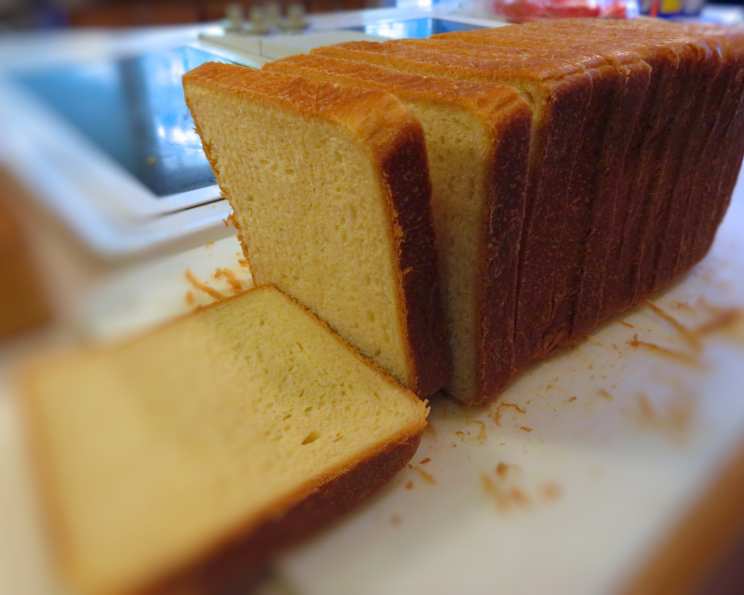
The Quintessential Pain de Mie: A Baker’s Journey
I remember the first time I tasted truly exceptional sandwich bread. It was in a tiny Parisian boulangerie, the air thick with the aroma of warm yeast and melted butter. The Pain de Mie, as it was called, possessed a texture so fine, so yielding, that it practically melted on my tongue. From that moment, I was determined to recreate that experience in my own kitchen, chasing the perfect crumb and subtle sweetness that made it so unforgettable. The quest led me through countless recipes and techniques, all culminating in this version, a testament to the art of simple perfection.
Recipe Overview
- Prep Time: 30 minutes
- Cook Time: 45 minutes
- Total Time: 2 hours 45 minutes (including proofing)
- Yields: 1 loaf
- Serves: 10
- Dietary Type: Not suitable for vegan or gluten-free diets
Ingredients
- 113 g unsalted butter, softened
- 630 g all-purpose flour
- 16 g kosher salt
- 25 g granulated sugar
- 31 g dry milk
- 6 g instant active dry yeast
- 378 g water
Equipment Needed
- Stand mixer
- Rolling pin
- 13-inch Pullman pan (with lid)
- Nonstick spray
- Lightly floured surface
- Sheet pan (optional)
Instructions
-
Begin by preparing the butter. Remove it from the refrigerator and use a rolling pin to gently pound it until softened. The goal is to make it pliable and easily incorporated into the dough. Aim for a consistency where a light touch leaves an impression.
-
In the bowl of a stand mixer, combine all the remaining ingredients: flour, salt, sugar, dry milk, yeast, and water.
-
Using the mixer with the dough hook attachment, mix on slow speed for 4 minutes. This allows the dry ingredients to hydrate properly and begin forming a cohesive mass.
-
Increase the mixer speed to medium. Add half of the softened butter to the dough and mix for 1 minute. This initial addition of butter starts the process of enriching the dough.
-
Add the remaining softened butter and mix for an additional 5 minutes. Continue mixing until all the butter is fully incorporated into the dough. The dough should become strong and supple, with the butter completely disappearing into the mix. This step is crucial for developing the characteristic texture of Pain de Mie.
-
Cover the dough and let it ferment for 1 hour and 15 minutes, performing a fold after 45 minutes. The fold helps develop strength and even out the temperature. To fold, gently stretch a portion of the dough upwards and fold it over onto itself. Repeat this several times around the dough ball.
-
Spray a 13-inch Pullman pan with nonstick spray. This ensures the Pain de Mie will release easily after baking.
-
Carefully turn the dough onto a lightly floured surface. Gently de-gas the dough by patting it into a rectangular shape. This helps to even out the air pockets in the dough.
-
Divide the rectangle roughly in half. It’s okay if the portions are not exactly the same weight.
-
Shape each piece into a baguette-like rope, approximately 20 inches long.
-
Lightly twist the two ropes together and place them into the prepared Pullman pan.
-
Place the lid on the pan, but leave it open 1-2 inches. This allows you to monitor the dough’s progress as it proofs.
-
The dough will require 1 to 1 1/2 hours to achieve full volume. It’s ready to bake when the top surface of the dough is about 1/2 inch below the lid of the pan.
-
Once proofed, close the lid completely before baking.
-
Bake at 450°F (232°C) for 10 minutes. Then, lower the temperature to 350°F (177°C) and bake for another 25 minutes.
-
Remove the lid from the pan and bake for an additional 10 minutes.
-
Check the sidewall of the loaf. It should be solid and golden brown. If it isn’t, invert the pan and let the Pain de Mie slide out onto a sheet pan. Bake for an extra 5 minutes, or until the sidewalls have enough structure to hold up the weight of the loaf. This ensures that the crust is evenly browned and the loaf is fully baked.
Expert Tips & Tricks
- The key to a tender Pain de Mie is properly softened butter. If the butter is too cold, it won’t incorporate smoothly into the dough, resulting in a tough texture.
- Don’t skip the folding step during the fermentation process. It strengthens the gluten and contributes to the bread’s structure.
- The Pullman pan is essential for the signature rectangular shape and tight crumb of Pain de Mie. If you don’t have one, you can bake the dough in a regular loaf pan, but the shape and texture will be different. In this case, brush the top with egg white before baking and slash the top to allow for expansion.
- If your oven tends to brown quickly, you can tent the loaf with foil during the final baking stage to prevent it from burning.
Serving & Storage Suggestions
Pain de Mie is the quintessential sandwich bread, perfect for everything from classic deli sandwiches to elegant tea sandwiches. Its soft texture and mild flavor also make it ideal for toast, French toast, and bread pudding.
To store, wrap the cooled loaf tightly in plastic wrap or place it in an airtight container. It will keep at room temperature for 2-3 days, in the refrigerator for up to a week, or in the freezer for up to 2 months. To reheat frozen Pain de Mie, thaw it completely and then toast or warm it in the oven.
Nutritional Information
| Nutrient | Amount per Serving | % Daily Value |
|---|---|---|
| Calories | 336.9 kcal | N/A |
| Calories from Fat | N/A | 28% |
| Total Fat | 10.6 g | 16% |
| Saturated Fat | 6.4 g | 31% |
| Cholesterol | 27.2 mg | 9% |
| Sodium | 714.5 mg | 29% |
| Total Carbohydrate | 52 g | 17% |
| Dietary Fiber | 1.9 g | 7% |
| Sugars | 3.9 g | N/A |
| Protein | 7.7 g | N/A |
Note: Nutritional information is an estimate and may vary based on specific ingredients and preparation methods.
Variations & Substitutions
- For a richer flavor, try using brown butter instead of regular softened butter.
- Add herbs like rosemary or thyme to the dough for a savory twist.
- Substitute a portion of the all-purpose flour with whole wheat flour for a nuttier flavor and increased fiber. Keep in mind this will alter the texture slightly.
- For a sweeter Pain de Mie, add a touch of honey or maple syrup to the dough.
FAQs (Frequently Asked Questions)
Q: Can I make this recipe without a stand mixer?
A: While a stand mixer makes the process easier, you can knead the dough by hand. It will require more time and effort, but it’s definitely possible. Knead for about 10-12 minutes until the dough is smooth and elastic.
Q: What if I don’t have a Pullman pan?
A: You can use a regular loaf pan, but the shape will be different. Also, since the dough won’t be fully contained, brush the top of the dough with egg white for browning and make a slash on top to allow expansion.
Q: Why is the butter softened and not melted?
A: Softened butter incorporates more evenly into the dough, creating a tender texture. Melted butter can make the dough greasy and affect the final product.
Q: How do I know when the dough is properly proofed?
A: The dough is ready to bake when it has nearly doubled in size and the top surface is about 1/2 inch below the lid of the Pullman pan. It should feel light and airy to the touch.
Q: My Pain de Mie is browning too quickly. What should I do?
A: Tent the loaf with aluminum foil during the final baking stage to prevent it from burning.
Final Thoughts
Embarking on the journey to bake your own Pain de Mie is an act of love. It’s a dedication to simple ingredients, time-honored techniques, and the joy of creating something truly special from scratch. Don’t be afraid to experiment, adapt the recipe to your own tastes, and most importantly, enjoy the process. Share your creations with loved ones and relish the delight of homemade bread. Pair it with a comforting bowl of soup, or a simple ham and cheese sandwich. I encourage you to try this recipe and share your experience!