
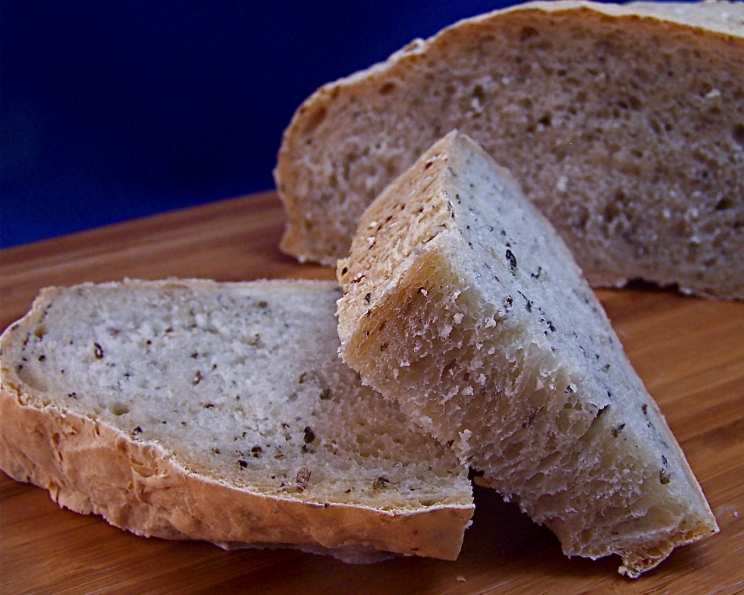
Pain De Provence: A Taste of the French Countryside
The aroma alone transports me. Just one whiff of Pain De Provence baking in the oven and I’m instantly back in the Luberon valley. I remember wandering through sun-drenched lavender fields, the air thick with the scent of thyme and rosemary. This bread, studded with those very same Provençal herbs, is more than just food; it’s a edible memory, a reminder of a slower pace and the simple pleasures of life. It’s a taste of France I can recreate right in my own kitchen.
Recipe Overview
- Prep Time: 16 hours 25 minutes
- Cook Time: 45 minutes
- Total Time: 17 hours 10 minutes
- Yields: 1 Large Loaf
- Dietary Type: Vegetarian
Ingredients
Poolish (Sponge)
- 1 cup unbleached all-purpose flour
- 1 cup water
- 1/2 teaspoon instant yeast
Dough
- 2 cups bread flour (or 2 cups unbleached all-purpose flour)
- 1/2 cup herbes de provence (or to taste)
- 1 1/2 teaspoons instant yeast
- 1 teaspoon salt
- 1/4 cup Grand Marnier (or 1/4 cup orange juice or water as a substitute)
- 1/4 – 1/2 cup water, as needed
Equipment Needed
- Large mixing bowl
- Plastic wrap
- Measuring cups and spoons
- Baking stone (optional)
- Broiler pan or cast iron skillet
- Sharp knife or razor blade
- Oven
Instructions
- Prepare the Poolish (Sponge): The night before you plan to bake, create the poolish. In a mixing bowl, combine 1 cup of unbleached all-purpose flour, 1 cup of water, and 1/2 teaspoon of instant yeast. Mix until you have a smooth batter.
- Ferment the Poolish: Cover the bowl tightly with plastic wrap and allow the poolish to ferment at room temperature for 8 to 16 hours. This long fermentation develops the complex flavors that are characteristic of this bread.
- Combine Dry Ingredients: In a large bowl, whisk together 2 cups of bread flour (or all-purpose flour), 1 1/2 teaspoons of instant yeast, 1 teaspoon of salt, and 1/2 cup of herbes de provence. Make sure the herbs are well distributed throughout the flour.
- Incorporate Wet Ingredients: Add the fermented poolish, 1/4 cup of Grand Marnier (or your chosen substitute), and 1/4 cup of the additional water to the dry ingredients.
- Mix the Dough: Begin mixing the ingredients. Add more water, a tablespoon at a time, or flour, a tablespoon at a time, until the dough reaches the correct consistency. The dough should be tacky – meaning it sticks slightly to your fingers – but not so sticky that it clings excessively to your hands.
- Knead the Dough: Turn the dough out onto a lightly floured surface and knead by hand for 10 to 15 minutes. Alternatively, use a stand mixer fitted with a dough hook and knead for 5 to 10 minutes. The dough should become smooth and elastic.
- First Rise: Place the kneaded dough in a well-greased bowl, turning to coat all sides. Cover the bowl tightly with plastic wrap. Allow the dough to rise in a warm place until it has doubled in size. This should take approximately 90 minutes.
- Degas and Second Rise: Gently deflate (degas) the risen dough by pressing down on it lightly. Return the dough to the bowl, cover it again with plastic wrap, and allow it to rise a second time until doubled in size.
- Shape the Loaf: Remove the dough from the bowl and shape it into either a round ball (boule) or a long loaf (batard), depending on your preference.
- Final Proof: Place the shaped loaf on a baking sheet lined with parchment paper. Cover the loaf loosely with a damp towel and allow it to rise again until it has doubled in size. This final proofing should take between 60 and 90 minutes.
- Preheat the Oven: While the loaf is in its final rise, preheat your oven to 450°F (232°C). If you are using a baking stone, place it in the oven to preheat as well. This will help create a crispy crust. I also recommend preheating a broiler pan or cast iron skillet on the bottom rack of the oven; this will be used to create steam.
- Score the Loaf: Just before placing the loaf in the oven, use a sharp knife or razor blade to score the top of the loaf. This allows the bread to expand properly during baking and creates an attractive finish. Make a few slashes across the surface of the loaf.
- Create Steam: Carefully pour 1 cup of hot water into the preheated broiler pan or cast iron skillet on the bottom rack of the oven. This will create steam, which is essential for a crusty loaf.
- Bake the Bread: Immediately place the scored loaf in the preheated oven. Bake for 20 minutes at 450°F (232°C), then rotate the loaf 180 degrees and reduce the oven temperature to 375°F (190°C). Continue baking for another 25 minutes.
- Check for Doneness: The bread is done when it is golden brown and sounds hollow when tapped on the bottom. The internal temperature should be approximately 200°F (93°C) when measured with an instant-read thermometer.
- Cool Completely: Remove the Pain De Provence from the oven and place it on a wire rack to cool completely before slicing and serving. This allows the internal crumb to set properly.
Expert Tips & Tricks
- Poolish Timing: Don’t be afraid to experiment with the poolish fermentation time. A longer fermentation (up to 16 hours) will result in a more complex flavor. If your kitchen is particularly warm, you may want to reduce the fermentation time slightly.
- Dough Hydration: Bread dough hydration can vary based on the environment, so don’t be afraid to adjust the amount of water as needed. Remember, you’re looking for a tacky, not sticky, dough.
- Herb Infusion: For a more intense herb flavor, lightly toast the herbes de provence in a dry skillet before adding them to the dough. Be careful not to burn them.
- Steam is Key: The steam in the oven is crucial for a crusty loaf. If you don’t have a broiler pan or cast iron skillet, you can also toss a handful of ice cubes into the bottom of the oven.
- Scoring Technique: A sharp, clean score is essential for a beautiful loaf. Use a lame (a special bread scoring tool) or a very sharp knife.
Serving & Storage Suggestions
Pain De Provence is delicious served warm with a drizzle of olive oil, alongside a hearty soup, or as an accompaniment to a cheese board. It also makes excellent sandwiches.
Store the bread at room temperature in a paper bag or loosely wrapped in a clean kitchen towel. It will stay fresh for 2-3 days. For longer storage, wrap the loaf tightly in plastic wrap and freeze it for up to 2 months. To reheat, thaw the bread completely and then bake it in a preheated oven at 350°F (175°C) for 10-15 minutes, or until warmed through.
Nutritional Information
Please note that this is an estimated nutritional information calculated without specific brand details and may vary.
| Nutrient | Amount per Serving | % Daily Value |
|---|---|---|
| Calories | 250 kcal | 13% |
| Total Fat | 3g | 5% |
| Saturated Fat | 0.5g | 3% |
| Cholesterol | 0mg | 0% |
| Sodium | 400mg | 17% |
| Total Carbohydrate | 50g | 18% |
| Dietary Fiber | 2g | 7% |
| Sugars | 1g | 2% |
| Protein | 7g | 14% |
Variations & Substitutions
- Gluten-Free: While not tested with this specific recipe, you could try substituting the all-purpose and bread flour with a gluten-free all-purpose blend. Be sure to use a blend that is formulated for bread making, and you may need to adjust the hydration levels.
- Different Herbs: While Herbes de Provence is classic, feel free to experiment with other herb combinations. Rosemary and thyme, or basil and oregano would be delicious alternatives.
- Cheese Infusion: Add grated Parmesan or Gruyere cheese to the dough for an extra layer of flavor.
- Seed Crust: Before the final proof, brush the loaf with olive oil and sprinkle with sesame seeds, poppy seeds, or sunflower seeds.
FAQs (Frequently Asked Questions)
Q: Can I use active dry yeast instead of instant yeast?
A: Yes, you can. However, you will need to proof the active dry yeast in warm water before adding it to the other ingredients. Use the water called for in the recipe for this purpose, and let the yeast sit for 5-10 minutes until it becomes foamy.
Q: Why is steam important when baking bread?
A: Steam creates a moist environment in the oven, which allows the bread to rise fully and develop a crisp, shiny crust.
Q: What if I don’t have Grand Marnier?
A: Orange juice or water are perfectly acceptable substitutes for Grand Marnier. The liqueur adds a subtle orange flavor, but it is not essential to the recipe.
Q: How do I know when the dough has risen enough?
A: The dough has risen enough when it has doubled in size. You can also use the “poke test” – gently press your finger into the dough. If the indentation remains, the dough is ready to be baked.
Q: My bread is browning too quickly. What should I do?
A: If your bread is browning too quickly, tent it loosely with aluminum foil to prevent it from burning.
Final Thoughts
This Pain De Provence recipe is more than just a bread; it’s an experience. The combination of fragrant herbs, a crisp crust, and a soft, chewy interior is simply irresistible. I encourage you to try this recipe and bring a taste of the French countryside into your own kitchen. Share your creations and any variations you try – I’d love to hear about them! Enjoy this beautiful loaf with a glass of local wine, and savor the simple pleasures of life.