
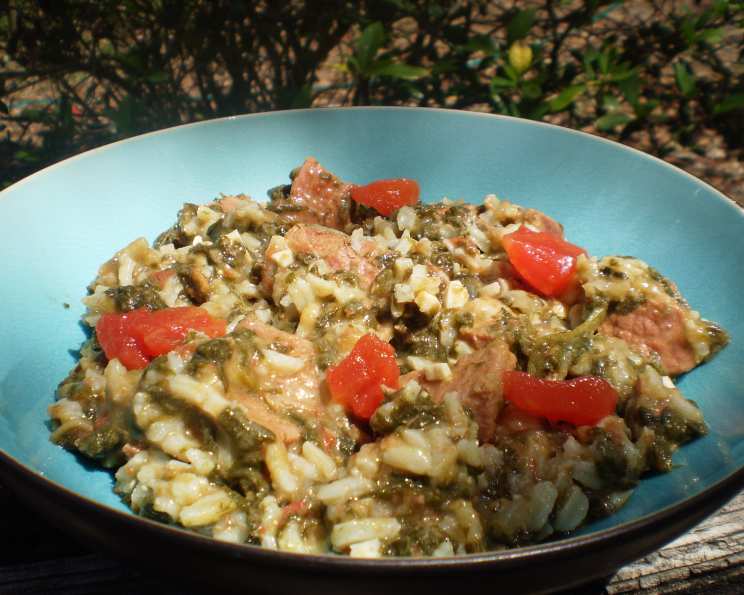
Palaver Sauce: A Taste of West Africa
The first time I tasted Palaver Sauce was at a bustling outdoor market in Accra, Ghana. The air was thick with the scent of spices, smoked fish, and the earthy aroma of the sauce itself, bubbling away in a huge pot over an open fire. A woman with a warm smile ladled a generous portion over a mound of steaming rice, and as I took my first bite, I was transported. The rich, savory flavor, the slight bitterness of the greens, and the smoky depth of the meat created a symphony of textures and tastes that I’ve never forgotten – a true testament to the vibrant culinary traditions of West Africa.
Recipe Overview
- Prep Time: 20 minutes
- Cook Time: 1 hour 25 minutes
- Total Time: 1 hour 45 minutes
- Servings: 8
- Yield: Approximately 8 cups
- Dietary Type: Not Vegetarian
Ingredients
- 2 lbs beef stew meat, cut into 1 inch pieces
- 2 smoked pork hocks (use only one if it is large; smoked bacon or salt pork can be substituted)
- 1 cup water
- 2 lbs fresh spinach, torn into pieces (platto, bologi, collards or kale can be substituted)
- 2 medium onions, finely chopped
- 2 garlic cloves, minced
- 2 large tomatoes, peeled and chopped
- 1 tablespoon gingerroot, grated (or 1 teaspoon ground ginger)
- 1-2 teaspoons ground red pepper
- 2 tablespoons peanut oil
- 2 hard-cooked eggs, chopped
- Hot cooked rice (optional)
- Finishing salt, to taste
Equipment Needed
- Large saucepan or Dutch oven
- Large covered saucepan
- Large skillet
Instructions
-
In a large saucepan or Dutch oven, combine the beef, pork hocks, and 1 cup water. Bring the mixture to a boil over high heat, then reduce the heat to low.
-
Cover the pot and simmer for approximately 50 minutes, or until the beef is just tender. The meat should easily yield when pierced with a fork.
-
Carefully remove the pork hocks from the pot and set them aside to cool slightly. Be careful, as they will be hot.
-
Once the pork hocks are cool enough to handle, cut the meat from the bones. Discard the bones and return the meat to the Dutch oven with the beef.
-
While the meats are simmering, prepare the greens. In a large covered saucepan, simmer the spinach in a small amount of water (just enough to prevent scorching) for about 5 minutes, or until the spinach has wilted.
-
Drain the spinach well, pressing out any excess water. Set aside.
-
In a large skillet, heat the peanut oil over medium heat. Add the onions, garlic, tomatoes, gingerroot, and ground red pepper.
-
Cook, stirring frequently, until the onion is tender and translucent but not browned. This should take approximately 8-10 minutes.
-
Stir the onion mixture, drained spinach, and chopped hard-cooked eggs into the Dutch oven with the meat mixture.
-
Cook, uncovered, for 30 minutes, stirring occasionally to prevent sticking and ensure even cooking. The sauce will thicken as it simmers.
-
Taste and adjust the seasoning with finishing salt, if needed. The amount of salt required will depend on the saltiness of the pork hocks.
-
If desired, serve the Palaver Sauce over hot cooked rice in soup bowls.
Expert Tips & Tricks
- Meat Quality Matters: Opt for high-quality stew meat with good marbling for the best flavor and tenderness.
- Spice Adjustment: The amount of ground red pepper can be adjusted to your preference. Start with 1 teaspoon and add more to taste.
- Leafy Green Variety: While spinach is a readily available substitute, exploring other leafy greens like collard greens or kale will add depth and authenticity to the flavor. These greens may require a longer simmering time than spinach.
- Smoked Flavor Enhancement: If using smoked bacon or salt pork instead of pork hocks, render the fat in the skillet before adding the onions and other vegetables. This will infuse the vegetables with a rich, smoky flavor.
- Egg Incorporation: The chopped hard-cooked eggs add a subtle richness and texture to the sauce. Don’t skip this step!
- Ginger Freshness: Freshly grated gingerroot offers a brighter, more aromatic flavor than ground ginger.
- Simmering Consistency: During the final 30 minutes of cooking, ensure the sauce is simmering gently rather than boiling vigorously. This will prevent it from scorching and allow the flavors to meld together beautifully.
Serving & Storage Suggestions
Palaver Sauce is traditionally served hot over a bed of fluffy white rice. The rice provides a neutral base that allows the rich and complex flavors of the sauce to shine. Garnish with a sprinkle of chopped fresh herbs, such as parsley or cilantro, for a pop of freshness and color.
Leftover Palaver Sauce can be stored in an airtight container in the refrigerator for up to 3-4 days. To reheat, gently warm the sauce in a saucepan over low heat, stirring occasionally, until heated through. You can also reheat it in the microwave in 1-2 minute intervals, stirring in between, until heated through.
For longer storage, Palaver Sauce can be frozen for up to 2-3 months. Allow the sauce to cool completely before transferring it to a freezer-safe container. To thaw, place the container in the refrigerator overnight. Reheat as described above.
Nutritional Information
Please note that these values are estimates and may vary based on specific ingredients and portion sizes.
| Nutrient | Amount per Serving | % Daily Value |
|---|---|---|
| Calories | 350 kcal | 18% |
| Total Fat | 20g | 31% |
| Saturated Fat | 7g | 35% |
| Cholesterol | 150mg | 50% |
| Sodium | 300mg | 13% |
| Total Carbohydrate | 15g | 5% |
| Dietary Fiber | 5g | 20% |
| Sugars | 5g | – |
| Protein | 30g | 60% |
Variations & Substitutions
- Vegetarian Palaver Sauce: Substitute the beef and pork with smoked tofu or mushrooms for a vegetarian version.
- Spicy Palaver Sauce: Increase the amount of ground red pepper or add a chopped scotch bonnet pepper (use with caution!).
- Seafood Palaver Sauce: Substitute the beef and pork with smoked fish, such as mackerel or tilapia.
- Nut-Free Palaver Sauce: Replace the peanut oil with another vegetable oil, such as canola or sunflower oil.
- Coconut Milk Palaver Sauce: Add a can of coconut milk during the last 15 minutes of cooking for a creamier, richer flavor.
- Seasonal Greens: Adapt the recipe to use seasonal greens. Collard greens, kale, or mustard greens work well in the cooler months.
FAQs (Frequently Asked Questions)
Q: Can I make this ahead of time?
A: Absolutely! Palaver Sauce actually tastes even better the next day as the flavors have had more time to meld together. Prepare it a day or two in advance and store it in the refrigerator until ready to serve.
Q: What if I can’t find smoked pork hocks?
A: Smoked bacon or salt pork are excellent substitutes. They will provide a similar smoky flavor to the sauce.
Q: Can I use frozen spinach instead of fresh?
A: Yes, you can use frozen spinach. Be sure to thaw it completely and squeeze out any excess water before adding it to the sauce.
Q: How do I prevent the sauce from sticking to the bottom of the pot?
A: Stir the sauce occasionally, especially during the last 30 minutes of cooking. This will prevent it from sticking and ensure even cooking. Using a heavy-bottomed pot can also help.
Q: What is the origin of the name “Palaver Sauce”?
A: The name “palaver” comes from the Portuguese word “palavra,” meaning “word” or “discussion.” It refers to the lengthy discussions and negotiations that often took place around the preparation and sharing of this communal dish.
Final Thoughts
Palaver Sauce is more than just a recipe; it’s a taste of West African culture, a celebration of fresh ingredients, and a testament to the power of food to bring people together. I encourage you to try this recipe and experience the vibrant flavors and aromas for yourself. Don’t be afraid to experiment with different greens and spices to create your own unique version. And most importantly, share it with friends and family and enjoy the conversations that unfold around the table.