
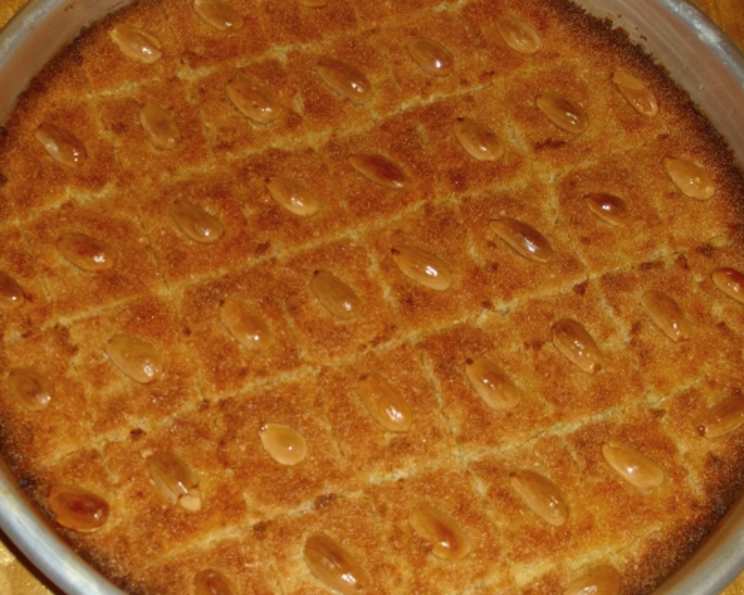
Palestinian Harissa: A Taste of Home
The scent of warm semolina and sweet syrup always takes me back to my grandmother’s kitchen in Nazareth. I remember watching her meticulously prepare harissa, her hands moving with a practiced grace that only years of tradition could instill. The anticipation as the fragrant squares emerged from the oven, glistening with syrup and adorned with almonds, was almost unbearable. That first bite, the perfect balance of textures and sweetness, was pure bliss – a taste of home, of family, and of love.
Recipe Overview
- Prep Time: 20 minutes
- Cook Time: 30-45 minutes
- Total Time: 1 hour 20 minutes
- Servings: 12
- Yield: 1 large tray
- Dietary Type: Vegetarian
Ingredients
For the Harissa:
- 3 cups semolina
- ¾ cup sugar
- ¾ cup unsalted butter, melted
- 1 ½ teaspoons baking powder
- 1 cup yogurt
- ½ cup almonds, whole
- 1 tablespoon tahini
For the Syrup:
- 3 cups sugar
- 2 cups water
- ½ lemon, juice of
Equipment Needed
- Large mixing bowl
- Small mixing bowl
- Baking tray (approximately 9×13 inches)
- Saucepan
- Whisk
- Pastry brush
Instructions
- Prepare the syrup: In a saucepan over medium heat, combine the water and sugar. Bring the mixture to a boil, then reduce the heat to low and let it simmer for 10 minutes. This allows the syrup to thicken slightly.
- Add the juice of ½ lemon to the simmering syrup and let it boil for an additional 2 minutes. This helps to balance the sweetness and prevents crystallization. Remove the syrup from the heat and set it aside to cool completely. The syrup should be cold before you pour it over the hot harissa.
- Prepare the harissa dough: In a large mixing bowl, combine the semolina, sugar, and melted unsalted butter. Mix these ingredients together with your hands until they are well combined and the mixture is homogenous. This step ensures that the butter coats the semolina evenly, contributing to the final texture.
- In a separate, small mixing bowl, combine the yogurt and baking powder. Mix them well and let the mixture sit for 10 minutes. You will notice that the yogurt mixture doubles in size; this is the baking powder activating and will help to create a light and airy harissa.
- Add the yogurt and baking powder mixture to the semolina mixture. Using your hands, mix all the ingredients together until a homogenous dough forms. Be careful not to overmix the dough.
- Prepare the baking tray: Brush the bottom and sides of the baking tray generously with tahini. The tahini will prevent the harissa from sticking and add a nutty flavor to the edges.
- Spread the harissa dough evenly into the prepared baking tray. The dough should be no more than 1.5 centimeters (approximately 0.6 inches) thick. Level the surface with your hands or a spatula for even baking.
- Using a sharp knife, carefully cut the harissa dough into squares or diamond shapes. The size of the squares is up to you, but aim for uniform pieces for even baking.
- Place a whole almond in the center of each square. Gently press the almond into the dough to secure it.
- Bake the harissa: Preheat your oven to 250°C (482°F). Place the baking tray with the harissa in the preheated oven and bake for 30 to 45 minutes, or until the top is golden brown. Keep a close eye on it, as ovens can vary. You want a rich golden-brown color, but avoid burning.
- Syrup the harissa: Once the harissa is baked, immediately remove it from the oven and pour the cold syrup evenly over the hot harissa. The contrast in temperature helps the harissa absorb the syrup properly.
- Let the harissa cool completely in the tray before serving. This allows the syrup to soak in fully and the harissa to set.
Expert Tips & Tricks
- Melting the butter: Make sure the butter is fully melted but not browned. Browning the butter can change the flavor profile of the harissa.
- Yogurt Consistency: Use a full-fat yogurt for best results. It adds moisture and richness to the dough.
- Semolina Type: Coarse semolina is traditionally used for harissa, but you can use fine semolina if that’s what you have available. The texture will be slightly different, but the flavor will remain delicious.
- Even Syrup Distribution: To ensure even syrup distribution, poke small holes in the harissa with a toothpick or skewer before pouring the syrup.
- Preventing a Soggy Base: Baking the harissa on the lowest rack in the oven can help prevent a soggy base.
Serving & Storage Suggestions
Serve the Palestinian harissa at room temperature. It’s delicious on its own or with a cup of Arabic coffee or tea.
To store leftover harissa, cover the baking tray tightly with plastic wrap or transfer the pieces to an airtight container. Harissa can be stored at room temperature for up to 3 days or in the refrigerator for up to a week. It can also be frozen for up to a month. To reheat, warm the harissa in a low oven or microwave until slightly warmed.
Nutritional Information
| Nutrient | Amount per Serving | % Daily Value |
|---|---|---|
| Calories | 541 kcal | N/A |
| Calories from Fat | 140 g | 26% |
| Total Fat | 15.6 g | 24% |
| Saturated Fat | 8 g | 40% |
| Cholesterol | 33.2 mg | 11% |
| Sodium | 132.4 mg | 5% |
| Total Carbohydrate | 95.2 g | 31% |
| Dietary Fiber | 2.3 g | 9% |
| Sugars | 63.7 g | 254% |
| Protein | 7.3 g | 14% |
Note: Nutritional information is an estimate and can vary based on specific ingredients and portion sizes.
Variations & Substitutions
- Nut Variations: Instead of almonds, you can use pistachios, walnuts, or pine nuts.
- Citrus Zest: Add a teaspoon of orange or lemon zest to the semolina mixture for a more complex flavor.
- Rosewater or Orange Blossom Water: Add a teaspoon of rosewater or orange blossom water to the syrup for a floral aroma and flavor.
- Vegan Harissa: Substitute the butter with vegan butter and the yogurt with a plant-based yogurt alternative. Make sure the vegan yogurt is thick and creamy.
- Gluten-Free Harissa: While traditionally made with semolina, you can experiment with gluten-free semolina alternatives or a blend of almond flour and tapioca starch, though the texture will be different.
FAQs (Frequently Asked Questions)
Q: Why is my harissa dry?
A: This could be due to overbaking or not enough syrup. Make sure to follow the baking time closely and pour enough syrup to saturate the harissa.
Q: Can I make the syrup ahead of time?
A: Yes, the syrup can be made a day or two in advance and stored in the refrigerator.
Q: My almonds are burning during baking. What should I do?
A: If the almonds start to brown too quickly, you can tent the baking tray with aluminum foil to prevent further browning.
Q: Can I use honey instead of sugar in the syrup?
A: While you can use honey, the flavor will be different, and it may affect the texture of the syrup. It’s best to stick with sugar for the traditional flavor.
Q: How do I know when the harissa is done baking?
A: The harissa is done when the top is golden brown and a toothpick inserted into the center comes out clean.
Final Thoughts
I truly hope you enjoy making this traditional Palestinian Harissa recipe. It’s more than just a dessert; it’s a taste of history, culture, and home. Don’t be afraid to experiment with variations and make it your own. If you try this recipe, please share your feedback and photos. Serve it with a strong cup of coffee and enjoy the sweet taste of Palestine!