
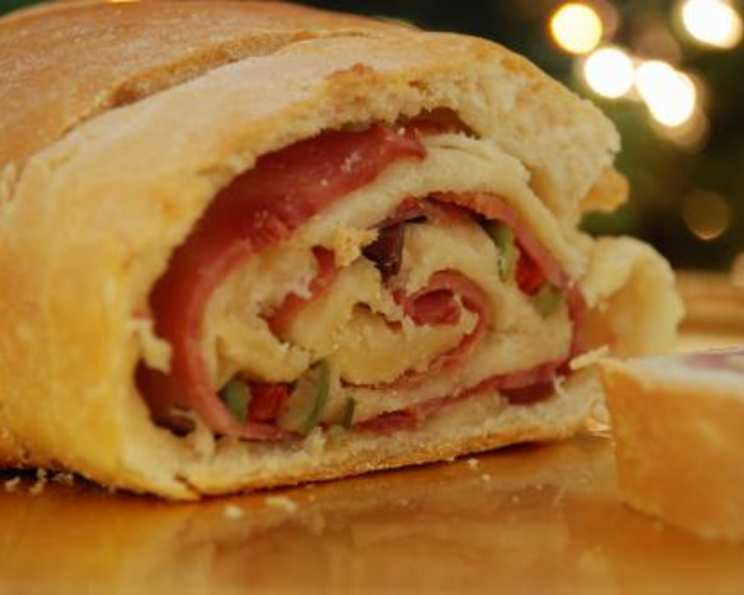
Pan de Jamon: A Taste of Venezuelan Christmas
The aroma alone transports me back to Caracas. It’s December, and the air is filled with the sweet, yeasty scent of baking bread mingled with the savory perfume of ham and olives. My grandmother, Abuela Elena, would be in her element, flour dusting her apron as she expertly kneaded the dough for her famous Pan de Jamon. The whole family would gather in her kitchen, eager to help (or, more likely, sneak a taste of the filling), the laughter echoing as Abuela Elena spun stories of Christmases past. It wasn’t just bread; it was a symbol of family, tradition, and the warmth of the holiday season.
Recipe Overview
- Prep Time: 2 hours
- Cook Time: 45 minutes
- Total Time: 2 hours 45 minutes
- Servings: 10
- Yield: 2 large loaves
- Dietary Type: Not suitable for Vegan, Vegetarian or Gluten-Free diets
Ingredients
For the Yeast Starter:
- 1 1/2 cups water
- 5 teaspoons granulated yeast
- 1 teaspoon sugar
For the Dough:
- 250 g (8.8 ounces or 1 cup + 2 tablespoons) butter, softened
- 1 liter (4.2 cups) warm milk
- 2 kg (4.4 pounds or about 16 cups) all-purpose flour
- 1 teaspoon salt
- 1 teaspoon sugar
For the Filling:
- 1 1/2 kg (3.3 pounds) sliced ham (good quality smoked ham is recommended)
- 1/2 kg (1.1 pounds) smoked bacon, cooked and crumbled
- 250 g (8.8 ounces or 1 cup + 2 tablespoons) butter, melted
- 1/2 kg (1.1 pounds) pitted green olives, stuffed with pimentos, halved
- 1/2 kg (1.1 pounds) raisins
- 1 egg, beaten (for egg wash)
Equipment Needed
- Large mixing bowl
- Stand mixer (optional, but recommended)
- Rolling pin
- Baking sheets
- Parchment paper
- Small bowl for egg wash
- Pastry brush
Instructions
-
Prepare the Yeast Starter: In a bowl, combine the 1 1/2 cups of water and 1 teaspoon of sugar. Sprinkle the 5 teaspoons of granulated yeast over the water. Let it stand for 15 minutes, or until the yeast has proofed and formed a frothy “head.” This indicates that the yeast is active and ready to use. If it doesn’t foam, the yeast is likely expired and you’ll need to start over with fresh yeast.
-
Combine Wet Ingredients: In a separate bowl, add the 250g of softened butter to the 1 liter of warm milk. Stir until the butter is mostly melted. Add the 1 teaspoon of salt and 1 teaspoon of sugar.
-
Mix the Dough: Pour the milk mixture into a large mixing bowl or the bowl of a stand mixer fitted with a dough hook. Gradually add the 2 kg of flour, mixing on low speed until just combined. Add the proofed yeast mixture.
-
Knead the Dough: If using a stand mixer, knead the dough on medium speed for 10-15 minutes until it becomes smooth and elastic. If kneading by hand, turn the dough out onto a lightly floured surface and knead for 15-20 minutes. The dough should be slightly sticky but not overly so. A good test is to press your finger into the dough; it should slowly spring back.
-
First Rise: Lightly oil a large bowl. Place the kneaded dough in the bowl, turning to coat. Cover the bowl with a damp cloth or plastic wrap. Let the dough rise in a warm place for about 1 hour, or until doubled in size.
-
Prepare the Filling: While the dough is rising, prepare the filling. Cook the bacon until crispy, then crumble. Halve the olives. Melt the remaining 250g of butter in a small bowl. Gather the ham slices and raisins.
-
Assemble the Pan de Jamon: After the dough has doubled, punch it down gently to release the air. Divide the dough in half to make two loaves. On a lightly floured surface, roll out one portion of the dough into a large rectangle, about 1/4 inch thick.
-
Layer the Filling: Brush the rolled-out dough generously with melted butter. Arrange half of the ham slices evenly over the buttered dough, overlapping them slightly. Sprinkle half of the crumbled bacon over the ham. Distribute half of the olives and raisins evenly over the ham and bacon. Leave a small, approximately one-inch section at the far edge of the rectangle uncovered to help seal the bread.
-
Roll and Seal: Starting from the edge closest to you, tightly roll up the dough like a Swiss roll. Pinch the seam along the bottom to seal it. Brush the un-filled “tongue” with some of the beaten egg to ensure a tight seal. Tuck the ends under to create a neat loaf shape.
-
Second Rise: Place the assembled loaf seam-side down on a baking sheet lined with parchment paper. Repeat steps 7-9 with the remaining dough and filling to create the second loaf. Cover both loaves with a damp cloth and let them rise for another 30 minutes.
-
Egg Wash and Bake: Preheat the oven to 350°F (175°C). Brush the top of each loaf generously with the remaining beaten egg. This will give the bread a beautiful golden-brown color.
-
Bake: Bake the Pan de Jamon for 45 minutes, or until golden brown and the internal temperature reaches 190-200°F (88-93°C). If the bread starts to brown too quickly, tent it loosely with foil.
-
Cool and Serve: Remove the Pan de Jamon from the oven and let it cool on a wire rack for at least 30 minutes before slicing and serving.
Expert Tips & Tricks
- Yeast Quality: Always use fresh, active yeast. Expired yeast will result in a dense, flat bread.
- Dough Temperature: The dough should be slightly warm to the touch after kneading. This promotes proper rising.
- Ham Selection: Choose a high-quality smoked ham for the best flavor. Serrano ham or prosciutto can also be used.
- Butter Temperature: Make sure the butter for the dough is softened, but not melted. Melted butter will result in a greasy dough.
- Even Baking: Rotate the baking sheets halfway through the baking time to ensure even browning.
- Prevent Sticking: Use parchment paper to line the baking sheets to prevent the bread from sticking.
- Make-Ahead Tip: You can prepare the dough a day ahead and let it rise slowly in the refrigerator overnight. This will develop the flavor and make the baking process easier the next day. Just be sure to punch it down before rolling it out.
Serving & Storage Suggestions
Pan de Jamon is best served warm or at room temperature. Slice it into thick slices and enjoy it as a main course, side dish, or appetizer. It’s traditionally served during Christmas, but it can be enjoyed year-round.
To store leftovers, wrap the bread tightly in plastic wrap or place it in an airtight container. It will keep at room temperature for up to 2 days, in the refrigerator for up to 4 days, or in the freezer for up to 2 months.
To reheat, sprinkle the bread lightly with water and warm it in a low oven (around 300°F or 150°C) for about 10-15 minutes, or until heated through. You can also reheat slices in a microwave, but be careful not to overcook them.
Nutritional Information
| Nutrient | Amount per Serving | % Daily Value |
|---|---|---|
| Calories | 1865.8 kcal | N/A |
| Calories from Fat | 735 g | 39% |
| Total Fat | 81.7 g | 125% |
| Saturated Fat | 38.9 g | 194% |
| Cholesterol | 273.1 mg | 91% |
| Sodium | 4457.3 mg | 185% |
| Total Carbohydrate | 202.7 g | 67% |
| Dietary Fiber | 9.4 g | 37% |
| Sugars | 31 g | 124% |
| Protein | 79.9 g | 159% |
Note: Nutritional information is an estimate and may vary based on specific ingredients and serving sizes.
Variations & Substitutions
- Spicy Pan de Jamon: Add a pinch of cayenne pepper or a few chopped jalapeños to the filling for a spicy kick.
- Vegetarian Pan de Jamon: Replace the ham and bacon with roasted vegetables like bell peppers, zucchini, and eggplant.
- Sweet Pan de Jamon: Add chopped dates, figs, or apricots to the filling for a sweeter version.
- Gluten-Free Pan de Jamon: While challenging, you could try using a high-quality gluten-free bread flour blend and adjust the liquid accordingly. Be prepared for a denser texture.
- Alternative Meats: Consider using turkey ham or a combination of different cured meats.
FAQs (Frequently Asked Questions)
Q: Why is my dough not rising?
A: The most common reason is inactive yeast. Make sure your yeast is fresh and proof it before adding it to the other ingredients. Also, ensure the dough is kept in a warm place, free from drafts.
Q: Can I freeze Pan de Jamon?
A: Yes, you can freeze Pan de Jamon. Wrap it tightly in plastic wrap and then in foil to prevent freezer burn. It can be frozen for up to 2 months.
Q: How do I prevent the bread from drying out?
A: Be careful not to overbake the bread. Check for doneness by inserting a thermometer. Brushing the bread with melted butter after baking can also help keep it moist.
Q: Can I use a different type of filling?
A: Absolutely! While ham, bacon, olives, and raisins are traditional, you can experiment with other fillings like roasted vegetables, cheese, or different types of cured meats.
Q: How do I get a shiny crust?
A: The egg wash is key for a shiny, golden-brown crust. Be sure to brush the entire surface of the bread evenly with the beaten egg before baking.
Final Thoughts
I hope this recipe inspires you to create your own Pan de Jamon and share it with your loved ones. Whether you’re celebrating Christmas or simply looking for a delicious and satisfying bread, this recipe is sure to be a hit. Don’t be afraid to experiment with different fillings and variations to make it your own. Most importantly, enjoy the process and savor the delicious results! Share your creations and feedback – I’d love to hear how it turns out. ¡Buen provecho!