
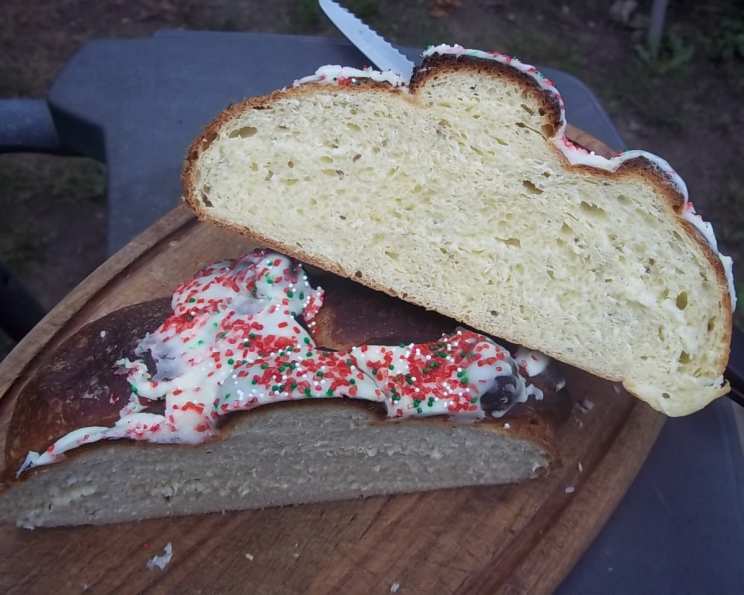
Pan de Muerto: A Taste of Tradition
The scent of orange and anise, woven into the warm embrace of freshly baked bread, instantly transports me back to my abuela’s kitchen. Every year, as the days grew shorter and the anticipation for Día de Muertos grew stronger, she would begin her preparations for Pan de Muerto. The rhythmic kneading, the gentle proofing, and the collective murmur of stories shared over the rising dough were as much a part of the tradition as the ofrenda itself. This bread wasn’t just food; it was a tangible connection to those we missed, a sweet offering born of love and remembrance.
Recipe Overview
- Prep Time: 3 hours
- Cook Time: 35-40 minutes
- Total Time: 6 hours 35 minutes
- Servings: Varies
- Yield: 2 loaves
- Dietary Type: Varies (Not Vegan/Vegetarian)
Ingredients
Bread:
- 1/2 cup warm water
- 2 1/4 teaspoons active dry yeast
- 4 1/2 cups bread flour
- 1 tablespoon anise seed, crushed
- 1 orange, zest of, grated
- 5 large eggs
- 1 cup unsalted butter, melted and cooled to lukewarm
- Butter, for greasing pans
- 3 tablespoons orange liqueur
- 1/3 cup sugar
- 2 teaspoons salt
Glaze:
- 2 cups powdered sugar
- 2 tablespoons unsalted butter, softened
- 2 tablespoons orange juice, fresh
- 1 tablespoon lemon juice, fresh
- 1 teaspoon grated orange zest
Topping:
- Yellow or orange colored crystal sugar, crystals, or candy sprinkles
Equipment Needed
- 1-quart bowl
- Plastic wrap
- Electric mixer
- Dough hook attachment
- Greased bowl
- Cloth
- 2 8-inch round cake pans
- Wire rack
Instructions
-
Begin by activating the yeast. Pour the warm water into a 1-quart bowl and sprinkle the active dry yeast over the water. Set aside in a warm, draft-free place until bubbly, about 5 minutes. This step ensures the yeast is alive and ready to leaven the dough.
-
Create a sponge. Stir in 1 cup of the bread flour to the yeast mixture to form a sponge. Cover the bowl with plastic wrap and set aside until the sponge doubles in volume, about 1 hour. The sponge method helps develop flavor and gluten structure in the bread.
-
Combine the sponge with the remaining ingredients. Scrape the sponge into the bowl of an electric mixer. Using the mixer, incorporate the anise seeds, orange zest, melted butter, orange liqueur, sugar, salt, eggs, and 2 cups of bread flour. Beat the batter on medium speed for approximately 5 minutes. This initial mixing thoroughly combines the wet and dry components.
-
Gradually add more flour. Reduce the mixer speed to low and add the remaining 1 1/2 cups of bread flour, one 1/4 cup at a time, until a very soft dough forms that cleans the sides of the bowl. Be patient and add the flour gradually to avoid over-kneading or creating a tough dough.
-
Knead the dough. Attach the dough hook to the mixer. Knead the dough for about 4 minutes. The dough will be smooth and very soft, but it should not be sticky. If needed, add more flour by the tablespoon to prevent sticking. Resist the urge to add too much flour, as a slightly sticky dough will result in a more tender crumb.
-
First rise. Place the dough in a greased bowl, cover it with a cloth, and set aside to rise in a warm, draft-free place until doubled in volume, about 1 1/2 hours. This first rise is crucial for developing the airy texture of the bread.
-
Shape the dough. Grease two 8-inch round cake pans with butter. Gently deflate the dough and divide it in half. The dough will be very soft. Carefully transfer each half to a greased cake pan, turning the edges under to smooth the top as best as you can.
-
Second rise. Cover the pans loosely with plastic wrap, then with damp cloths, and let stand in a warm place until the dough rises to the top of the pan, about 1 1/2 to 2 hours. This second rise further enhances the bread’s lightness and final shape.
-
Preheat and bake. Preheat the oven to 350°F (175°C). Bake the bread until it sounds hollow when thumped, about 35 to 40 minutes. The hollow sound indicates that the bread is fully cooked.
-
Cool the loaves. Immediately remove the loaves from the pans and place them on a wire rack to cool completely. Allowing the bread to cool completely prevents a soggy bottom.
-
Prepare the glaze. In a bowl, stir together the powdered sugar, softened butter, orange juice, lemon juice, and grated orange zest until smooth. Add more orange juice if necessary to reach a spreadable consistency.
-
Glaze and decorate. Once the loaves are completely cooled, spread the glaze evenly over the tops and sprinkle generously with yellow or orange colored crystal sugar, crystals, or candy sprinkles. The glaze adds sweetness and a beautiful shine, while the toppings create a festive look.
Expert Tips & Tricks
- Yeast Activity: Always check the expiration date on your yeast. For an extra assurance of yeast activity, add a pinch of sugar to the warm water along with the yeast. A frothy mixture indicates healthy yeast.
- Dough Temperature: Maintaining the right dough temperature is key. Too cold, and the yeast will be sluggish. Too warm, and it will rise too quickly, leading to a flat, dense bread. A warm (but not hot) environment is ideal.
- Kneading Technique: Don’t over-knead the dough! Over-kneading can develop too much gluten, resulting in a tough bread.
- Shaping the Bones: The traditional Pan de Muerto is decorated with bone shapes made from extra dough. To create these, roll out small pieces of dough into thin logs and arrange them on top of the loaf before baking.
- Glaze Consistency: Adjust the amount of orange juice in the glaze to achieve your desired consistency. For a thicker glaze, use less juice; for a thinner glaze, add more.
Serving & Storage Suggestions
Pan de Muerto is best enjoyed fresh, preferably on the day it is baked. Serve it alongside a cup of hot chocolate or café de olla. To store leftovers, wrap them tightly in plastic wrap or place them in an airtight container at room temperature. It will stay fresh for about 2-3 days. You can also freeze the bread for longer storage; simply wrap it well and thaw completely before serving. Reheating in a warm oven (around 300°F/150°C) for a few minutes can help revive the bread’s texture.
Nutritional Information
Note: Nutritional information is an estimate and may vary based on specific ingredients and serving sizes.
| Nutrient | Amount per Serving | % Daily Value |
|---|---|---|
| Calories | 2749 kcal | N/A |
| Calories from Fat | 1072 g | 39% |
| Total Fat | 119.2 g | 183% |
| Saturated Fat | 70 g | 350% |
| Cholesterol | 739.6 mg | 246% |
| Sodium | 2530.2 mg | 105% |
| Total Carbohydrate | 374.5 g | 124% |
| Dietary Fiber | 9.4 g | 37% |
| Sugars | 153.3 g | 613% |
| Protein | 48.4 g | 96% |
Variations & Substitutions
- Citrus Infusion: Experiment with different citrus zests in the dough, such as lime or grapefruit, for a unique twist.
- Spiced Delight: Add a pinch of cinnamon, nutmeg, or cloves to the dough for a warm, spiced flavor.
- Chocolate Chips: Incorporate chocolate chips into the dough for a decadent treat.
- Gluten-Free Option: Substitute the bread flour with a gluten-free bread flour blend, but note that the texture may be slightly different. You might need to adjust the liquid content.
- Vegan Pan de Muerto: Substitute the eggs with a flax egg mixture (1 tablespoon ground flaxseed mixed with 3 tablespoons water, let sit for 5 minutes). Use a plant-based butter alternative.
FAQs (Frequently Asked Questions)
Q: Can I make the dough ahead of time?
A: Yes, you can prepare the dough the day before and let it rise slowly in the refrigerator overnight. This will develop even more flavor. Just be sure to bring it to room temperature before shaping and baking.
Q: What if I don’t have orange liqueur?
A: You can substitute the orange liqueur with an equal amount of orange juice or orange extract.
Q: My dough is too sticky. What should I do?
A: Add flour one tablespoon at a time until the dough is manageable, but be careful not to add too much, as this can result in a dry bread.
Q: Why is my Pan de Muerto so dense?
A: This could be due to several factors: the yeast might not have been active, the dough may not have risen enough, or the oven temperature could have been too low.
Q: Can I use a stand mixer instead of kneading by hand?
A: Yes, a stand mixer with a dough hook is ideal for kneading the dough. Knead until the dough is smooth and elastic.
Final Thoughts
More than just a recipe, this Pan de Muerto is an invitation to connect with the rich traditions of Día de Muertos. Gather your loved ones, fill your kitchen with the comforting aromas of orange and anise, and bake a bread that honors those who came before us. Don’t be afraid to personalize it with your own creative touches – after all, every loaf tells a story. I encourage you to try this recipe and share your creations. Maybe pair it with a fragrant Oaxacan hot chocolate for an unforgettable experience. From my kitchen to yours, happy baking and a heartfelt Día de Muertos.