
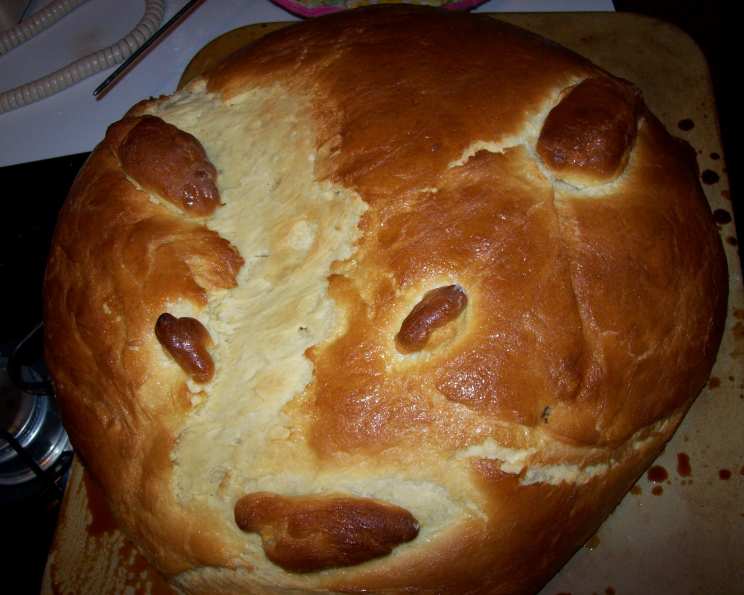
Pan de Muertos: A Sweet Offering for the Day of the Dead
The scent of orange zest and warm yeast dough always transports me back to my abuela’s kitchen. Every year, in the weeks leading up to Día de los Muertos, the air would be thick with anticipation and the comforting aroma of Pan de Muertos baking in her old, trusty oven. I remember being a small child, mesmerized by the way she deftly shaped the dough, carefully placing the “bones” and adorning it with sugar. More than just a delicious bread, it was a symbol of our love and remembrance for those who had passed on, a sweet offering to welcome them back home.
Recipe Overview
- Prep Time: 2 hours
- Cook Time: 40 minutes
- Total Time: 3 hours 40 minutes
- Servings: 20
- Yield: 1 large loaf or several smaller loaves
- Dietary Type: Not specified (Contains dairy and eggs)
Ingredients
- 1 1/2 cups flour
- 1/2 cup sugar
- 1 teaspoon salt
- 2 tablespoons dry yeast
- 1/2 cup milk
- 1/2 cup water
- 1/2 cup butter
- 4 eggs
- 4 1/2 cups flour
- 1/2 cup sugar
- 1/3 cup orange juice
Equipment Needed
- Large mixing bowl
- Small saucepan
- Electric mixer (optional, but recommended)
- Baking sheet
- Pastry brush
Instructions
- In a large mixing bowl, combine 1 1/2 cups flour, 1/2 cup sugar, 1 teaspoon salt, and 2 tablespoons dry yeast. This is your dry ingredient base. Ensure the yeast is fresh for optimal rising.
- In a small saucepan, heat 1/2 cup milk, 1/2 cup water, and 1/2 cup butter until the butter is melted and the mixture is warm to the touch (about 110-115°F or 43-46°C). Don’t overheat the mixture, as this can kill the yeast.
- Pour the warm liquid mixture into the bowl with the dry ingredients.
- Using an electric mixer or a wooden spoon, beat well to combine all ingredients.
- Add 4 eggs and 1 1/2 cups flour to the mixture. Beat well again until everything is fully incorporated. The dough will be quite wet at this stage.
- Gradually add the remaining 4 1/2 cups of flour, mixing a little at a time. You may not need all the flour; add just enough until the dough comes together and is no longer sticky.
- Turn the dough out onto a lightly floured surface and knead for about 10 minutes. The dough should be smooth and elastic. If it’s too sticky, add a little more flour, a tablespoon at a time.
- Place the dough in a lightly oiled bowl, turning to coat. Cover the bowl with a clean cloth or plastic wrap.
- Let the dough rise in a warm place until doubled in size, approximately 1 1/2 hours. This is crucial for a light and airy bread.
- Punch the dough down to release the air. Now comes the fun part: shaping the Pan de Muertos.
- Divide the dough into portions depending on if you want one large loaf or several smaller ones. Reserve a smaller piece of dough to create the “bones.” Roll the larger piece into a round or oval shape.
- Roll the reserved dough into thin logs and shape them into bone-like figures. Place these “bones” on top of the round loaf, pressing gently to adhere. You can also create a small knob of dough in the center to represent a skull.
- Place the shaped dough on a greased or parchment-lined baking sheet.
- Cover the dough and let it rise again for another hour. This second rise is important for the final texture of the bread.
- Preheat your oven to 350°F (175°C).
- While the oven is preheating, prepare the glaze by heating 1/2 cup sugar and 1/3 cup orange juice in a small saucepan over medium heat until the sugar is melted and the mixture is smooth.
- Brush the glaze generously over the entire surface of the risen dough, including the “bones.” This will give the bread a beautiful sheen and a touch of sweetness.
- Bake in the preheated oven for approximately 40 minutes, or until the bread is golden brown and sounds hollow when tapped on the bottom.
- Let the Pan de Muertos cool on a wire rack before serving.
Expert Tips & Tricks
- For a richer flavor, use browned butter instead of regular melted butter. Brown the butter in the saucepan before adding the milk and water.
- To prevent the “bones” from over-browning, you can cover them with small pieces of aluminum foil during the last 15 minutes of baking.
- If the dough is rising too quickly, place it in a cooler spot, like the refrigerator, to slow down the fermentation process.
- Experiment with flavorings: Add a teaspoon of orange zest or anise extract to the dough for a more pronounced flavor.
- For a shiny crust, brush the bread with an egg wash (1 egg yolk whisked with a tablespoon of water) before baking, in addition to the orange juice glaze.
Serving & Storage Suggestions
Pan de Muertos is best served fresh, while it’s still warm and fragrant. It’s traditionally enjoyed with hot chocolate or coffee. You can also dip it in champurrado, a thick Mexican chocolate drink. Leftover Pan de Muertos can be stored in an airtight container at room temperature for up to 3 days. To keep it fresh longer, wrap it tightly in plastic wrap and store it in the freezer for up to 2 months. Reheat in a low oven (300°F or 150°C) for about 10-15 minutes to revive its texture.
Nutritional Information
| Nutrient | Amount per Serving | % Daily Value |
|---|---|---|
| Calories | 239.8 kcal | N/A |
| Calories from Fat | 56 g | 23% |
| Total Fat | 6.2 g | 9% |
| Saturated Fat | 3.4 g | 17% |
| Cholesterol | 50.3 mg | 16% |
| Sodium | 175.7 mg | 7% |
| Total Carbohydrate | 39.9 g | 13% |
| Dietary Fiber | 1.3 g | 5% |
| Sugars | 10.5 g | 41% |
| Protein | 5.9 g | 11% |
Note: Nutritional information is an estimate and may vary based on specific ingredients and portion sizes.
Variations & Substitutions
- Vegan Pan de Muertos: Substitute the milk with plant-based milk (almond, soy, or oat milk), the butter with vegan butter, and the eggs with a flaxseed egg (1 tablespoon ground flaxseed mixed with 3 tablespoons water per egg).
- Gluten-Free Pan de Muertos: Use a gluten-free flour blend specifically designed for baking. You may need to adjust the amount of liquid depending on the blend.
- Citrus Variations: Experiment with different citrus juices in the glaze, such as lime or grapefruit. You can also add a teaspoon of citrus zest to the dough for extra flavor.
- Anise Flavor: Add 1 teaspoon of anise extract to the dough for a more traditional flavor profile.
FAQs (Frequently Asked Questions)
Q: Why is my Pan de Muertos dry?
A: Overbaking is the most common cause of dry bread. Reduce the baking time or lower the oven temperature slightly. Also, ensure you’re using enough butter and eggs in the dough.
Q: Can I make the dough ahead of time?
A: Yes, you can prepare the dough ahead of time and store it in the refrigerator for up to 24 hours after the first rise. Punch it down before refrigerating, and let it come to room temperature before shaping and baking.
Q: How do I get the “bones” to stick to the bread?
A: Make sure to press the bones firmly onto the surface of the loaf. You can also brush the surface with a little water before adding the bones to help them adhere.
Q: What does the orange juice glaze do?
A: The orange juice glaze adds sweetness, moisture, and a beautiful shine to the bread. It also enhances the citrusy aroma.
Q: Can I use active dry yeast instead of instant yeast?
A: Yes, but you’ll need to proof the active dry yeast first. Dissolve it in the warm milk and water mixture with a teaspoon of sugar and let it sit for 5-10 minutes until it becomes foamy before adding it to the dry ingredients.
Final Thoughts
Pan de Muertos is more than just a recipe; it’s a tradition, a symbol of remembrance, and a delicious way to honor those who have passed on. I encourage you to try this recipe and create your own sweet offering for Día de los Muertos. Don’t be afraid to get creative with the shaping and decorations! Share your creations with loved ones and let the aroma of this bread fill your home with warmth and memories. And please, let me know how yours turns out – I’d love to hear your stories! Pair it with a comforting cup of Mexican hot chocolate for the perfect seasonal treat.