
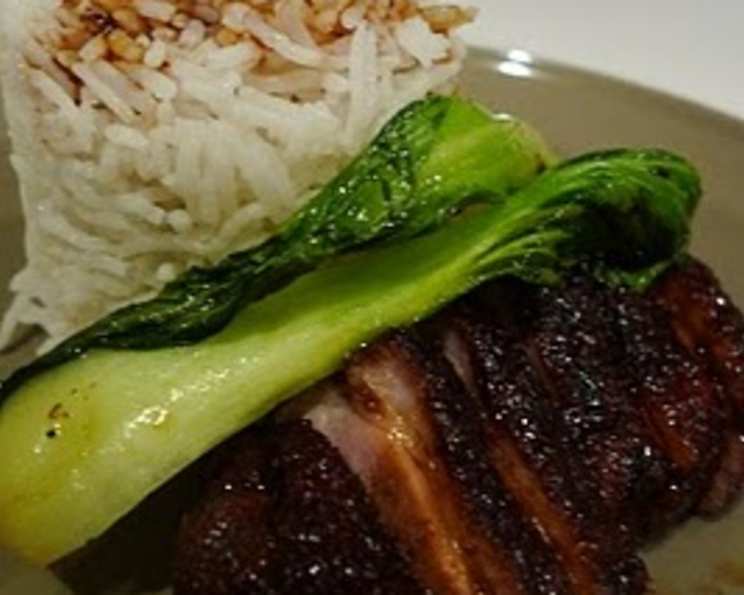
Pan-Fried Duck Breast With Honey Soy Sauce and Pak Choi: A Symphony of Flavors
The first time I tasted perfectly cooked duck breast, I was a wide-eyed culinary student on a scholarship trip to France. We were at a tiny bistro in Lyon, a city famed for its gastronomy. The chef, a gruff but kind man named Monsieur Dubois, placed before me a glistening, mahogany-colored duck breast, the skin crackling invitingly. The aroma alone was intoxicating, a blend of rich duck fat, savory soy, and a hint of sweetness. One bite, and I was hooked. The crispy skin gave way to succulent, tender meat, a delightful contrast that danced on my palate. That memory has stayed with me, inspiring me to recreate that magic, and this pan-fried duck breast with honey soy sauce and pak choi is my humble attempt to capture a sliver of that Lyon experience.
Recipe Overview
- Prep Time: 10 minutes
- Cook Time: 25 minutes
- Total Time: 35 minutes
- Servings: 2
- Dietary Type: Pescatarian
Ingredients
- 2 (175 g each) duck breasts, with skin
- Sea salt, to taste
- Ground black pepper, to taste
- 2 teaspoons Chinese five spice powder
- 1-2 tablespoons honey
- 3 tablespoons soy sauce
- 150 g pak choi
- 1 tablespoon vegetable oil
- 2 tablespoons oyster sauce
Equipment Needed
- Very sharp knife
- Ovenproof pan
- Small bowl
- Wok or large pan
Instructions
- Begin by preparing the duck breasts. Using a very sharp knife, score the skin in a criss-cross pattern, being careful not to cut into the flesh. This helps render the fat and creates a crispy skin.
- Season the duck breasts generously with sea salt, ground black pepper, and Chinese five spice powder. Rub the spices thoroughly into the skin. This step is crucial for flavor development.
- In a small bowl, whisk together the honey and soy sauce. Set this glaze aside.
- Place the duck breasts, skin-side down, in a dry, unheated, ovenproof pan. Turn the heat to very low. The goal here is to render down the fat slowly and evenly. This may take 10-15 minutes, depending on the thickness of the fat layer. The fat should be bubbling gently.
- Once a significant amount of fat has rendered out of the duck breasts, carefully drain it from the pan. You can save this duck fat for future cooking; it’s liquid gold for roasting potatoes or vegetables!
- Now, turn up the heat to medium-high. Fry the duck breasts until the skin is golden brown and crisp, about 5-7 minutes.
- Flip the duck breasts over and cook the other side for another 3-4 minutes, or until the internal temperature reaches 135°F (57°C) for medium-rare, 145°F (63°C) for medium, or 160°F (71°C) for well-done. Use a meat thermometer for accurate results.
- Just before the duck is ready, drizzle the honey and soy sauce mixture over the top. Toss and turn the duck in the glaze, cooking until the liquid has reduced to a syrupy consistency, about 1-2 minutes. Baste the duck continuously with the glaze to ensure even coating and flavor penetration.
- Transfer the duck breasts to a warm plate and let them rest for 5-10 minutes. This allows the juices to redistribute, resulting in a more tender and flavorful final product.
- While the duck is resting, prepare the pak choi. Heat a wok or large pan over medium-high heat. Add the vegetable oil.
- When the oil is hot, add the pak choi and oyster sauce. Stir-fry for about 5 minutes, or until the pak choi is tender-crisp.
- Dish the pak choi out onto a plate.
- Slice the rested duck breasts lengthwise, about 1/4 inch thick.
- Arrange the sliced duck on plates, alongside the pak choi.
Expert Tips & Tricks
- Scoring the Skin: Don’t be afraid to score the skin deeply, but avoid cutting into the meat. This is essential for rendering the fat and achieving crispy skin.
- Rendering the Fat: Start cooking the duck in a cold pan over low heat. This allows the fat to render slowly and evenly, resulting in crispier skin. Patience is key here!
- Doneness: Use a meat thermometer to ensure the duck is cooked to your desired level of doneness. Remember that the internal temperature will continue to rise slightly as the duck rests.
- Honey Soy Glaze: Keep a close eye on the glaze as it cooks, as it can burn easily. Adjust the heat as needed.
- Duck Fat Savings: Save the rendered duck fat! It’s a fantastic cooking fat for potatoes, vegetables, or even eggs. Strain it through a fine-mesh sieve and store it in an airtight container in the refrigerator for up to a week.
Serving & Storage Suggestions
Serve the pan-fried duck breast immediately while it’s hot and the skin is crispy. Garnish with extra pak choi and drizzle any leftover honey soy sauce over the top for added flavor. Plain rice is an excellent accompaniment, allowing the rich flavors of the duck to shine through.
Leftover duck breast can be stored in an airtight container in the refrigerator for up to 3 days. To reheat, gently warm the duck in a pan over low heat or in a microwave, being careful not to overcook it. Reheating may cause the skin to lose some of its crispness.
Nutritional Information
| Nutrient | Amount per Serving | % Daily Value |
|---|---|---|
| Calories | 470.9 kcal | N/A |
| Calories from Fat | 232 g | 49% |
| Total Fat | 25.9 g | 39% |
| Saturated Fat | 6 g | 30% |
| Cholesterol | 238 mg | 79% |
| Sodium | 2147.6 mg | 89% |
| Total Carbohydrate | 12.1 g | 4% |
| Dietary Fiber | 0.3 g | 1% |
| Sugars | 9.1 g | 36% |
| Protein | 46 g | 91% |
Note: Nutritional information is an estimate and may vary based on specific ingredients and preparation methods.
Variations & Substitutions
- Gluten-Free: Use tamari instead of soy sauce to make this recipe gluten-free.
- Vegetarian: Substitute the duck breast with firm tofu, pressing it to remove excess moisture before pan-frying.
- Spice Level: Add a pinch of red pepper flakes to the honey soy glaze for a touch of heat.
- Vegetable Variations: Substitute the pak choi with other Asian greens like bok choy or gai lan.
FAQs (Frequently Asked Questions)
Q: How do I prevent the duck skin from curling up during cooking?
A: Scoring the skin in a criss-cross pattern helps prevent curling. Also, starting the duck in a cold pan and rendering the fat slowly helps keep the skin flat.
Q: What if I don’t have Chinese five spice powder?
A: You can make your own blend by combining equal parts ground cinnamon, star anise, cloves, fennel seeds, and white pepper.
Q: Can I use a different type of honey?
A: Absolutely! Feel free to experiment with different varieties of honey, such as wildflower, clover, or buckwheat. Each will impart a slightly different flavor to the glaze.
Q: How do I know when the duck is cooked to medium-rare?
A: The internal temperature of the duck should reach 135°F (57°C) when measured with a meat thermometer.
Q: Can I prepare the pak choi ahead of time?
A: It’s best to cook the pak choi just before serving, as it can become wilted if left to sit for too long. However, you can wash and chop the pak choi in advance to save time.
Final Thoughts
This pan-fried duck breast with honey soy sauce and pak choi is a surprisingly simple yet incredibly flavorful dish that’s perfect for a special occasion or a weeknight treat. Don’t be intimidated by the duck; with a few simple techniques, you can achieve restaurant-quality results in your own kitchen. I encourage you to give it a try, experiment with the flavors, and make it your own. And when you do, be sure to share your culinary creation and feedback with me! This dish pairs beautifully with a crisp Sauvignon Blanc or a light-bodied Pinot Noir. Bon appétit!