
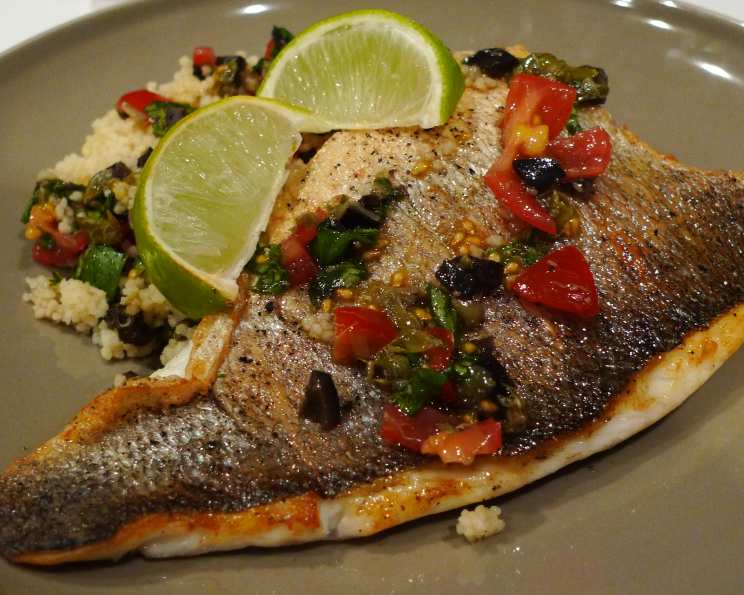
Pan-Fried Seabass Fillet with Salsa Sauce and Couscous: A Mediterranean Delight
The first time I tasted seabass prepared this way, it was on a small family-run taverna overlooking the Aegean Sea. The simplicity of the dish, perfectly cooked fish with a vibrant salsa bursting with fresh Mediterranean flavors, was captivating. The gentle sea breeze, the clinking of glasses, and the taste of that seabass are forever etched in my memory – a true testament to how simple ingredients, prepared with care, can create an unforgettable culinary experience.
Recipe Overview
- Prep Time: 10 minutes
- Cook Time: 15 minutes
- Total Time: 25 minutes
- Servings: 2
- Dietary Type: Pescatarian
Ingredients
- 2 (150 g) sea bass fillets, de-scaled and cleaned, skin on
- 50 g ripped cherry tomatoes, chopped into small pieces
- 1 tablespoon capers, chopped
- 2 tablespoons chopped olives
- 1 bunch fresh basil leaf, chopped
- 1 tablespoon olive oil
- 1 teaspoon balsamic vinegar
- ½ lime, freshly squeezed lime juice
- ½ lime, for garnish
- Sea salt, to taste
- Grounded black pepper, to taste
- 200 g couscous
- 400 ml chicken stock (vegetable stock can be substituted for a vegetarian option)
Equipment Needed
- Knife
- Chopping board
- Mixing bowl
- Frying pan (non-stick recommended)
- Spatula
- Plate
Instructions
-
Begin by preparing the seabass fillets. Score the skin of each fillet with a sharp knife, making shallow cuts about an inch apart. This helps the skin crisp up beautifully and prevents the fillet from curling during cooking. Season the fillets generously with sea salt and ground black pepper on both sides. Set aside.
-
Next, make the vibrant salsa. In a mixing bowl, combine the chopped cherry tomatoes, chopped capers, chopped olives, and chopped fresh basil leaves.
-
Add the olive oil, balsamic vinegar, and the juice of ½ lime to the salsa mixture. Season with sea salt and ground black pepper to your liking. Taste and adjust the seasoning as needed; it should be a bright and flavorful counterpoint to the richness of the fish.
-
Prepare the couscous. In a separate bowl, pour in the couscous, then add the chicken stock. The stock should be hot, but not boiling.
-
Cover the bowl with a plate and leave the couscous to sit for 5-7 minutes, or until all the liquid is absorbed. This allows the couscous to steam and become fluffy.
-
Once the liquid is absorbed, fluff the couscous with a fork. This separates the grains and creates a light and airy texture. Mix some of the tomato salsa into the couscous for added flavor and moisture. Dish the couscous onto a warm plate.
-
While the couscous is resting, heat a non-stick frying pan over medium heat. Add the remaining olive oil. Ensure the pan is hot before adding the fish.
-
When the oil is hot, gently place the seabass fillets in the pan, skin-side down. Immediately press the fillet down with a spatula to ensure even contact with the pan. This is crucial for achieving crispy skin.
-
Fry the fillet for 4 minutes, or until the skin is golden brown and crispy. Monitor the heat and adjust as needed to prevent burning.
-
Carefully turn the fish over using the spatula, being careful not to break the delicate fillet.
-
Fry for a further 2 minutes, or until the fish is cooked through. The flesh should be opaque and flake easily with a fork. Turn off the heat.
-
Lay the pan-fried seabass fillet on top of the couscous. Drizzle with some of the remaining tomato salsa and garnish with a wedge of lime. Serve immediately.
Expert Tips & Tricks
- For the crispiest skin, ensure the seabass fillet is as dry as possible before cooking. Pat it dry with paper towels.
- Don’t overcrowd the pan; cook the fillets in batches if necessary to maintain even heat distribution.
- To check for doneness, gently press the thickest part of the fillet. It should feel firm and spring back slightly. If it feels too soft, it needs a little more time.
- If you don’t have balsamic vinegar, a squeeze of lemon juice can be used as a substitute.
- Don’t be afraid to experiment with the salsa! Add a pinch of red pepper flakes for a little heat, or some finely chopped red onion for extra bite.
Serving & Storage Suggestions
Serve the pan-fried seabass immediately for the best texture and flavor. The crispy skin will soften over time. To plate attractively, consider arranging the couscous in a neat mound, placing the seabass fillet on top, and drizzling the salsa artfully around the fish. Garnish with fresh basil sprigs or a wedge of lime for a pop of color.
Leftovers can be stored in an airtight container in the refrigerator for up to 24 hours. However, the skin will lose its crispness. Reheat gently in a pan or microwave, but be careful not to overcook the fish. The salsa is best consumed fresh, but can also be stored in the refrigerator for up to 24 hours. Freezing is not recommended as it can affect the texture of the fish and salsa.
Nutritional Information
| Nutrient | Amount per Serving | % Daily Value |
|---|---|---|
| Calories | 681.6 kcal | N/A |
| Calories from Fat | N/A | N/A |
| Total Fat | 13.9 g | 21% |
| Saturated Fat | 2.6 g | 13% |
| Cholesterol | 67.6 mg | 22% |
| Sodium | 605.5 mg | 25% |
| Total Carbohydrate | 90.3 g | 30% |
| Dietary Fiber | 6.8 g | 27% |
| Sugars | 4.8 g | N/A |
| Protein | 46.2 g | 92% |
Note: These values are estimates and may vary based on specific ingredients and portion sizes.
Variations & Substitutions
- Gluten-free: Use gluten-free couscous or substitute with quinoa or rice.
- Vegetarian: Replace the chicken stock with vegetable stock.
- Spice it up: Add a pinch of red pepper flakes to the salsa for a little heat.
- Seasonal: Use seasonal tomatoes for the salsa, such as heirloom tomatoes in the summer.
- Herb variations: Experiment with different herbs in the salsa, such as mint, parsley, or cilantro.
- Fish Variations: Try this recipe with other white fish, such as cod, haddock, or snapper.
- Citrus Swap: Use lemon instead of lime for a different citrus note.
FAQs (Frequently Asked Questions)
Q: How do I prevent the fish from sticking to the pan?
A: Ensure the pan is hot before adding the oil, and use a non-stick frying pan. Also, make sure the fish is dry before searing.
Q: Can I use frozen seabass fillets?
A: Yes, but make sure to thaw them completely and pat them dry before cooking to remove excess moisture.
Q: How do I know when the seabass is cooked through?
A: The flesh should be opaque and flake easily with a fork. The internal temperature should reach 145°F (63°C).
Q: Can I make the salsa ahead of time?
A: Yes, you can make the salsa a few hours in advance. Store it in the refrigerator until ready to use.
Q: What other sides go well with this dish?
A: Steamed asparagus, sautéed spinach, or a simple green salad are all great accompaniments.
Final Thoughts
This Pan-Fried Seabass Fillet with Salsa Sauce and Couscous is a dish that is both elegant and approachable, perfect for a weeknight meal or a special occasion. The combination of crispy fish, vibrant salsa, and fluffy couscous creates a symphony of flavors and textures that will delight your taste buds. I encourage you to try this recipe and make it your own by experimenting with different variations and substitutions. Share your creations and feedback, and let’s continue to explore the wonderful world of cooking together! And why not pair this with a crisp, dry white wine, such as a Vermentino, to complete the Mediterranean experience?