
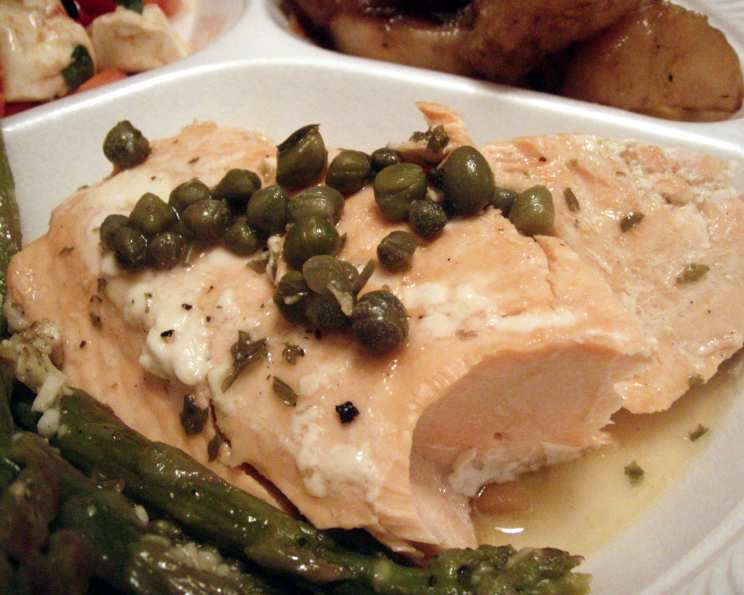
Pan-Poached Salmon Piccata: A Symphony of Flavors in Minutes
I remember the first time I tasted a perfectly executed piccata sauce. It was at a tiny trattoria in Rome, tucked away on a cobblestone street. The bright, lemony tang, the briny capers, the richness of the butter – it was an epiphany. Back home, I craved that experience, and that’s when I discovered the magic of pan-poaching salmon in a piccata sauce. It delivers all the vibrant flavors I love, but in a fraction of the time, making it a weeknight winner.
Recipe Overview
- Prep Time: 5 minutes
- Cook Time: 15 minutes
- Total Time: 20 minutes
- Servings: 4
- Dietary Type: Pescatarian
Ingredients
- 1 cup water
- 8 tablespoons lemon juice
- 1/4 teaspoon chicken bouillon granule
- 1 lb salmon fillet, skin on or off, cut into 4 equal portions
- 2 tablespoons butter
- 6 tablespoons capers, drained
- Black pepper, to taste
- 2 tablespoons parsley, dried
Equipment Needed
- Medium-sized skillet with a lid
- Fork
Instructions
-
In a medium-sized skillet, bring the water and lemon juice to a boil over medium-high heat.
-
Stir in the chicken bouillon granule until dissolved. This adds a subtle savory depth to the sauce.
-
Reduce the heat to a simmer, which is a gentle bubbling. Carefully place the salmon fillets into the pan. Ensure the salmon is mostly submerged in the liquid; if not, add a splash more water.
-
Cover the skillet with a lid and simmer over low heat. Cook for approximately 10 minutes per inch of thickness, measured at the thickest part of the fillet. This ensures the salmon is cooked through without drying out.
-
To test for doneness, gently flake the salmon with a fork. If it flakes easily and is opaque throughout, it’s ready. Be careful not to overcook the salmon, as it will become dry.
-
Remove the salmon fillets from the pan and set them aside. Cover them loosely with foil to keep them warm while you finish the sauce.
-
Increase the heat back to medium-high. Boil the remaining liquid in the skillet until it is reduced to approximately 1/4 cup. This concentrates the flavors and creates a richer base for the sauce. Watch carefully to prevent it from burning.
-
Reduce the heat to low. Whisk in the butter, a tablespoon at a time, until it is fully melted and emulsified into the reduced sauce. This creates a silky, luxurious texture.
-
Stir in the capers. Their briny, salty flavor is a signature element of piccata sauce.
-
Spoon the sauce generously over the salmon fillets.
-
Season with black pepper to taste.
-
Sprinkle with dried parsley for a pop of color and a subtle herbaceous note.
Expert Tips & Tricks
- Don’t overcrowd the pan: If your skillet is too small, cook the salmon in batches to ensure even cooking.
- Use fresh lemon juice: Bottled lemon juice lacks the vibrant flavor of fresh.
- Adjust the lemon: Taste the sauce and add more lemon juice if you prefer a tangier flavor.
- Skin-on vs. skin-off: Cooking with the skin on helps to keep the salmon moist. If you prefer skinless, you can easily remove the skin after cooking.
- Make it ahead: The piccata sauce can be made ahead of time and stored in the refrigerator for up to 2 days. Reheat gently before serving.
- Add a touch of heat: For a spicy kick, add a pinch of red pepper flakes to the sauce.
- Fresh herbs: While the recipe calls for dried parsley, fresh parsley, chopped finely, will elevate the dish. Add it at the very end to preserve its bright flavor.
- Wine Pairing: A crisp, dry white wine like Pinot Grigio or Sauvignon Blanc pairs perfectly with the lemony flavors of this dish.
Serving & Storage Suggestions
Serve the Pan-Poached Salmon Piccata immediately for the best flavor and texture. Garnish with extra parsley and a lemon wedge. It pairs beautifully with a side of roasted asparagus, garlic mashed potatoes, or angel hair pasta.
Leftovers can be stored in an airtight container in the refrigerator for up to 2 days. To reheat, gently warm the salmon in a skillet over low heat or in the microwave. Be careful not to overcook it. The sauce may separate slightly upon reheating, but it will still taste delicious. Freezing is not recommended as it can affect the texture of the salmon.
Nutritional Information
| Nutrient | Amount per Serving | % Daily Value |
|---|---|---|
| Calories | 194 kcal | – |
| Calories from Fat | 88 kcal | 45% |
| Total Fat | 9.8 g | 15% |
| Saturated Fat | 4.3 g | 21% |
| Cholesterol | 74.4 mg | 24% |
| Sodium | 525.2 mg | 21% |
| Total Carbohydrate | 3.4 g | 1% |
| Dietary Fiber | 0.6 g | 2% |
| Sugars | 0.8 g | 3% |
| Protein | 23.2 g | 46% |
Variations & Substitutions
- Gluten-Free: This recipe is naturally gluten-free.
- Dairy-Free: Substitute the butter with olive oil or a dairy-free butter alternative.
- Herb Variations: Experiment with different herbs, such as fresh dill or thyme.
- Fish Substitutions: This recipe also works well with other flaky white fish, such as cod or haddock. Adjust cooking time accordingly.
- Vegetarian Option: Sauté thick slices of halloumi cheese instead of salmon and follow the rest of the recipe.
FAQs (Frequently Asked Questions)
Q: Can I use frozen salmon for this recipe?
A: Yes, but make sure to thaw the salmon completely before cooking. Pat it dry with paper towels to remove excess moisture.
Q: How do I know when the salmon is cooked through?
A: The salmon is cooked when it flakes easily with a fork and is opaque throughout. An internal temperature of 145°F (63°C) is ideal.
Q: Can I add wine to the sauce?
A: Absolutely! Add a splash of dry white wine, such as Pinot Grigio, to the skillet after removing the salmon. Let it reduce slightly before adding the butter and capers.
Q: What can I use instead of chicken bouillon?
A: Vegetable bouillon or fish bouillon can be used as substitutes. You can also omit it entirely, but it adds a nice depth of flavor.
Q: Can I use salted or unsalted butter?
A: Either salted or unsalted butter will work. If using salted butter, taste the sauce before adding any additional salt.
Final Thoughts
Pan-Poached Salmon Piccata is a testament to the fact that delicious, restaurant-quality meals don’t have to be complicated or time-consuming. This recipe is a blank canvas for your culinary creativity, so don’t be afraid to experiment with different herbs, spices, and vegetables. I encourage you to try this recipe and share your creations with friends and family. It’s a guaranteed crowd-pleaser!