
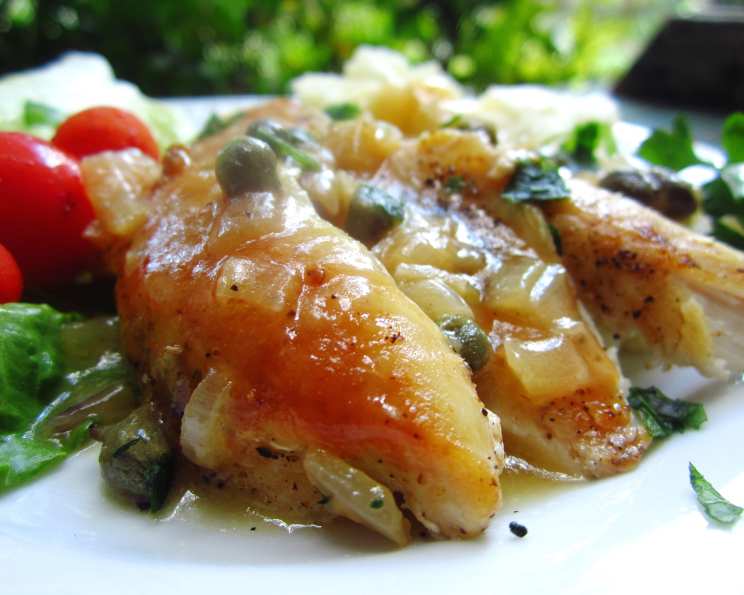
Pan Roasted Chicken Breasts With Lemon and Caper Sauce
The first time I made this dish, it was a chilly autumn evening. The scent of lemons and herbs mingled with the crisp air drifting in from the open kitchen window, instantly transporting me back to a sun-drenched terrace in Tuscany. The golden-brown chicken, glistening with the tangy sauce, was a comforting beacon against the gathering dusk. That night, gathered around the table with close friends, this simple yet elegant dish felt like a warm hug on a plate, solidifying its place as a forever favorite.
Recipe Overview
- Prep Time: 10 minutes
- Cook Time: 40 minutes
- Total Time: 50 minutes
- Servings: 4
- Dietary Type: High Protein
Ingredients
- 3 lbs bone-in skin-on chicken breasts
- 1 tablespoon vegetable oil
- Salt and pepper
For the Sauce:
- 1 teaspoon vegetable oil
- 1 shallot, minced
- 1 teaspoon flour
- 3⁄4 cup low sodium chicken broth
- 1 tablespoon unsalted butter
- 1 tablespoon capers
- 1 tablespoon fresh parsley, chopped
- 2 teaspoons fresh lemon juice
- Salt and pepper to taste
Equipment Needed
- 12-inch oven-safe skillet
- Paper towels
- Instant-read thermometer
- Cutting board
- Chef’s knife
Instructions
- Adjust an oven rack to the lowest position and heat the oven to 450°F.
- Pat the chicken breasts dry with paper towels. This is crucial for achieving crispy skin. Season generously with salt and pepper on both sides.
- Heat 1 tablespoon of vegetable oil in a 12-inch oven-safe skillet over medium-high heat until the oil is just smoking. The skillet needs to be hot enough to quickly sear the chicken.
- Carefully lay the chicken breasts skin-side down in the hot skillet and cook until the skin is well browned and crispy, about 6-8 minutes. Resist the urge to move the chicken around too much, as this will prevent proper browning.
- Turn the chicken breasts and continue to brown lightly on the second side, about 3 minutes.
- Turn the chicken breasts skin-side down again.
- Transfer the skillet to the preheated oven. Roast until the thickest part of the breasts registers 160°F on an instant-read thermometer, about 15-20 minutes. Check the temperature periodically, as cooking times can vary depending on the size of the chicken breasts.
- Remove the skillet from the oven. (Warning: The handle is HOT!) Use oven mitts or a thick towel to handle the skillet.
- Transfer the chicken breasts to a plate, tent loosely with foil, and let rest while making the sauce. This allows the juices to redistribute, resulting in a more tender and flavorful chicken.
- Sauce: Being careful of the hot pan handle, add 1 teaspoon of vegetable oil to the skillet and return it to medium heat until the oil is shimmering.
- Add the minced shallot to the skillet and cook until softened and translucent, about 2 minutes. Be careful not to burn the shallots; adjust the heat as needed.
- Stir in the flour and cook for 30 seconds, stirring constantly. This creates a roux that will thicken the sauce.
- Stir in the low sodium chicken broth, scraping up any browned bits from the bottom of the pan. These browned bits, called fond, add a lot of flavor to the sauce.
- Bring the sauce to a simmer and cook for 2-3 minutes to reduce slightly and thicken.
- Stir in any accumulated juices from the chicken (from the plate where the chicken is resting) and return to a simmer.
- Remove the skillet from the heat and stir in the unsalted butter, capers, fresh parsley, and fresh lemon juice. The butter adds richness and the lemon juice adds brightness.
- Season the sauce with salt and pepper to taste.
- Carve the chicken (if desired, although bone-in is delicious!) and serve immediately with the lemon-caper sauce spooned over the top.
Expert Tips & Tricks
- Crispy Skin Secrets: Patting the chicken dry is paramount for achieving that desirable crispy skin. The drier the skin, the better it will brown.
- Don’t Crowd the Pan: If your skillet is too small to fit all the chicken breasts without crowding, cook them in batches. Overcrowding lowers the pan temperature and prevents proper browning.
- Resting is Key: Allowing the chicken to rest after cooking is crucial for tender and juicy results. Tenting it with foil helps retain heat without steaming the skin.
- Shallot Substitute: If you don’t have shallots on hand, a small amount of finely chopped onion can be used as a substitute.
- Adding Herbs: Feel free to experiment with other herbs in the sauce, such as thyme or rosemary. Add them towards the end of cooking to preserve their flavor.
Serving & Storage Suggestions
Serve the Pan Roasted Chicken Breasts with Lemon and Caper Sauce immediately for the best flavor and texture. Some excellent side dishes to complement this dish include roasted vegetables (asparagus, broccoli, or carrots), mashed potatoes, or a simple green salad.
To store leftovers, let the chicken cool completely before placing it in an airtight container in the refrigerator. Leftovers will keep for up to 3-4 days. The sauce can also be stored separately in an airtight container.
To reheat, gently warm the chicken in a skillet over low heat or in a preheated oven at 350°F. Reheat the sauce separately in a saucepan until warmed through. You can also microwave the chicken, but be careful not to overcook it, as it can become dry.
Nutritional Information
| Nutrient | Amount per Serving | % Daily Value |
|---|---|---|
| Calories | 665.7 kcal | N/A |
| Calories from Fat | 352 g | 53% |
| Total Fat | 39.2 g | 60% |
| Saturated Fat | 11.6 g | 57% |
| Cholesterol | 225.6 mg | 75% |
| Sodium | 293.3 mg | 12% |
| Total Carbohydrate | 2.2 g | 0% |
| Dietary Fiber | 0.1 g | 0% |
| Sugars | 0.1 g | 0% |
| Protein | 72.2 g | 144% |
Variations & Substitutions
- Gluten-Free: Ensure the chicken broth is gluten-free, and substitute the all-purpose flour with a gluten-free blend or cornstarch for thickening the sauce.
- Dairy-Free: Replace the butter with a dairy-free butter alternative or olive oil.
- Herb Infusion: Experiment with infusing the vegetable oil with herbs like rosemary or thyme before searing the chicken for an extra layer of flavor.
- Spicy Kick: Add a pinch of red pepper flakes to the sauce for a subtle heat.
- Wine Reduction: For a richer, more complex sauce, deglaze the pan with a splash of dry white wine after cooking the shallots, allowing it to reduce before adding the chicken broth.
FAQs (Frequently Asked Questions)
Q: Can I use boneless, skinless chicken breasts for this recipe?
A: While you can, bone-in, skin-on chicken breasts are recommended for optimal flavor and juiciness. The bone adds flavor and the skin crisps up beautifully, creating a wonderful texture. If using boneless, skinless breasts, reduce the cooking time accordingly and be careful not to overcook them.
Q: What is the best way to check the doneness of the chicken?
A: The most accurate way is to use an instant-read thermometer. Insert the thermometer into the thickest part of the breast, avoiding the bone. The chicken is done when it reaches an internal temperature of 160°F. It will continue to rise slightly as it rests.
Q: Can I make the sauce ahead of time?
A: The sauce is best made fresh, but you can certainly prep the shallots and other ingredients in advance. If you need to make the sauce ahead of time, store it in an airtight container in the refrigerator and reheat gently before serving.
Q: What if my chicken skin isn’t crispy enough?
A: Ensure the chicken skin is completely dry before searing. Also, make sure the skillet is hot enough before adding the chicken. You can also broil the chicken for the last few minutes of cooking to crisp up the skin further, but watch it carefully to prevent burning.
Q: Can I freeze leftovers?
A: While you can freeze the cooked chicken, the texture may change slightly upon thawing. The sauce can also be frozen, but it may separate slightly. To minimize changes in texture, wrap the chicken tightly in plastic wrap and then in foil, and store the sauce in an airtight container.
Final Thoughts
This Pan Roasted Chicken Breast with Lemon and Caper Sauce is a testament to the fact that simple ingredients, when combined with skillful technique, can create a truly memorable meal. It’s an approachable yet elegant dish that’s perfect for a weeknight dinner or a special occasion. Don’t be afraid to experiment with the variations and make it your own. I encourage you to try this recipe and share your experience, and consider pairing it with a crisp Sauvignon Blanc for a truly delightful dining experience. Bon appétit!