
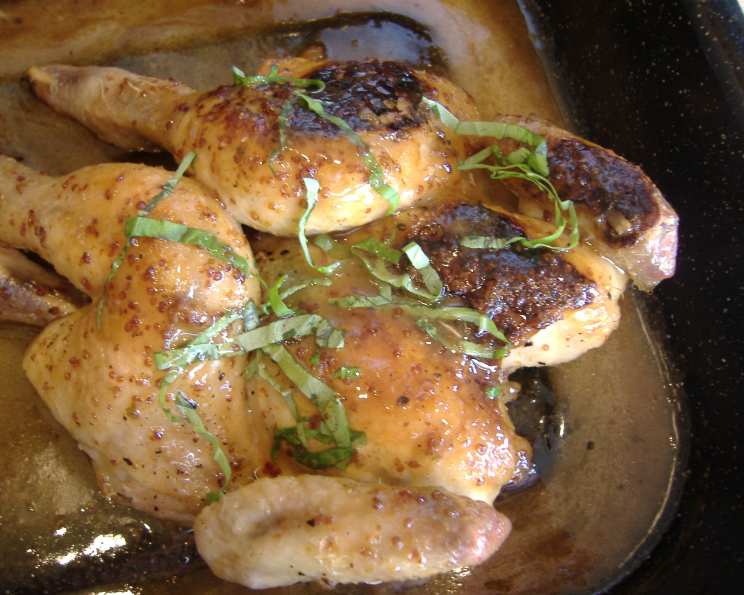
Pan Roasted Chicken With Lemon and Whole Grain Mustard
There’s something about a perfectly roasted chicken that speaks of home, comfort, and shared meals. I remember the first time I made this particular recipe; I was a young cook, intimidated by the idea of roasting a whole bird. The aroma of lemon, mustard, and fresh herbs filled my tiny apartment kitchen, and as the chicken sizzled in the pan, I felt a surge of confidence. That mahogany-brown, crispy skin and the incredibly juicy meat beneath was a triumph. This recipe quickly became a go-to, a reliable way to impress friends and family without spending hours in the kitchen.
Recipe Overview
- Prep Time: 10 minutes
- Cook Time: 40 minutes
- Total Time: 50 minutes
- Servings: 2-4
- Yield: 1 chicken
- Dietary Type: Gluten-Free
Ingredients
- 1 (3 lb) frying chicken, butterflied
- 2 fresh basil leaves or 1 sprig rosemary
- Salt & freshly ground black pepper, to taste
- 2 tablespoons extra virgin olive oil
- 1 cup chicken stock
- 2 large lemons, juice of (6 to 8 TBS)
- 2 tablespoons whole grain mustard
- 4 tablespoons unsalted butter, cut into several pieces
- 1/4 cup minced fresh flat leaf parsley or 1/4 cup finely shredded fresh basil
Equipment Needed
- Oven-proof skillet large enough to hold the chicken
- Poultry shears (optional, for butterflying the chicken yourself)
- Cutting board
- Wooden spoon
- Wire whisk
- Thin skewer
Instructions
-
Preheat oven to 450°F (232°C). Ensure your oven rack is positioned in the middle.
-
Prepare the chicken by gently easing your fingertips between the skin and the meat at the neck opening. Loosen the skin all over the breast, taking care not to tear it. This creates a pocket for the herbs, which will infuse the meat with flavor.
-
Insert the parsley sprig, basil, or rosemary under the skin. Distribute the herb evenly across the breast for maximum flavor impact.
-
Season the chicken generously on both sides with salt and pepper. Don’t be shy – this is your chance to build a flavorful crust.
-
Heat an oven-proof skillet large enough to hold the chicken over high heat. Make sure the skillet is thoroughly heated before adding the oil.
-
Add the olive oil and swirl it in the skillet. The oil should shimmer and appear almost fluid-like, rather than viscous.
-
As soon as you begin to see slight wisps of smoke, carefully place the chicken skin side down in the skillet. This initial sear is crucial for achieving that coveted crispy skin.
-
Sear the chicken, undisturbed, while reducing the heat little by little to medium, until its skin has turned golden brown and crisp, 5 to 7 minutes. Resist the urge to move the chicken around. Patience is key!
-
Carefully turn the chicken skin side up. Use tongs to avoid splattering hot oil.
-
Put the skillet with the chicken into the preheated oven and cook until the chicken is deep golden brown and the juices run clear when the thickest part of the thigh meat is pierced with a thin skewer, 10 to 15 minutes more, depending on its size. The internal temperature of the thickest part of the thigh should reach 165°F (74°C).
-
When the chicken is done, remove it from the skillet with tongs and transfer it to a cutting board. Allow the chicken to rest for at least 5 minutes before carving. This allows the juices to redistribute, resulting in a more tender and flavorful bird.
-
Pour off all but a thin glaze of fat from the skillet. Be careful when handling hot fat. You can reserve the rendered chicken fat for other cooking purposes.
-
Return the skillet to high heat, add the chicken stock and the lemon juice, stirring and scraping with a wooden spoon to deglaze the pan. The browned bits stuck to the bottom of the pan (fond) are packed with flavor, so be sure to scrape them up.
-
Boil the liquid down until it has reduced by half its volume, 3 to 4 minutes. The sauce will thicken slightly as it reduces.
-
Turn down the heat to low and add the mustard, stirring briskly with a wire whisk. The mustard will add a tangy and slightly spicy element to the sauce.
-
Add the butter a piece at a time to make a creamy sauce, making sure each piece has been incorporated completely before adding the next. This technique, known as mounting with butter, emulsifies the sauce and gives it a luxurious, velvety texture.
-
Season to taste with salt and pepper and stir in half of the parsley or basil. Taste the sauce and adjust the seasoning as needed.
-
To serve, spoon the sauce into the centers of two to four heated plates. Warming the plates helps to keep the food hot for longer.
-
With a large sharp knife, cut the chicken into two halves or four equal pieces.
-
Place the chicken on the plates, sprinkle with the remaining parsley or basil and serve.
Expert Tips & Tricks
- Butterflying the chicken: If you’re not comfortable butterflying the chicken yourself, ask your butcher to do it for you. It significantly reduces cooking time and ensures even cooking. If you do it yourself, use sharp poultry shears and work slowly and carefully.
- Don’t overcrowd the pan: Make sure the skillet is large enough to comfortably hold the chicken without overcrowding. Overcrowding will lower the temperature of the pan and prevent the skin from getting crispy.
- Temperature is key: Use an instant-read thermometer to ensure the chicken is cooked to the correct internal temperature.
- Resting the chicken: Don’t skip the resting period! It’s essential for juicy, flavorful meat.
- Make-Ahead: The sauce can be made ahead of time and reheated gently before serving.
Serving & Storage Suggestions
Serve this pan-roasted chicken immediately for the best flavor and crispy skin. It pairs beautifully with roasted vegetables, mashed potatoes, or a simple salad. To store leftovers, let the chicken cool completely, then transfer it to an airtight container. It will keep in the refrigerator for up to 3 days. Reheat in the oven at 350°F (175°C) until warmed through. The sauce can also be stored separately in the refrigerator. Freezing is not recommended as it will affect the texture of the chicken and sauce.
Nutritional Information
| Nutrient | Amount per Serving | % Daily Value |
|---|---|---|
| Calories | 930 kcal | 47% |
| Total Fat | 70.7 g | 109% |
| Saturated Fat | 23.15 g | 116% |
| Cholesterol | 288.5 mg | 96% |
| Sodium | 413.05 mg | 17% |
| Total Carbohydrate | 5 g | 2% |
| Dietary Fiber | 0.45 g | 2% |
| Sugars | 1.75 g | 7% |
| Protein | 65.65 g | 131% |
Nutritional information is an estimate and may vary based on specific ingredients and portion sizes.
Variations & Substitutions
- Herb Variations: Experiment with different herbs like thyme, sage, or oregano instead of basil or rosemary.
- Spice it Up: Add a pinch of red pepper flakes to the sauce for a touch of heat.
- Wine Addition: Add a splash of dry white wine to the pan while deglazing for a richer flavor.
- Mustard Variety: Try using Dijon mustard or a honey mustard for a different flavor profile.
- Vegetable Accompaniment: Roast vegetables like potatoes, carrots, and onions alongside the chicken for a complete one-pan meal.
- Dairy-Free Option: Substitute the butter with olive oil or a vegan butter alternative.
FAQs (Frequently Asked Questions)
Q: How do I know when the chicken is fully cooked?
A: The best way to check is with a meat thermometer. Insert it into the thickest part of the thigh, avoiding the bone. It should register 165°F (74°C). The juices should also run clear when pierced with a fork.
Q: Can I use bone-in, skin-on chicken pieces instead of a whole butterflied chicken?
A: Yes, you can, but the cooking time will need to be adjusted. Follow the same searing and sauce-making steps, but cook the chicken pieces until they reach an internal temperature of 165°F (74°C).
Q: What if I don’t have an oven-proof skillet?
A: You can sear the chicken in a regular skillet and then transfer it to a baking dish to finish cooking in the oven.
Q: Can I use dried herbs instead of fresh?
A: Yes, but use about half the amount since dried herbs are more concentrated. For this recipe, use 1 fresh basil leave or 1/2 sprig of rosemary.
Q: The sauce is too tart. What can I do?
A: Add a small amount of honey or sugar to balance the acidity. A pinch should be enough.
Final Thoughts
This Pan Roasted Chicken with Lemon and Whole Grain Mustard is a simple yet elegant dish that is perfect for a weeknight dinner or a special occasion. The combination of crispy skin, juicy meat, and tangy sauce is simply irresistible. I encourage you to try this recipe and make it your own. Don’t be afraid to experiment with different herbs, spices, and flavor combinations. And most importantly, have fun in the kitchen! Share your culinary creations with loved ones and savor the joy of a home-cooked meal. Serve it with a crisp glass of Sauvignon Blanc for a truly delightful experience.