
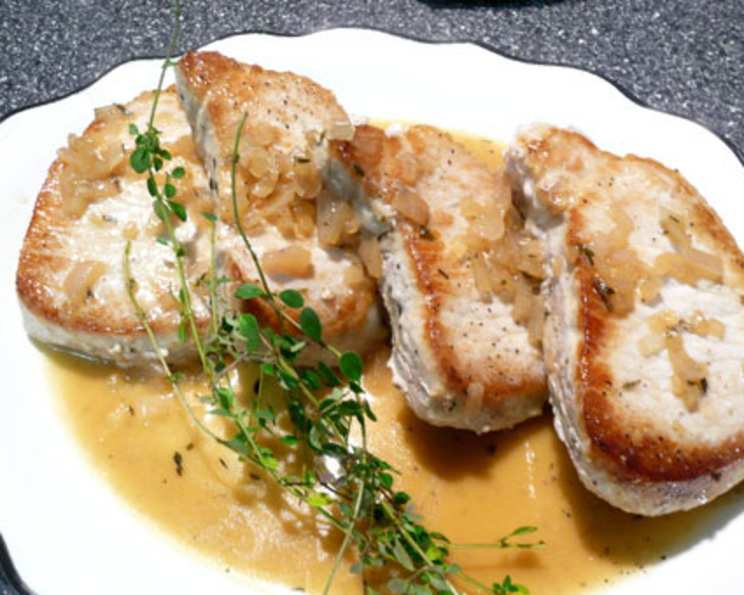
Pan-Seared Pork Chops with Cider Sauce: An Autumnal Delight
The first time I tasted a pork chop with apple cider sauce, it was a chilly October evening at a small farm-to-table restaurant nestled in the Hudson Valley. The aroma of crisp apples and savory herbs filled the air, creating an atmosphere of warmth and comfort. The dish was simple yet exquisite – a perfectly seared pork chop, its richness balanced by the sweet and tangy cider sauce. Each bite was a celebration of fall flavors, and it sparked a lifelong love for this delightful combination.
Recipe Overview
- Prep Time: 10 minutes
- Cook Time: 15 minutes
- Total Time: 25 minutes
- Servings: 4
- Yield: 4 pork chops
- Dietary Type: Gluten-Free
Ingredients
- 4 boneless pork chops, 1-inch thick
- Salt and freshly ground black pepper, to taste
- 1 tablespoon vegetable oil
- 2 tablespoons butter, divided
- 2 shallots, minced
- 4 sprigs fresh thyme
- ¼ cup cider vinegar
- 1 cup apple cider
- ½ cup chicken stock
- Thyme leaves (to garnish)
Equipment Needed
- Large frying pan (preferably cast iron)
- Tongs
- Measuring cups and spoons
- Cutting board
- Knife
Instructions
-
Begin by preparing your pork chops. Pat them dry with paper towels. This is crucial for achieving a good sear. Season both sides generously with salt and freshly ground black pepper. Don’t be shy – proper seasoning is key to a flavorful chop.
-
Heat the vegetable oil in a large frying pan over medium-high heat. Ensure the pan is hot before adding the pork. A screaming hot pan is what will give you that beautiful crust on the pork chops.
-
Place the seasoned, room-temperature pork chops carefully in the hot pan. Sear them for 3 to 4 minutes without moving. Resist the urge to peek or fidget with them! This allows a deep, golden-brown crust to develop.
-
Flip the pork chops and cook for another 3 to 4 minutes, again without moving them, until the other side is equally well-seared. The internal temperature should reach 145°F (63°C) for safe consumption and optimal juiciness. Use a meat thermometer to ensure accuracy.
-
Remove the pork chops from the pan and set them aside on a plate. Tent them loosely with foil to keep them warm while you prepare the sauce.
-
Add 1 tablespoon of butter to the pan. Once melted, add the minced shallots and fresh thyme sprigs. Stir continuously for about 2 minutes until the shallots have softened and become fragrant. Be careful not to burn the shallots, as this will impart a bitter taste to the sauce.
-
Pour the cider vinegar into the pan, being careful as it may sizzle. Deglaze the pan by scraping up any browned bits from the bottom – these bits are packed with flavor! Reduce the vinegar for about 3 minutes, or until it thickens slightly. This step is crucial for mellowing the acidity of the vinegar.
-
Add the apple cider and chicken stock to the pan. Bring the mixture to a simmer and reduce it by half, which should take approximately 5-7 minutes. The sauce should thicken to a syrupy consistency.
-
Remove the thyme sprigs from the sauce. At this point, you can use tongs or a fork to easily remove the spent herbs.
-
Return the seared pork chops to the pan and let them simmer in the sauce for about 2 minutes to reheat them. This also allows the flavors of the sauce to meld with the pork chops.
-
Remove the pork chops from the pan again and place them back on the plate.
-
Stir in the remaining 1 tablespoon of butter into the sauce. This adds richness and a beautiful glossy sheen. Season the sauce to taste with additional salt and freshly ground black pepper.
-
Pour the luscious cider sauce generously over the pork chops. Garnish with fresh thyme leaves for an added touch of freshness and visual appeal.
Expert Tips & Tricks
- Pat the pork chops dry: This is essential for getting a good sear. Moisture is the enemy of browning.
- Don’t overcrowd the pan: If your pan is too small, cook the pork chops in batches to ensure they brown properly.
- Use a meat thermometer: This is the best way to ensure your pork chops are cooked to a safe and juicy internal temperature of 145°F (63°C).
- Let the pork chops rest: After cooking, let the pork chops rest for a few minutes before slicing. This allows the juices to redistribute, resulting in a more tender and flavorful chop.
- For a thicker sauce: Create a slurry with 1 tablespoon of cornstarch and 2 tablespoons of cold water. Whisk it into the sauce during the reduction process to thicken it further.
- Add a touch of sweetness: A teaspoon of maple syrup or honey can enhance the apple cider flavor in the sauce.
Serving & Storage Suggestions
Serve the pan-seared pork chops with cider sauce immediately for the best flavor and texture. They pair beautifully with sides like roasted root vegetables, mashed sweet potatoes, or a simple green salad.
Leftover pork chops can be stored in an airtight container in the refrigerator for up to 3 days. Reheat them gently in a skillet with a little bit of the sauce, or in a microwave. Be careful not to overcook them during reheating, as they can become dry.
The sauce can also be stored separately in the refrigerator for up to 3 days.
Nutritional Information
| Nutrient | Amount per Serving | % Daily Value |
|---|---|---|
| Calories | 420 kcal | 21% |
| Total Fat | 25g | 38% |
| Saturated Fat | 10g | 50% |
| Cholesterol | 150mg | 50% |
| Sodium | 250mg | 11% |
| Carbohydrates | 5g | 2% |
| Fiber | 0g | 0% |
| Sugar | 3g | – |
| Protein | 42g | 84% |
Note: Nutritional information is an estimate and may vary based on specific ingredients and cooking methods.
Variations & Substitutions
- Bone-in pork chops: You can use bone-in pork chops instead of boneless. Adjust cooking time accordingly, as bone-in chops may take a bit longer to cook through.
- Apple juice: If you don’t have apple cider, apple juice can be used as a substitute, although the flavor won’t be quite as complex.
- Different herbs: Feel free to experiment with other herbs like sage, rosemary, or oregano in the sauce.
- Spicy kick: Add a pinch of red pepper flakes to the sauce for a touch of heat.
- Vegetarian option: Try this sauce with pan-seared halloumi cheese or roasted cauliflower steaks for a vegetarian alternative.
FAQs (Frequently Asked Questions)
Q: Can I make the sauce ahead of time?
A: Yes, you can make the cider sauce up to 2 days in advance. Store it in an airtight container in the refrigerator and reheat it gently before serving.
Q: How do I know when the pork chops are cooked through?
A: The best way to ensure the pork chops are cooked to a safe internal temperature is to use a meat thermometer. Insert the thermometer into the thickest part of the chop, avoiding the bone. The internal temperature should reach 145°F (63°C).
Q: Can I use a different type of vinegar?
A: While cider vinegar complements the apple flavors in the sauce, you could experiment with other vinegars like white wine vinegar or balsamic vinegar. Keep in mind that the flavor profile will change.
Q: What if my sauce is too thin?
A: If your sauce is too thin, continue simmering it for a few more minutes until it reduces to your desired consistency. Alternatively, you can thicken it with a cornstarch slurry (1 tablespoon cornstarch mixed with 2 tablespoons cold water).
Q: Can I freeze the leftover pork chops?
A: While you can freeze leftover pork chops, the texture may change slightly upon thawing. To freeze, wrap the pork chops tightly in plastic wrap and then in aluminum foil. Store them in the freezer for up to 2 months. Thaw them overnight in the refrigerator before reheating.
Final Thoughts
This pan-seared pork chop with cider sauce recipe is a true celebration of autumn flavors, and it’s surprisingly easy to make at home. The combination of savory pork and sweet-tangy sauce is simply irresistible. I encourage you to give this recipe a try and experience the deliciousness for yourself! Don’t be afraid to experiment with variations and make it your own. Share your feedback and any creative twists you come up with – I’d love to hear about your culinary adventures. This dish pairs perfectly with a crisp apple salad and a glass of dry hard cider. Bon appétit!