
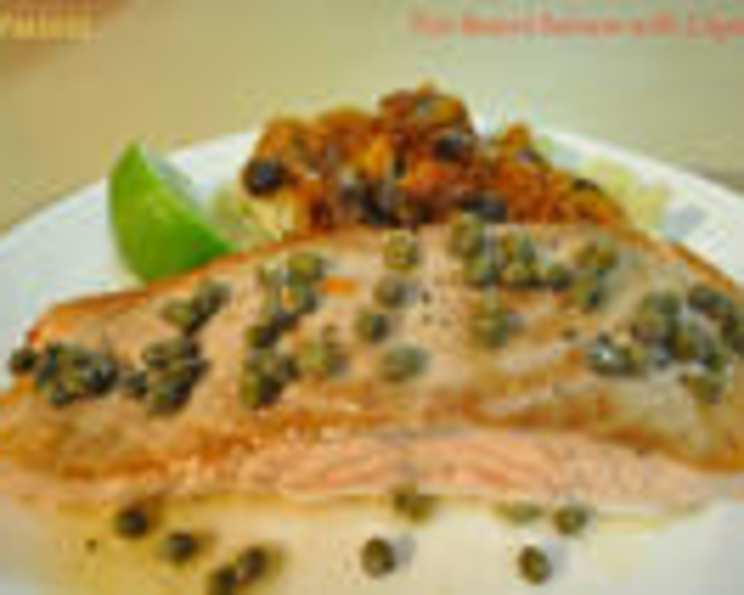
Pan-Seared Salmon with Capers: A Mediterranean Delight
I remember the first time I tasted salmon prepared this way. It was at a tiny trattoria overlooking the Ligurian Sea. The air was thick with the scent of salt and herbs, and the simple, perfectly cooked salmon with its burst of salty capers was a revelation. It wasn’t just the food; it was the moment – the golden sunset, the gentle sea breeze, and the vibrant flavors that captured the essence of the Mediterranean. I’ve been chasing that feeling ever since, and this recipe comes incredibly close.
Recipe Overview
- Prep Time: 5 minutes
- Cook Time: 8 minutes
- Total Time: 13 minutes
- Servings: 4
- Dietary Type: Pescatarian, Gluten-Free (naturally)
Ingredients
- 4 (6 ounce) salmon fillets
- 2 tablespoons olive oil
- 2 tablespoons capers
- ⅛ teaspoon salt
- ⅛ teaspoon ground black pepper
- 4 slices lemons
Equipment Needed
- Large Heavy Skillet
Instructions
-
Preheat a large, heavy skillet over medium heat for 3 minutes. This is crucial to ensure even cooking and a beautiful sear. Using a heavy skillet, such as cast iron, will retain heat better.
-
Coat the salmon fillets with olive oil. Ensure each fillet is evenly coated, as this will help them develop a delicious crust. You can use your hands or a pastry brush for this step.
-
Place the salmon fillets in the preheated skillet, and increase the heat to high. Be careful not to overcrowd the pan; if necessary, cook the salmon in batches to maintain proper searing.
-
Cook for 3 minutes on the first side. Avoid moving the salmon during this time to allow a golden-brown crust to form.
-
Sprinkle the capers, salt, and ground black pepper over the salmon fillets. Distribute the capers evenly so that each fillet gets a good amount.
-
Turn the salmon fillets over, and cook for 5 minutes, or until browned and cooked through. The exact cooking time will depend on the thickness of the salmon fillets.
-
The salmon is done when it flakes easily with a fork. Gently insert a fork into the thickest part of the fillet and twist; if the salmon separates easily, it’s ready.
-
Transfer the cooked salmon fillets to individual plates, and garnish with lemon slices. Serve immediately.
Expert Tips & Tricks
- Pat the salmon dry: Before coating with olive oil, pat the salmon fillets dry with a paper towel. This helps to achieve a crispier sear.
- Don’t overcrowd the pan: Overcrowding lowers the pan temperature and results in steamed, rather than seared, salmon.
- Use skin-on fillets: If using skin-on salmon, sear the skin side down first for a crispy skin.
- Caper brine burst: For extra flavor, add a tablespoon of the caper brine to the pan during the last minute of cooking.
- Doneness test: If you don’t have a fork handy, insert a thin knife into the thickest part of the salmon. If it’s opaque throughout, it’s done. You can also use a meat thermometer; salmon is best cooked to an internal temperature of 145°F (63°C).
- Lemon zest boost: Add a teaspoon of lemon zest along with the capers for an even brighter flavor profile.
Serving & Storage Suggestions
Serve the pan-seared salmon immediately while it’s hot and the crust is crispy. It pairs beautifully with a simple green salad, roasted vegetables (asparagus, broccoli, or green beans are excellent choices), or a side of creamy polenta or risotto. A dry white wine, such as Sauvignon Blanc or Pinot Grigio, complements the dish perfectly.
Leftovers can be stored in an airtight container in the refrigerator for up to 2 days. To reheat, gently warm the salmon in a skillet over low heat or in a microwave. Be careful not to overcook it, as it can become dry. Salmon doesn’t freeze well after cooking, so it’s best to enjoy it fresh.
Nutritional Information
| Nutrient | Amount per Serving | % Daily Value |
|---|---|---|
| Calories | 277 kcal | N/A |
| Total Fat | 14g | 22% |
| Saturated Fat | 2g | 10% |
| Cholesterol | 77mg | 26% |
| Sodium | 327mg | 14% |
| Total Carbohydrate | 1g | 0% |
| Dietary Fiber | 0g | 0% |
| Sugars | 0g | 0% |
| Protein | 35g | 70% |
Note: Nutritional information is an estimate and may vary based on specific ingredients and cooking methods.
Variations & Substitutions
- Herb-Infused Oil: Infuse the olive oil with fresh herbs like thyme, rosemary, or dill for added flavor. Simply heat the oil with the herbs over low heat for a few minutes, then strain before using.
- Spice It Up: Add a pinch of red pepper flakes along with the salt and pepper for a subtle kick.
- Citrus Variations: Experiment with different citrus fruits. Orange or grapefruit slices can be used instead of lemon.
- Caper Alternatives: If you’re not a fan of capers, try using chopped green olives or sun-dried tomatoes instead.
- Sauce Enhancement: Create a simple pan sauce by deglazing the skillet with white wine or chicken broth after cooking the salmon. Reduce the liquid until slightly thickened, then swirl in a pat of butter for richness.
- Mediterranean Herb Crust: Combine panko breadcrumbs, grated Parmesan cheese, chopped herbs (parsley, oregano, thyme), and olive oil. Press the mixture onto the salmon fillets before searing for a crispy, flavorful crust.
FAQs (Frequently Asked Questions)
Q: Can I use frozen salmon for this recipe?
A: Yes, but make sure to thaw the salmon completely before cooking. Pat it dry with paper towels to remove excess moisture for a better sear.
Q: What if I don’t have a heavy skillet?
A: While a heavy skillet is ideal, you can still use a regular skillet. Just be mindful of maintaining a consistent heat level and avoid overcrowding the pan.
Q: How do I prevent the salmon from sticking to the pan?
A: Ensure the skillet is properly preheated and well-oiled. Also, avoid moving the salmon around too much during the initial searing process.
Q: Can I add other vegetables to the pan while cooking the salmon?
A: Yes, you can add vegetables like asparagus, cherry tomatoes, or zucchini during the last few minutes of cooking. Just make sure to adjust the cooking time accordingly.
Q: Is it possible to overcook salmon?
A: Yes, salmon can easily become dry and tough if overcooked. Use a fork to check for flakiness and avoid cooking it for too long.
Final Thoughts
This pan-seared salmon with capers is more than just a quick and easy weeknight dinner; it’s a passport to the sun-drenched shores of the Mediterranean. With its simple yet vibrant flavors, it’s a dish that’s sure to impress. So, grab your skillet, gather your ingredients, and prepare to embark on a culinary adventure. Don’t be afraid to experiment with variations and make it your own. And most importantly, savor every delicious bite! I can’t wait to hear about your experience with this recipe – please share your feedback and any creative twists you try. Buon appetito!