
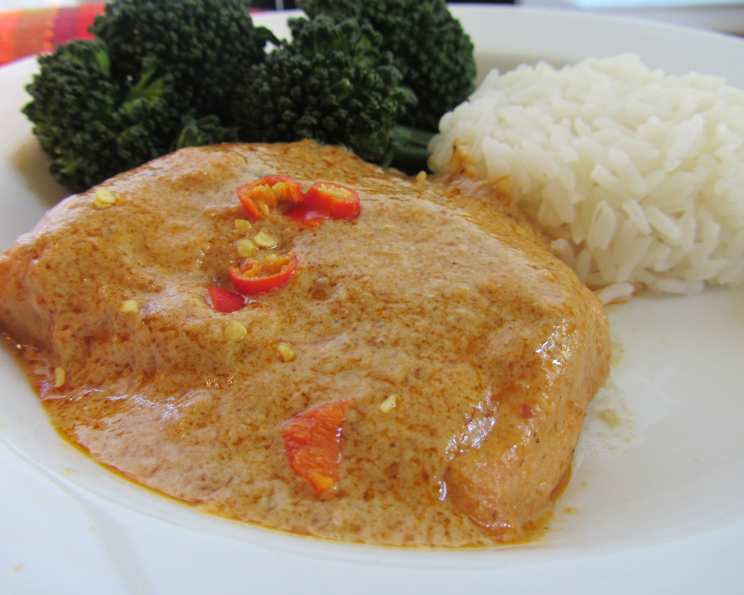
Panang Curry Salmon: A Taste of Thailand at Home
The first time I tasted Panang curry was at a tiny, family-run restaurant in San Francisco’s Mission District. The aroma alone – a symphony of coconut, chili, and lemongrass – was enough to transport me. But it was the velvety sauce clinging to perfectly cooked salmon that truly captivated me. I remember thinking, “I have to learn how to make this!” Recreating that experience at home became my culinary quest, and this recipe, adapted from the back of a Mae Ploy curry paste container, is the delicious result.
Recipe Overview
- Prep Time: 5 minutes
- Cook Time: 15 minutes
- Total Time: 20 minutes
- Servings: 4
- Dietary Type: Dairy-Free
Ingredients
- ¼ cup Panang curry paste (I used Mae Ploy brand)
- 1 tablespoon canola oil
- 16-20 ounces salmon fillets, cut into 4 serving-size portions
- 1 (16 ounce) can coconut milk, divided
- ½ – ¾ cup water
- 1 ¾ teaspoons sugar
- Fresh kaffir lime leaf (garnish)
- Sliced chile (garnish, Thai red chilies are nice and spicy!)
Equipment Needed
- Large skillet or wok
- Spatula
Instructions
- Heat the canola oil in a large skillet or wok over medium heat. Once the oil is shimmering, add the Panang curry paste.
- Stir-fry the curry paste in the oil for about 1-2 minutes, until fragrant. This step is crucial for blooming the spices and releasing their full flavor. Be careful not to burn the paste; lower the heat if necessary.
- Add 1 cup of the coconut milk to the skillet. Stir constantly until the curry paste is thoroughly blended and the mixture begins to bubble gently. This creates the base of the luscious Panang curry sauce.
- Gently place the salmon fillets into the simmering sauce. Cook for 2-3 minutes, allowing the salmon to partially cook and absorb the flavors of the curry.
- Turn the salmon fillets over carefully. Add the remaining coconut milk and water to the skillet, gently mixing to combine all the ingredients without breaking the salmon.
- Bring the mixture to a gentle boil, then reduce the heat to medium and continue cooking until the salmon is cooked through. This usually takes about 3-4 minutes, depending on the thickness of the fillets. The salmon is done when it flakes easily with a fork.
- Sprinkle the sugar over the curry. Mix it in gently and adjust the seasoning to taste. You may need a touch more sugar or even a pinch of salt depending on the brand of curry paste used.
- Garnish with fresh kaffir lime leaves and sliced chile.
- Serve immediately with Thai Jasmine rice and freshly steamed vegetables.
Expert Tips & Tricks
- Spice Level: Panang curry paste can vary in heat. This recipe’s ratio of curry paste to liquid is moderately spicy. If you’re unsure of your spice tolerance, start with half the amount of curry paste called for and add more to taste.
- Coconut Milk Quality: The quality of coconut milk greatly affects the final dish. Some brands are thicker and creamier than others. Experiment until you find one you like. I personally prefer AROY-D from Thailand. If you can only find a smaller can of coconut milk, simply use less water.
- Doneness of Salmon: Avoid overcooking the salmon. It should be moist and tender, not dry. The internal temperature should reach 145°F (63°C).
- Make-Ahead Tip: You can prepare the curry sauce base ahead of time. Simply stir-fry the curry paste and coconut milk, then store it in the refrigerator for up to 2 days. When ready to cook, reheat the sauce and add the salmon.
Serving & Storage Suggestions
Serve the Panang Curry Salmon hot over a bed of fluffy Thai Jasmine rice. Steamed vegetables like broccoli, green beans, bell peppers, or peas and carrots make excellent accompaniments.
Leftovers can be stored in an airtight container in the refrigerator for up to 3 days. To reheat, gently warm the salmon in a skillet over low heat or in the microwave. Avoid overheating, as this can dry out the salmon. I do not recommend freezing leftovers, as the texture of the salmon and the sauce can change.
Nutritional Information
| Nutrient | Amount per Serving | % Daily Value |
|---|---|---|
| Calories | 603.2 kcal | N/A |
| Calories from Fat | 249 g | 41% |
| Total Fat | 27.8 g | 42% |
| Saturated Fat | 19.5 g | 97% |
| Cholesterol | 51.6 mg | 17% |
| Sodium | 127.7 mg | 5% |
| Total Carbohydrate | 64.8 g | 21% |
| Dietary Fiber | 0.2 g | 0% |
| Sugars | 62.8 g | 251% |
| Protein | 24.4 g | 48% |
Variations & Substitutions
- Vegetarian Option: Substitute the salmon with firm tofu or tempeh. Press the tofu to remove excess water before adding it to the curry.
- Protein Variety: Chicken, shrimp, or even beef can be used in place of salmon. Adjust the cooking time accordingly.
- Vegetable Boost: Add more vegetables to the curry, such as bamboo shoots, eggplant, or zucchini.
- Spice Level Adjustment: If you prefer a milder curry, use less curry paste or add a dollop of coconut cream to tame the heat.
- Peanut Allergy: While traditional Panang curry often contains peanuts, this recipe is peanut-free. Always check the label of your curry paste to ensure it doesn’t contain peanuts or other allergens.
FAQs (Frequently Asked Questions)
Q: Can I use a different type of curry paste?
A: While you can experiment with other curry pastes, the flavor profile will be different. Panang curry paste has a unique blend of spices that creates a distinctively sweet and savory flavor.
Q: Can I make this dish ahead of time?
A: You can prepare the curry sauce base ahead of time and store it in the refrigerator for up to 2 days. Add the salmon just before serving.
Q: What kind of rice should I serve with this curry?
A: Thai Jasmine rice is the traditional choice, but any long-grain rice will work well.
Q: My curry sauce is too thin. How can I thicken it?
A: Simmer the sauce for a few more minutes to allow it to reduce and thicken naturally. You can also add a slurry of cornstarch and water (1 teaspoon cornstarch mixed with 1 tablespoon water) to the sauce while it’s simmering.
Q: Can I use frozen salmon?
A: Yes, but make sure to thaw the salmon completely before cooking. Pat it dry with paper towels to remove excess moisture.
Final Thoughts
This Panang Curry Salmon recipe is a delightful way to bring the vibrant flavors of Thailand into your own kitchen. It’s surprisingly simple to make, yet delivers a restaurant-quality dish that’s sure to impress. Don’t be afraid to experiment with the spice level and vegetable additions to create your own signature version. I encourage you to try it, share it with friends and family, and let me know what you think! Pair it with a crisp, cold Thai beer for a truly authentic experience.