
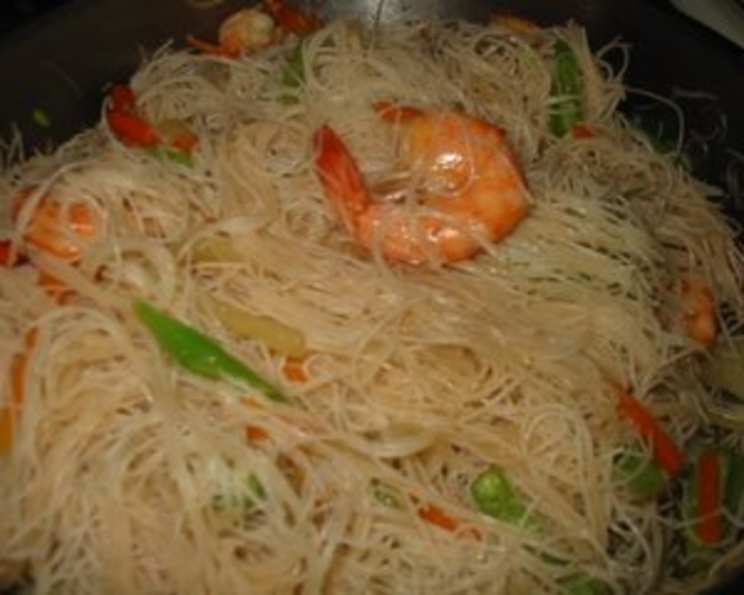
Pancit Bihon: A Taste of Filipino Celebration
The memory is etched in my mind: a bustling kitchen, the rhythmic thwack of cleavers chopping vegetables, and the warm, inviting aroma of soy sauce and garlic. My Lola (grandmother) would be at the center of it all, her hands moving with the practiced grace of a seasoned chef, preparing Pancit Bihon for yet another family gathering. That vibrant mound of glistening noodles, studded with colorful vegetables and tender chicken, wasn’t just food; it was a symbol of love, togetherness, and the enduring spirit of Filipino hospitality. Every strand carried a piece of home.
Recipe Overview
- Prep Time: 30 minutes
- Cook Time: 25 minutes
- Total Time: 55 minutes
- Servings: 12
- Yield: Large Serving Platter
- Dietary Type: Varies (can be adapted to be gluten-free, vegetarian, etc.)
Ingredients
- 2 (8 ounce) packages rice sticks
- 3-4 large boneless skinless chicken breasts, cut into 1/2-inch pieces
- 1 large onion, sliced
- 6 garlic cloves, minced
- 4-6 large carrots, julienned
- 3 large celery ribs, thinly sliced
- 1/2 head cabbage, cut in chunks
- 1 cup chicken broth, more if needed
- 1/3 – 1/2 cup soy sauce, depending on taste
- 1/2 teaspoon Accent seasoning
- 1 teaspoon black pepper
- 3 tablespoons oil
- 3-4 fresh lemons, wedged
Equipment Needed
- Large bowl
- Large pot or wok
- Kitchen shears
- Cutting board
- Knife
Instructions
-
Begin by preparing your ingredients. Cut the chicken breasts into ½-inch pieces, slice the onion, mince the garlic, julienne the carrots, thinly slice the celery ribs, and cut the cabbage into chunks. Have all your ingredients prepped and ready to go before you start cooking.
-
Next, soak the rice sticks. Place the rice noodles into a large bowl of very warm water and let them soak until they are limp and pliable. This usually takes about 15-20 minutes. To make the noodles more manageable, you can cut them in half with kitchen shears after they have soaked a bit. Drain the noodles thoroughly before adding them to the pot.
-
Now, sauté the aromatics and chicken. In a large pot or wok, heat 2 tablespoons of oil over medium-high heat. Add half of the sliced onions and minced garlic and sauté until the onions are translucent and fragrant – about 3-5 minutes.
-
Add the chicken pieces to the pot and cook until they are fully cooked through and no longer pink inside. This usually takes about 5-7 minutes. Once the chicken is cooked, remove it from the pot and set it aside in a bowl.
-
Sauté the remaining vegetables. Add the remaining 1 tablespoon of oil to the pot. Add the remaining onions, celery, and carrots. Sauté for about 1 minute, stirring frequently. The goal is to soften the vegetables slightly without browning them.
-
Build the sauce. Pour in the chicken broth, soy sauce, and Accent seasoning into the pot with the vegetables. Stir to combine all the ingredients.
-
Combine everything and simmer. Add the cooked chicken back into the pot with the vegetable mixture. Add the drained rice noodles to the pot. Gently stir the mixture to combine everything, ensuring the noodles are coated with the sauce.
-
Cover and cook. Cover the pot with a lid and allow the Pancit Bihon to cook for 10-15 minutes, stirring occasionally and checking the liquid level. Be careful not to let the noodles stick to the bottom of the pot. If the liquid boils out before the vegetables are tender and the noodles are cooked through, add more chicken broth as needed.
-
Season and serve. Once the noodles are tender and the vegetables are cooked to your liking, season the Pancit Bihon with black pepper. Serve immediately while hot, with fresh lemon wedges on the side. Encourage your guests to squeeze fresh lemon juice over their serving, as it adds a bright and zesty flavor.
Expert Tips & Tricks
- Don’t oversoak the noodles: Oversoaked noodles will become mushy during cooking. Aim for just pliable, not falling apart.
- Use quality soy sauce: The soy sauce is a key flavor component, so choose a brand you enjoy.
- Adjust the sauce: Taste the dish as it cooks and adjust the soy sauce and chicken broth to your liking.
- For a richer flavor, use homemade chicken broth.
- Make it ahead: You can cook the chicken and vegetables ahead of time and store them in the refrigerator. When ready to serve, simply reheat and add the noodles.
Serving & Storage Suggestions
Pancit Bihon is best served immediately, while hot and the noodles are still tender. Arrange the noodles on a large serving platter and garnish with fresh lemon wedges.
Leftover Pancit Bihon can be stored in an airtight container in the refrigerator for up to 3 days. To reheat, you can microwave it in short intervals, stirring in between, or reheat it in a pan on the stovetop with a little bit of chicken broth to prevent it from drying out. Freezing is not recommended as it can affect the texture of the noodles.
Nutritional Information
| Nutrient | Amount per Serving | % Daily Value |
|---|---|---|
| Calories | 242.5 kcal | N/A |
| Calories from Fat | 38 g | 16% |
| Total Fat | 4.3 g | 6% |
| Saturated Fat | 0.7 g | 3% |
| Cholesterol | 17.1 mg | 5% |
| Sodium | 635.3 mg | 26% |
| Total Carbohydrate | 41.6 g | 13% |
| Dietary Fiber | 4 g | 15% |
| Sugars | 3.5 g | N/A |
| Protein | 10.8 g | 21% |
Note: Nutritional information is an estimate and may vary based on specific ingredients and cooking methods.
Variations & Substitutions
- Vegetarian Pancit: Omit the chicken and add more vegetables, such as mushrooms, tofu, or snow peas.
- Seafood Pancit: Replace the chicken with shrimp or squid.
- Pork or Beef Pancit: Use thinly sliced pork or beef instead of chicken.
- Gluten-Free Pancit: Ensure your soy sauce is gluten-free or use tamari.
- Spicy Pancit: Add a pinch of red pepper flakes or a drizzle of chili oil to the dish.
- Add different vegetables: Bell peppers, green beans, and bean sprouts are also great additions.
FAQs (Frequently Asked Questions)
Q: Can I use a different type of noodle?
A: While Pancit Bihon is traditionally made with thin rice noodles, you can experiment with other types of noodles like canton noodles for a different texture.
Q: How do I prevent the noodles from sticking together?
A: Avoid oversoaking the noodles and make sure to stir the dish frequently while it’s cooking to prevent sticking. Adding a little bit of oil to the noodles after they’re drained can also help.
Q: Can I make this ahead of time?
A: Yes, you can prepare the chicken and vegetables ahead of time and store them in the refrigerator. Add the cooked noodles just before serving.
Q: What does Accent seasoning add to the dish?
A: Accent seasoning, which is MSG (monosodium glutamate), enhances the savory umami flavor of the Pancit Bihon. You can omit it if you prefer, but it does add a distinct taste.
Q: How do I know when the Pancit Bihon is done?
A: The Pancit Bihon is done when the noodles are tender and the vegetables are cooked to your liking. There should still be a little bit of moisture in the pot, but not too much liquid.
Final Thoughts
Pancit Bihon is more than just a dish; it’s an experience. It’s the taste of family, the joy of celebration, and the warmth of Filipino culture. So, gather your ingredients, follow this recipe, and create your own delicious memories. Don’t be afraid to experiment with different variations and make it your own. And most importantly, share it with the people you love. Kain na tayo! (Let’s eat!)