
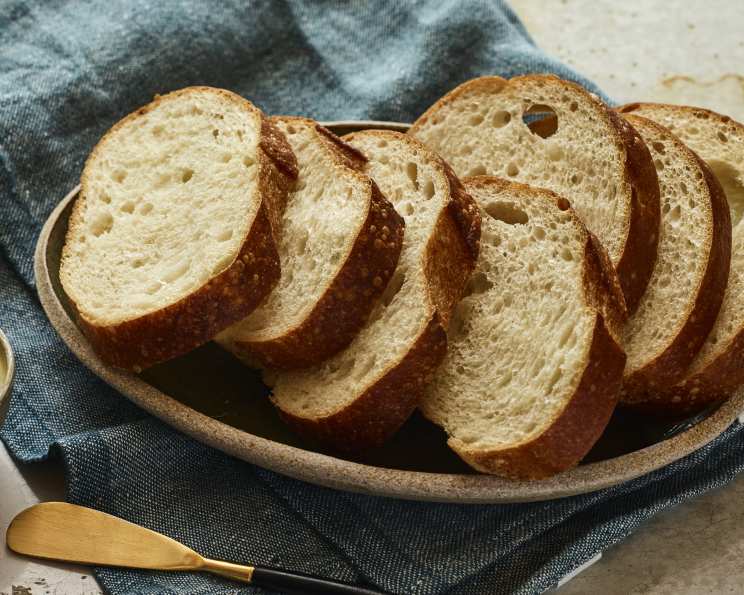
Mastering the Art of Panera-Style Sourdough: A Baker’s Journey
The aroma of sourdough baking fills my kitchen with a comforting warmth, instantly transporting me back to my days working at a small-town bakery. The head baker, a gruff but kind woman named Agnes, had a simple rule: every loaf had to tell a story. Each crackle of the crust, each airy pocket within, was a testament to time, patience, and the magic of fermentation. Agnes would have adored this Panera-inspired sourdough; it embodies that same spirit of slow craftsmanship and deeply satisfying flavor.
Recipe Overview
- Prep Time: 48 hours
- Cook Time: 30-40 minutes
- Total Time: 48 hours 40 minutes
- Yields: 2 loaves
- Serves: 24
- Dietary Type: Vegetarian
Ingredients
For the Dough:
- 3/4 cup warm water (95-105 F)
- 3/4 teaspoon fresh yeast
- 1 1/2 cups sourdough starter
- 1 1/2 cups all-purpose flour
- 1 1/4 cups whole wheat flour
- 1 tablespoon salt
For the Sourdough Starter – Stage 1:
- 1 cup warm water (95-105 F)
- 1/2 teaspoon fresh yeast
- 1 cup buttermilk
- 1 1/2 cups plain yogurt
- 2 cups all-purpose flour
- 1/3 cup semolina flour
- 1 cup unwashed medium red grapes
For the Sourdough Starter – Stage 2:
- Sourdough starter (from stage 1)
- 2 cups all-purpose flour
- 1 cup semolina flour
- 1/2 teaspoon fresh yeast
- 2 cups warm water (95-105 F)
Equipment Needed
- Stand mixer
- Medium mixing bowl
- Clean cheesecloth or small kitchen cloth
- Spatula
- Proofing basket or counter space
- Warm, damp cloth
- Sharp knife
- Spray bottle
- Baking sheet
- Cooling rack
Instructions
-
Prepare the Sourdough Starter (Stage 1): In a medium mixing bowl, combine the warm water and fresh yeast. Stir to dissolve the yeast completely. Add the buttermilk, plain yogurt, all-purpose flour, and semolina flour to the bowl. Stir until all ingredients are fully incorporated.
-
Infuse with Grape Essence: Wrap the unwashed red grapes securely in a clean cheesecloth or small kitchen cloth. Submerge the cloth in the mixture. Ensure the grapes are fully submerged to impart their unique flavor.
-
First Fermentation: Ferment at room temperature for 12 hours. This is crucial for developing the initial sour flavors.
-
Prepare the Sourdough Starter (Stage 2): Carefully remove the cheesecloth containing the grapes from the mixture. Use a spatula to scrape any remaining starter off the cloth and back into the bowl.
-
Extract the Grape Juice: Squeeze the cheesecloth containing the grapes over the bowl, capturing the juice in the bowl. Discard the cloth and the grapes. This grape juice adds a subtle sweetness and enhances the sourdough’s complexity.
-
Incorporate Remaining Ingredients: Stir the starter until the grape juice is fully incorporated. Add the all-purpose flour and semolina flour to the starter.
-
Activate the Yeast: In a separate bowl, add the fresh yeast to the warm water, stirring until the yeast is fully dissolved. Add this mixture to the starter.
-
Final Starter Fermentation: Mix the starter until all ingredients are fully incorporated. Ferment at room temperature for 4 hours before using. Alternatively, cover and place in the refrigerator for future use. This further develops the flavor and creates a bubbly starter ready for baking.
-
Combine Dough Ingredients: For the Sourdough Bread, combine the warm water and fresh yeast in the bowl of a stand mixer. Stir to dissolve the yeast fully. Add the sourdough starter (Note: If refrigerated, bring to room temperature before using), all-purpose flour, whole wheat flour, and salt.
-
Mix the Dough: Mix on low speed until the dough is fully developed. This will take several minutes. You want the dough to pull away from the sides of the bowl and become smooth and elastic.
-
First Rise (Bulk Fermentation): Remove the dough from the mixing bowl. Roll the dough into a smooth ball and place in a medium mixing bowl lightly brushed with olive oil. Cover and refrigerate for 16 hours. This slow, cold fermentation is key to developing the signature sourdough tang.
-
Second Rise (Room Temperature Fermentation): Remove the bowl from the refrigerator and ferment at room temperature for 6 hours. This allows the yeast to become active again and the dough to further develop in flavor and texture.
-
Divide and Shape: Divide the dough into 2 equal pieces and form into loaves. You can shape them into rounds (boules) or oblongs (batards).
-
Proofing: Place the loaves on the counter or in a proofing basket (banneton) lined with a floured cloth. Cover with a warm, damp cloth. Proof the loaves at room temperature for 2 hours.
-
Final Proofing: Continue proofing the loaves at room temperature for 1 hour. This allows for optimal rise and a light, airy crumb.
-
Preheat the Oven: Preheat the oven to 400°F (200°C). Make sure your oven is fully preheated before baking.
-
Score the Loaves: Score the loaves with a sharp knife. This allows the bread to expand properly in the oven and creates an attractive crust. A simple slash down the center or a more intricate pattern works well.
-
Add Moisture: Spray the loaves with water. This creates steam in the oven, which helps to develop a crisp, shiny crust.
-
Bake: Bake for 30 to 40 minutes, or until the crusts are a deep golden brown and the middle of the loaves registers 190-200°F (88-93°C) on an instant-read thermometer.
-
Cool Completely: Remove the bread from the oven and place on a cooling rack for 30 minutes. If the bread was baked in loaf pans, remove the bread from the pans before cooling. This allows the steam to escape and prevents the crust from becoming soggy.
Expert Tips & Tricks
- For a More Intense Sour Flavor: Extend the refrigeration time of the dough an additional 6 to 8 hours. The longer the dough ferments in the cold, the more pronounced the sourness.
- Temperature is Key: Use a thermometer to ensure your water is between 95-105°F. Water that is too hot will kill the yeast, while water that is too cold will not activate it properly.
- Don’t Overmix: Overmixing the dough can result in a tough loaf. Mix only until the ingredients are combined and the dough is smooth.
- Use a Dutch Oven: For an even crispier crust, bake the loaves in a preheated Dutch oven.
- Reviving Stale Bread: Sprinkle the loaf with water and bake in a preheated oven at 350°F (175°C) for 5-10 minutes.
Serving & Storage Suggestions
Serve this sourdough warm with a pat of butter, alongside a hearty soup, or as the base for a delicious sandwich. It’s also fantastic toasted and topped with avocado and a sprinkle of sea salt.
Store leftover sourdough in a bread box or wrapped in a linen cloth at room temperature for up to 3 days. For longer storage, wrap the loaf tightly in plastic wrap and freeze for up to 2 months. To reheat frozen bread, thaw it completely and then bake in a preheated oven at 350°F (175°C) for 10-15 minutes.
Nutritional Information
| Nutrient | Amount per Serving | % Daily Value |
|---|---|---|
| Calories | 176.7 kcal | – |
| Calories from Fat | 10 g | – |
| Total Fat | 1.1 g | 1% |
| Saturated Fat | 0.5 g | 2% |
| Cholesterol | 2.4 mg | 0% |
| Sodium | 310.5 mg | 12% |
| Total Carbohydrate | 35.5 g | 11% |
| Dietary Fiber | 1.9 g | 7% |
| Sugars | 2.3 g | – |
| Protein | 5.9 g | – |
Note: Nutritional information is an estimate and may vary based on specific ingredients and preparation methods.
Variations & Substitutions
- Whole Wheat Sourdough: Increase the amount of whole wheat flour for a nuttier flavor and denser texture.
- Rye Sourdough: Substitute a portion of the all-purpose flour with rye flour for a bolder, more complex flavor.
- Seeded Sourdough: Add a mixture of seeds, such as sesame, poppy, or sunflower seeds, to the dough for added texture and flavor.
- Herb Sourdough: Incorporate fresh herbs, such as rosemary, thyme, or oregano, into the dough for an aromatic twist.
FAQs (Frequently Asked Questions)
Q: Why do I need to use unwashed grapes in the sourdough starter?
A: The natural yeasts present on the skin of unwashed grapes contribute to the unique fermentation process and flavor development of the starter.
Q: Can I use dried yeast instead of fresh yeast?
A: Yes, you can substitute dried yeast for fresh yeast. Use about half the amount of dried yeast as fresh yeast. Be sure to proof the dried yeast in warm water before adding it to the other ingredients.
Q: My sourdough bread is too dense. What could be the problem?
A: Several factors can contribute to dense sourdough bread, including under-proofing, using too much flour, or not having an active enough starter. Ensure your starter is bubbly and active, and allow the dough to proof fully.
Q: How do I know when my sourdough starter is ready to use?
A: A ready sourdough starter will be bubbly, have a slightly sour aroma, and will have roughly doubled in size after feeding.
Q: Can I freeze my sourdough starter?
A: Yes, you can freeze sourdough starter for longer storage. Thaw it completely in the refrigerator and then feed it to reactivate it before using.
Final Thoughts
Embrace the process, trust your instincts, and don’t be afraid to experiment. Baking sourdough is as much an art as it is a science. This Panera-inspired recipe is a wonderful starting point for your own sourdough journey. Enjoy the process, savor the aroma, and share the joy of homemade bread with your loved ones. I encourage you to try this recipe and leave a comment with your experiences and variations. Bon appétit!