
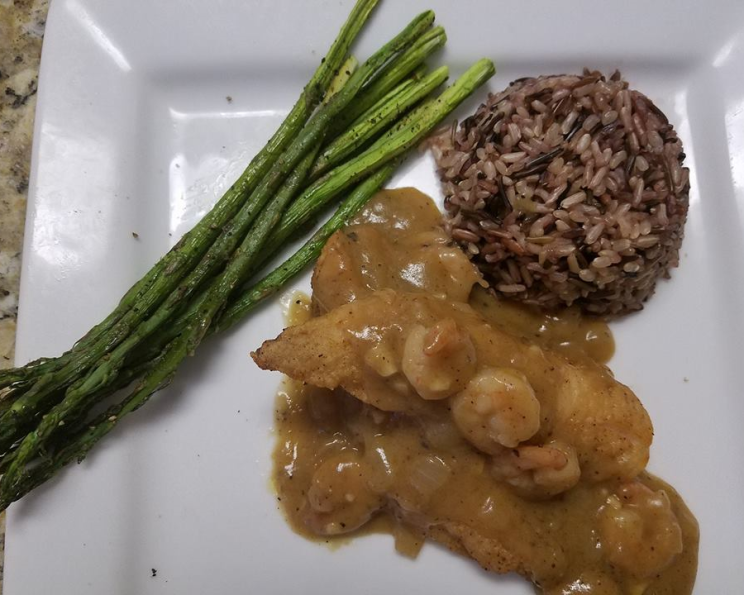
Pappadeaux Snapper Ponchartrain: A Culinary Journey to Louisiana
The first time I tasted Snapper Ponchartrain was a revelation. I was a wide-eyed culinary student visiting New Orleans, and the creamy, decadent sauce blanketing perfectly cooked snapper was unlike anything I’d ever experienced. The richness of the Madeira wine, the subtle spice, the succulent shrimp and crab – it was a symphony of flavors that transported me straight to the heart of Louisiana’s culinary soul. It was a dish I knew I had to master, a dish that whispered promises of Southern hospitality and exquisite taste.
Recipe Overview
- Prep Time: 30 minutes
- Cook Time: 30 minutes
- Total Time: 1 hour
- Servings: 6
- Dietary Type: Pescatarian
Ingredients
- 24 medium fresh shrimp, peeled and deveined (reserve shells)
- 1/2 cup onion, chopped
- 1/2 cup celery, chopped
- 1/2 cup carrot, chopped
- 5 cups water
- 1 1/8 cups unsalted butter, divided
- 4 tablespoons flour, plus
- 2 cups flour, divided
- 1 1/2 tablespoons chopped fresh garlic
- 1/4 cup chopped yellow onion
- 1 chicken bouillon cube
- 1 teaspoon hot red pepper sauce (Tabasco)
- 1/3 cup Madeira wine
- 1 tablespoon salt, to taste
- 1 1/2 teaspoons paprika
- 1 teaspoon garlic powder
- 1 teaspoon cayenne pepper
- 6 (8 ounce) fresh red snapper fillets (or other white-fleshed mild fish)
- Fresh lemon juice
- 6 ounces crab claws or 6 ounces backfin crab meat
Equipment Needed
- Large stockpot
- Heavy saucepan
- Saucepan
- Large heated skillet
Instructions
-
Begin by crafting the shrimp stock. Combine the reserved shrimp shells, chopped onion, celery, carrot, and water in a large stockpot. Simmer over medium heat until the liquid is reduced to 3 cups, approximately 30 minutes. This concentrates the flavors and forms the base of the sauce. Strain the stock through a fine-mesh sieve and set aside.
-
Next, prepare the roux. In a heavy saucepan, melt 4 tablespoons of unsalted butter over medium heat. Allow the butter to cook until it begins to turn brown, developing a nutty aroma. Be vigilant; you want to achieve a beautiful browned color, not burned butter.
-
Slowly whisk in 4 tablespoons of flour to the browned butter, ensuring that no lumps form. Continue to whisk constantly until the mixture thickens into a smooth paste. This is your roux. Cook the roux over medium-low heat until it turns a light, golden brown color. This step is crucial for developing depth of flavor in the sauce. Remove from heat and set aside.
-
In another saucepan, melt 1 tablespoon of unsalted butter. Add the chopped fresh garlic and yellow onion, and sauté over medium heat for about 2 minutes, until the onion becomes translucent and fragrant. Avoid browning the garlic, as it can become bitter.
-
Add the crushed chicken bouillon cube, hot red pepper sauce, and the prepared shrimp stock to the saucepan with the garlic and onion. Stir to combine and bring the mixture to a simmer.
-
While the stock is simmering, prepare the browned butter. Melt 1 stick plus 1 1/3 tablespoons of unsalted butter in a separate saucepan. Stir constantly until the butter turns a rich, golden brown. Set aside, being careful not to burn.
-
Now, it’s time to bring the sauce together. Add the prepared roux to the simmering stock mixture, whisking constantly to incorporate it fully. Simmer for 3 to 5 minutes, allowing the sauce to thicken and the flavors to meld.
-
Add the browned butter to the stock mixture and whisk until fully incorporated and emulsified. This will give the sauce its characteristic richness and luxurious texture.
-
Whisk in the Madeira wine until it is fully incorporated into the sauce. The Madeira adds a delightful depth of flavor and complexity to the dish. Set the sauce aside and keep it warm while you cook the fish fillets.
-
Prepare the fish for cooking. In a shallow dish, mix the remaining 2 cups of flour with the salt, paprika, garlic powder, and cayenne pepper. This seasoned flour will give the snapper a flavorful crust.
-
Dip each fish fillet in fresh lemon juice, then dredge it thoroughly in the seasoned flour, ensuring it is evenly coated.
-
In a large, heated skillet, melt 1 tablespoon of unsalted butter over medium heat. Carefully place the floured fish fillets in the skillet, ensuring they are not overcrowded. Cook until golden brown and completely cooked through, about 4 minutes per side. The fish should flake easily with a fork when done.
-
While the fish is cooking, sauté the peeled and deveined shrimp in 1 tablespoon of unsalted butter in a separate skillet. Cook just until they turn pink, being careful not to overcook them, as they can become rubbery. This should only take a minute or two.
-
Add the sautéed shrimp and the crab claws (or backfin crab meat) to the warm Madeira sauce. Stir gently to combine.
-
To serve, place a cooked fish fillet on each plate. Spoon 4 shrimp and a generous amount of the heated Madeira sauce over each fillet. Serve immediately and enjoy!
Expert Tips & Tricks
- Don’t rush the roux! A properly browned roux is key to the flavor and texture of the sauce. Take your time and stir constantly to avoid burning.
- Use good quality butter. The richness of the butter contributes significantly to the overall flavor of the dish.
- Be careful not to overcook the fish or shrimp. Overcooked seafood is tough and rubbery. Cook just until done.
- If you can’t find Madeira wine, you can substitute with a dry sherry or Marsala wine.
- For an extra layer of flavor, add a pinch of dried thyme or oregano to the seasoned flour.
Serving & Storage Suggestions
Serve Pappadeaux Snapper Ponchartrain immediately after cooking for the best flavor and texture. Garnish with a sprig of fresh parsley or a lemon wedge for added visual appeal. This dish pairs well with steamed rice, grits, or roasted vegetables.
Leftovers can be stored in an airtight container in the refrigerator for up to 2 days. Reheat gently in a saucepan over low heat, stirring occasionally, until warmed through. Be careful not to overheat, as the fish can become dry. Freezing is not recommended, as the sauce may separate upon thawing.
Nutritional Information
| Nutrient | Amount per Serving | % Daily Value |
|---|---|---|
| Calories | 817 kcal | N/A |
| Calories from Fat | 354 kcal | 43% |
| Total Fat | 39.4 g | 60% |
| Saturated Fat | 22.9 g | 114% |
| Cholesterol | 228.3 mg | 76% |
| Sodium | 1620.4 mg | 67% |
| Total Carbohydrate | 41.2 g | 13% |
| Dietary Fiber | 2.4 g | 9% |
| Sugars | 2 g | 8% |
| Protein | 68.9 g | 137% |
Note: Nutritional information is an estimate and may vary based on specific ingredients and cooking methods.
Variations & Substitutions
- Seafood Swap: If snapper isn’t available, try using other white-fleshed fish like grouper, cod, or haddock.
- Spicier Kick: Increase the amount of cayenne pepper or add a pinch of Creole seasoning to the flour mixture for a spicier dish.
- Dairy-Free Option: While the butter is essential for the roux and browned butter, you could experiment with using a high-quality plant-based butter alternative, though the flavor profile will change slightly.
- Vegetable Boost: Add some sautéed mushrooms or bell peppers to the sauce for extra vegetables and flavor.
- Budget-Friendly: Use imitation crab meat in place of real crab to save on costs.
FAQs (Frequently Asked Questions)
Q: Can I make the shrimp stock ahead of time?
A: Absolutely! Making the shrimp stock a day or two in advance is a great way to save time. Just store it in an airtight container in the refrigerator.
Q: What’s the best way to prevent the fish from sticking to the skillet?
A: Make sure your skillet is well-heated before adding the butter and fish. Also, don’t overcrowd the pan; cook the fillets in batches if necessary.
Q: Can I use frozen shrimp for this recipe?
A: Yes, you can use frozen shrimp. Just be sure to thaw them completely before cooking and pat them dry with paper towels.
Q: What if I don’t have Madeira wine?
A: A dry sherry or Marsala wine can be used as a substitute for Madeira. You could also use a dry white wine with a splash of brandy.
Q: How do I know when the snapper is cooked through?
A: The snapper is cooked through when it flakes easily with a fork and is no longer translucent in the center. The internal temperature should reach 145°F (63°C).
Final Thoughts
Pappadeaux Snapper Ponchartrain is more than just a recipe; it’s an invitation to experience the rich culinary heritage of Louisiana. Don’t be intimidated by the number of steps – each one contributes to the incredible depth of flavor in this dish. So gather your ingredients, put on some Zydeco music, and embark on a culinary journey that will transport you to the heart of New Orleans. I encourage you to try this recipe and share your creations with friends and family. Perhaps serve it with a crisp Sauvignon Blanc or a classic Sazerac cocktail for the ultimate Southern dining experience! Let me know how it turns out!