
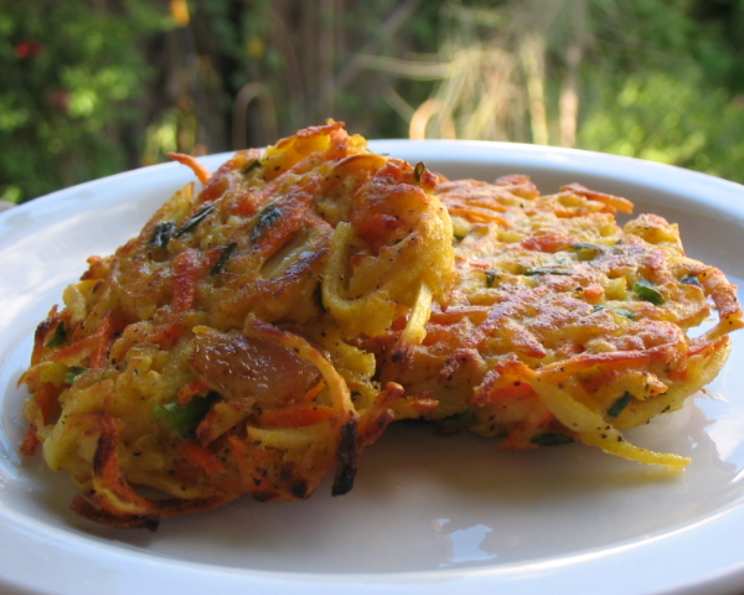
Parsnip and Carrot Latkes (Vegetable Pancakes)
The first time I made latkes was with my grandmother, Bubbe Rose, during a particularly snowy Chanukah. I remember the tiny kitchen filled with the scent of frying potatoes and the warmth of the stove battling the winter chill outside. Bubbe, with her flour-dusted apron and knowing smile, showed me how to grate the potatoes just so, how to squeeze out the excess moisture, and most importantly, how to listen for that perfect sizzle in the pan. These parsnip and carrot latkes bring back that memory, but with a unique twist, adding a touch of sweetness and vibrant color to a beloved classic.
Recipe Overview
- Prep Time: 20 minutes
- Cook Time: 20 minutes
- Total Time: 40 minutes
- Servings: 6
- Yield: About 18-20 latkes
- Dietary Type: Gluten-Free option
Ingredients
- 1 lb parsnip
- ½ lb carrot
- 1 large onion
- 6 garlic cloves
- 1 tablespoon ground black pepper
- 2 teaspoons salt
- ½ lemon, juice of
- ½ cup chives, finely chopped
- 3 eggs, beaten
- 1 cup gluten-free rice flour mix (see note) or ½ cup matzo meal
- Olive oil (for frying)
Note on Gluten-Free Flour: If using a gluten-free rice flour mix, a good blend consists of 3 cups white rice flour, 3 cups brown rice flour, 2 cups potato starch (not flour), and 1 cup tapioca starch. Use just 1 cup of this mixture for the recipe. If you can eat gluten, simply use ½ cup of matzo meal instead.
Equipment Needed
- Large bowl
- Food processor (optional, for grating and pureeing)
- Heavy pan or skillet
- Slotted spatula
- Plate lined with paper towels
Instructions
-
Begin by preparing your vegetables. Peel and remove the ends from the parsnips and carrots. This ensures a smooth texture and removes any potentially bitter parts.
-
Grate the parsnips and carrots. You can do this by hand using a box grater or, for a quicker process, use the grater attachment on your food processor. Aim for a medium shred.
-
Place the grated parsnips and carrots in a large bowl. This will be the base of your latke mixture.
-
Next, prepare the onion and garlic. Puree the onion and garlic in a food processor. This creates a smooth paste that will evenly distribute the flavor throughout the latkes. If you don’t have a food processor, you can finely mince the onion and garlic by hand.
-
Add the pureed onion and garlic to the vegetable mixture in the large bowl.
-
Now it’s time to add the remaining ingredients. Add the ground black pepper, salt, lemon juice, finely chopped chives, beaten eggs, and either the gluten-free rice flour mix or matzo meal to the bowl.
-
Mix all the ingredients well. Ensure everything is thoroughly combined, and there are no lumps of flour or unincorporated ingredients. The mixture should be slightly sticky but not overly wet.
-
Heat about ½ inch of olive oil in a heavy pan or skillet. Use medium-high heat, ensuring the oil is hot enough for frying but not smoking. A good indicator is when a small piece of the latke mixture sizzles immediately when dropped into the oil.
-
Add ¼ cup of batter at a time to the hot oil. Gently press each portion down with the back of a spatula until each pancake is about ½ inch thick. This helps them cook evenly and prevents them from being too thick and doughy in the center.
-
Cook the latkes until the exterior is crispy and a dark golden brown in color. This should take approximately 2 minutes per side. Keep a close eye on them, as the cooking time can vary depending on the heat of your stove and the thickness of the latkes.
-
Flip the latkes and cook on the second side until they are also crispy and golden brown.
-
Remove the cooked latkes with a slotted spatula and place them on a plate lined with several layers of brown paper or paper towel. This will help absorb any excess oil and keep the latkes crisp.
-
Serve hot.
Expert Tips & Tricks
-
Squeeze out excess moisture: After grating the parsnips and carrots, place them in a clean kitchen towel and squeeze out as much excess moisture as possible. This will help the latkes get crispy and prevent them from becoming soggy.
-
Control the oil temperature: Maintaining a consistent oil temperature is crucial for achieving perfectly cooked latkes. If the oil is too cold, the latkes will absorb too much oil and become greasy. If the oil is too hot, they will burn on the outside before the inside is cooked through.
-
Don’t overcrowd the pan: Cook the latkes in batches, ensuring there’s enough space between them in the pan. Overcrowding the pan will lower the oil temperature and result in soggy latkes.
-
Use a neutral-flavored oil: While olive oil adds a nice flavor, you can also use other neutral-flavored oils like canola or vegetable oil for frying.
-
Make ahead tip: You can prepare the latke mixture a few hours ahead of time. Store it in the refrigerator until ready to cook.
Serving & Storage Suggestions
These parsnip and carrot latkes are delicious served hot, straight from the pan. They go wonderfully with a dollop of sour cream or Greek yogurt. Alternatively, you can serve them with applesauce for a sweet and savory combination. Leftover latkes can be stored in an airtight container in the refrigerator for up to 3 days. To reheat, you can bake them in a preheated oven at 350°F (175°C) for about 10-15 minutes, or until heated through and crispy. You can also reheat them in a skillet with a little bit of oil. Freezing is not recommended as it affects the texture.
Nutritional Information
| Nutrient | Amount per Serving | % Daily Value |
|---|---|---|
| Calories | 128 kcal | 6% |
| Total Fat | 2.8g | 4% |
| Saturated Fat | 0.9g | 5% |
| Cholesterol | 93mg | 31% |
| Sodium | 846mg | 35% |
| Total Carbohydrate | 22g | 7% |
| Dietary Fiber | 5.7g | 23% |
| Sugars | 6.8g | N/A |
| Protein | 5.1g | 10% |
Nutritional information is an estimate and may vary based on specific ingredients and cooking methods.
Variations & Substitutions
- Sweet Potato Latkes: Substitute half of the parsnips with sweet potatoes for an even sweeter flavor.
- Herb Variations: Experiment with different herbs like dill, parsley, or thyme in place of or in addition to the chives.
- Spicy Latkes: Add a pinch of cayenne pepper or a finely chopped jalapeño to the mixture for a touch of heat.
- Vegan Latkes: Substitute the eggs with flax eggs (1 tablespoon ground flaxseed mixed with 3 tablespoons of water per egg). Ensure your gluten-free flour mix is also vegan.
FAQs (Frequently Asked Questions)
Q: Can I use a different type of flour if I don’t have gluten-free rice flour mix?
A: Yes, you can use all-purpose flour or another gluten-free flour blend. However, the texture and flavor of the latkes may be slightly different.
Q: Can I make these latkes ahead of time and reheat them?
A: Yes, you can make the latke mixture a few hours in advance and store it in the refrigerator. Cooked latkes can be reheated in the oven or skillet for the best results.
Q: How do I prevent the latkes from becoming greasy?
A: Make sure the oil is hot enough before adding the latkes, and don’t overcrowd the pan. Also, squeeze out as much excess moisture as possible from the grated vegetables.
Q: Can I freeze these latkes?
A: Freezing is not recommended as it can affect the texture of the latkes, making them soggy.
Q: What can I serve with these latkes?
A: These latkes are delicious served with sour cream, Greek yogurt, applesauce, or even a dollop of chutney.
Final Thoughts
These Parsnip and Carrot Latkes are a delightful twist on a classic dish, offering a beautiful combination of sweetness, savory flavors, and vibrant colors. They’re perfect for Chanukah, a festive brunch, or any time you’re craving a delicious and unique vegetable pancake. Don’t be afraid to experiment with different variations and substitutions to create your own signature version. I encourage you to try this recipe and share your feedback – and perhaps a dollop of sour cream – with friends and family!