
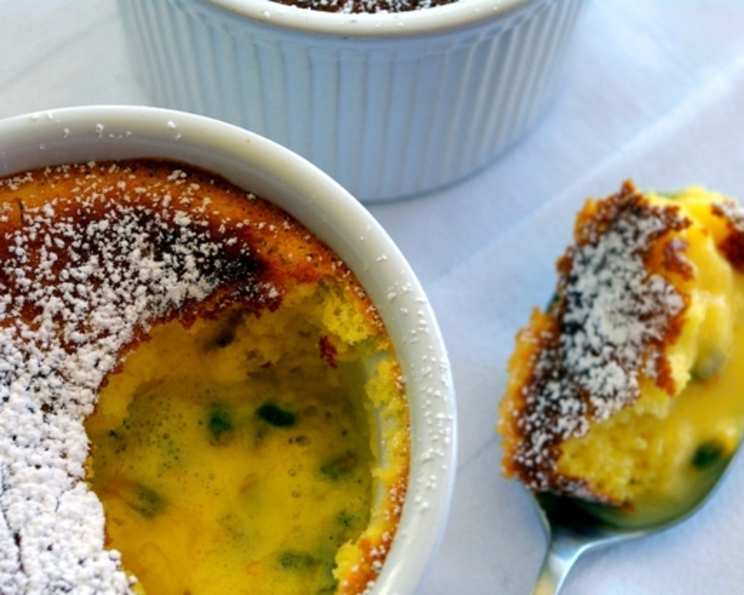
Passionfruit Pudding: A Tropical Delight
The first time I tasted passionfruit pudding, I was in my grandmother’s sun-drenched kitchen in Queensland, Australia. The air was thick with the scent of frangipani and baking. The tart, vibrant passionfruit, sourced straight from her backyard vine, cut through the sweetness of the pudding, creating a flavor explosion that transported me to a tropical paradise. It was more than just dessert; it was a taste of home, a reminder of lazy summer afternoons spent with family. To this day, the aroma alone can instantly bring me back to that golden memory.
Recipe Overview
- Prep Time: 15 minutes
- Cook Time: 50 minutes (large) / 30 minutes (small)
- Total Time: 1 hour 5 minutes (large) / 45 minutes (small)
- Servings: 6
- Yield: 1 large pudding or 6 individual puddings
- Dietary Type: Not specified (contains dairy and eggs)
Ingredients
- 1 cup caster sugar
- 2 tablespoons butter, melted
- 3 eggs, separated
- 2 teaspoons grated lemon rind
- 1/3 cup passion fruit pulp
- 1 lemon, juice of
- 1/2 cup self raising flour
- 1 cup milk
Equipment Needed
- Mixing bowls
- Electric mixer or whisk
- Oven dish (for a large pudding) or 6 small ramekins
- Baking dish (larger than the pudding dish/ramekins)
Instructions
- Preheat your oven to 200°C (390°F). Ensure you have a baking dish large enough to hold either your oven dish or the individual ramekins, as this will be used as a water bath.
- In a mixing bowl, beat the egg yolks with half a cup of the caster sugar until the mixture becomes pale and slightly thickened. This step is crucial for creating a smooth and rich base for the pudding.
- To the egg yolk mixture, add the grated lemon rind, melted butter, self raising flour, lemon juice, and milk. Mix until just combined. Be careful not to overmix, as this can develop the gluten in the flour and make the pudding tough.
- In a separate clean and dry bowl, beat the egg whites until stiff peaks form. This step adds air and lightness to the pudding.
- Gradually add the remaining half cup of caster sugar to the beaten egg whites, continuing to beat until the meringue is glossy and holds its shape firmly. This is known as a French meringue.
- Gently fold the meringue (beaten egg whites) into the egg yolk mixture. It’s important to fold gently, rather than stir, to maintain the airiness of the meringue. Use a figure-eight motion to combine the mixtures without deflating the egg whites.
- Carefully pour the passionfruit pulp into the mixture. Gently swirl it through, avoiding overmixing, to create pockets of intense passionfruit flavor.
- Pour the pudding mixture into either a single oven dish or divide it evenly among the six small ramekins.
- Place the dish/ramekins in the larger baking dish. Carefully pour hot water into the baking dish until it reaches about halfway up the sides of the pudding dish/ramekins. This water bath helps the pudding cook gently and evenly, preventing it from drying out or cracking.
- Bake for 50 minutes if using a large dish, or about 30 minutes if using small ramekins. The pudding is ready when the top is golden brown but not burnt, and it has separated into a light, sponge-like layer on top with a creamy sauce underneath. To test doneness, gently jiggle the dish. The top should be set, but the sauce underneath should still be slightly wobbly.
- Remove from the oven and let cool slightly before serving.
Expert Tips & Tricks
- Don’t skip the water bath! This is crucial for a creamy, custardy pudding rather than a dry one.
- For an extra intense passionfruit flavor, stir a spoonful of extra pulp into the sauce just before serving.
- If the top of the pudding is browning too quickly, loosely tent it with foil during the last 15 minutes of baking.
- Ensure your egg whites are at room temperature for the best volume when whipping. Adding a pinch of salt or cream of tartar can also help stabilize the meringue.
- Make sure your mixing bowl and whisk are completely clean and grease-free when whipping the egg whites, as any traces of fat can prevent them from whipping properly.
- If you don’t have self-raising flour, you can make your own by adding 1 1/2 teaspoons of baking powder and 1/4 teaspoon of salt to 1 cup of plain flour.
Serving & Storage Suggestions
This passionfruit pudding is best served warm, but it can also be enjoyed at room temperature. It is traditionally served with a dollop of fresh cream or a scoop of vanilla ice cream to complement the tartness of the passionfruit. A sprinkle of extra passionfruit pulp on top adds a beautiful finishing touch.
Leftover pudding can be stored in the refrigerator for up to 3 days in an airtight container. Reheat gently in the microwave or oven until warmed through. It is not recommended to freeze this pudding, as the texture can change upon thawing.
Nutritional Information
Please note that these values are estimates and may vary depending on specific ingredients and serving sizes.
| Nutrient | Amount per Serving | % Daily Value |
|---|---|---|
| Calories | 279 kcal | 14% |
| Total Fat | 8 g | 10% |
| Saturated Fat | 4 g | 20% |
| Cholesterol | 122 mg | 41% |
| Sodium | 86 mg | 4% |
| Total Carbohydrate | 47 g | 17% |
| Dietary Fiber | 2 g | 7% |
| Sugars | 35 g | 70% |
| Protein | 6 g | 12% |
Variations & Substitutions
- Dairy-Free: Substitute the milk with almond milk, oat milk, or coconut milk. Use a dairy-free butter alternative.
- Gluten-Free: Replace the self-raising flour with a gluten-free self-raising flour blend. Ensure the blend contains xanthan gum for binding.
- Lemon-Lime: Use half lemon juice and half lime juice for a zesty twist.
- Coconut Passionfruit: Use coconut milk instead of regular milk and add a tablespoon of shredded coconut to the batter.
- Seasonal Fruit: If passionfruit isn’t available, try using other tart fruits like raspberries or blackberries. You may need to adjust the sugar depending on the sweetness of the fruit.
FAQs (Frequently Asked Questions)
Q: Can I make this pudding ahead of time?
A: While best served fresh, you can prepare the pudding a few hours in advance and keep it refrigerated until ready to bake. However, the longer it sits, the more the meringue may deflate.
Q: My pudding didn’t separate into layers. What did I do wrong?
A: The most common reason for this is overmixing after adding the egg whites. Be sure to fold them in gently to maintain their airiness. Also, ensure your oven temperature is accurate.
Q: Can I use frozen passionfruit pulp?
A: Yes, frozen passionfruit pulp works just as well. Thaw it completely and drain any excess liquid before using.
Q: The top of my pudding is browning too quickly. What should I do?
A: Loosely tent the pudding with foil during the last 15 minutes of baking to prevent it from burning.
Q: Can I halve the recipe?
A: Yes, you can easily halve the recipe if you only need to make a smaller amount. Just divide all the ingredients by two.
Final Thoughts
This passionfruit pudding is a delightful dessert that’s both easy to make and impressive to serve. The combination of tart passionfruit and sweet, creamy pudding is a winning combination that’s sure to please everyone. Don’t be intimidated by the water bath – it’s the secret to the perfect texture. So go ahead, gather your ingredients, and bring a taste of the tropics to your table! We would love to hear how your pudding turns out! Consider pairing it with a crisp glass of Sauvignon Blanc for a truly memorable experience.