
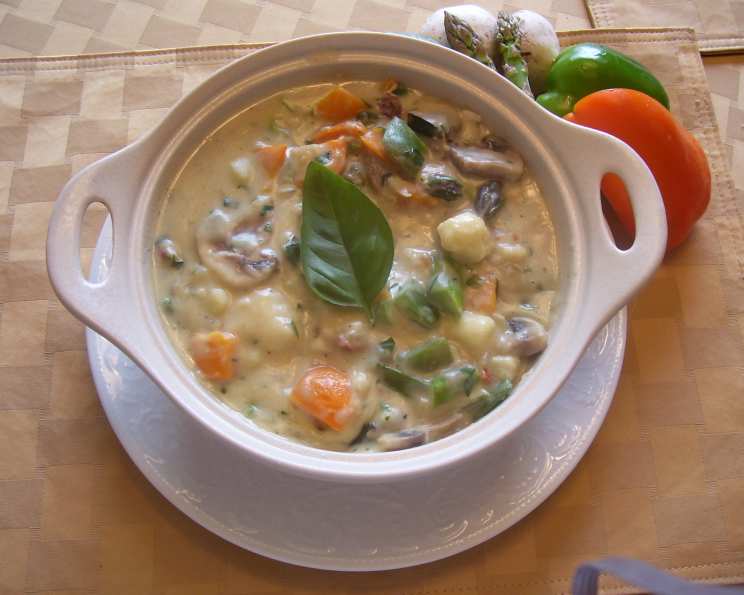
Pasta Primavera: A Symphony of Spring on Your Plate
I can still picture my grandmother, her hands stained green from the garden, assembling her version of Pasta Primavera. It wasn’t just a meal; it was a celebration of the season, a vibrant tapestry of colors and flavors woven together with love. Every forkful was a reminder of sun-drenched afternoons spent picking vegetables, the air filled with the sweet scent of basil and the joyful chatter of family. It’s a dish that embodies the essence of spring, and one I’m excited to share with you.
Recipe Overview
- Prep Time: 20 minutes
- Cook Time: 30 minutes
- Total Time: 50 minutes
- Servings: 6
- Dietary Type: Vegetarian
Ingredients
- 2 teaspoons olive oil
- 2 garlic cloves, crushed
- 6 green onions, sliced diagonally
- 1 red pepper, coarsely chopped
- 1 green pepper, coarsely chopped
- 4 cups cauliflower florets
- 3 tablespoons flour
- 1 1/2 cups 2% low-fat milk
- 1 1/2 cups chicken broth
- 1/2 teaspoon peppercorn, freshly ground
- 1 teaspoon salt
- 1 tablespoon fresh parsley, chopped
- 1/2 cup parmesan cheese, grated
- 1 roasted red pepper, chopped
- Linguine
- 1/2 cup slivered basil
Equipment Needed
- Large skillet or Dutch oven
- Large pot for boiling pasta
- Colander
Instructions
-
Heat the olive oil in a large skillet or Dutch oven over medium heat. Add the crushed garlic and diagonally sliced green onions. Cook, stirring occasionally, for about 5 minutes, or until the onions are softened and fragrant. Be careful not to burn the garlic!
-
Stir in the coarsely chopped red pepper and green pepper, along with the cauliflower florets. Cook for another 5 minutes, stirring occasionally, allowing the vegetables to begin to soften.
-
Add the flour to the skillet and stir well to coat the vegetables evenly. This will help to create a smooth and creamy sauce. Cook for 1 minute, stirring constantly, to cook out the raw flour taste.
-
Gradually stir in the low-fat milk and chicken broth, making sure to whisk continuously to prevent any lumps from forming. Bring the mixture to a simmer.
-
Add the salt, freshly ground peppercorn, and chopped fresh parsley. Reduce the heat to low and simmer for about 15 minutes, or until the mixture is slightly thickened and the vegetables are tender. Stir occasionally to prevent sticking.
-
Stir in the chopped roasted red pepper. At this stage, taste and adjust the seasoning as needed. You may want to add a pinch more salt or pepper to enhance the flavors.
-
While the sauce is simmering, cook the linguine according to package directions in a large pot of salted boiling water. Cook until al dente, which means “to the tooth” – firm but not hard.
-
Once the pasta is cooked, drain it thoroughly in a colander.
-
Add the drained pasta to the skillet with the sauce. Toss gently to coat the pasta evenly with the vegetable sauce.
-
Sprinkle with grated Parmesan cheese.
-
Garnish with slivered basil before serving.
Expert Tips & Tricks
- Vegetable Variety: Don’t be afraid to experiment with different vegetables depending on what’s in season or what you have on hand. Asparagus, peas, zucchini, and sugar snap peas are all excellent additions.
- Creamy Consistency: For an extra creamy sauce, you can add a tablespoon or two of cream cheese or mascarpone at the end of the cooking process. Stir until melted and fully incorporated.
- Make-Ahead Tip: The sauce can be made a day in advance and stored in the refrigerator. This allows the flavors to meld together even more. Simply reheat before adding the cooked pasta.
- Fresh Herbs: Fresh herbs are key to the bright, vibrant flavors of Pasta Primavera. Use a generous amount of your favorite herbs, such as basil, parsley, oregano, or thyme.
- Pasta Water: Reserve about a cup of the pasta water before draining. If the sauce becomes too thick, you can add a little pasta water to loosen it up and create a silky, emulsified sauce.
Serving & Storage Suggestions
Pasta Primavera is best served immediately while the pasta is still warm and the vegetables are tender. The vibrant colors and fresh flavors make it a beautiful and satisfying meal.
Leftovers can be stored in an airtight container in the refrigerator for up to 3 days. To reheat, gently warm the pasta in a skillet over low heat, adding a splash of milk or broth if needed to prevent it from drying out. You can also reheat it in the microwave, but be careful not to overcook the pasta.
While Pasta Primavera can be frozen, the texture of the vegetables may change slightly upon thawing. If you do freeze it, be sure to thaw it completely before reheating.
Nutritional Information
| Nutrient | Amount per Serving | % Daily Value |
|---|---|---|
| Calories | 143.8 kcal | N/A |
| Calories from Fat | 52 g | 36% |
| Total Fat | 5.8 g | 8% |
| Saturated Fat | 2.6 g | 13% |
| Cholesterol | 12.2 mg | 4% |
| Sodium | 756.2 mg | 31% |
| Total Carbohydrate | 15.5 g | 5% |
| Dietary Fiber | 3.8 g | 15% |
| Sugars | 6.7 g | N/A |
| Protein | 9.3 g | 18% |
Note: Nutritional information is an estimate and may vary based on specific ingredients and portion sizes.
Variations & Substitutions
- Gluten-Free: Use gluten-free pasta for a gluten-free version of this dish.
- Vegan: Omit the Parmesan cheese or substitute with a vegan Parmesan alternative. Use vegetable broth instead of chicken broth. You can also add a tablespoon of nutritional yeast to the sauce for a cheesy flavor.
- Spicy Kick: Add a pinch of red pepper flakes to the sauce for a spicy kick.
- Seasonal Vegetables: Adapt the recipe to feature seasonal vegetables. In the summer, try adding zucchini, yellow squash, and corn. In the fall, consider adding butternut squash and Brussels sprouts.
- Protein Boost: Add cooked chicken, shrimp, or tofu to the pasta for a protein boost.
FAQs (Frequently Asked Questions)
Q: Can I use frozen vegetables in Pasta Primavera?
A: Yes, you can use frozen vegetables, but fresh vegetables will provide the best flavor and texture. If using frozen, thaw them before adding them to the skillet.
Q: How can I prevent the sauce from becoming too thick?
A: If the sauce becomes too thick, add a little milk, broth, or pasta water to thin it out.
Q: Can I use a different type of pasta?
A: Absolutely! Feel free to use any type of pasta you prefer, such as fettuccine, penne, or rotini.
Q: Is it necessary to use low-fat milk?
A: No, you can use any type of milk you prefer. However, using low-fat milk will help to keep the dish lighter.
Q: Can I add wine to the sauce?
A: Yes, adding a splash of white wine to the sauce can enhance the flavor. Add the wine after cooking the garlic and onions, and let it simmer for a minute or two before adding the other ingredients.
Final Thoughts
Pasta Primavera is more than just a pasta dish; it’s a celebration of fresh, seasonal ingredients and a testament to the simple joy of cooking. I encourage you to try this recipe and make it your own by experimenting with different vegetables and herbs. Share your creation with family and friends, and let the vibrant flavors of spring brighten your day. Enjoy!