
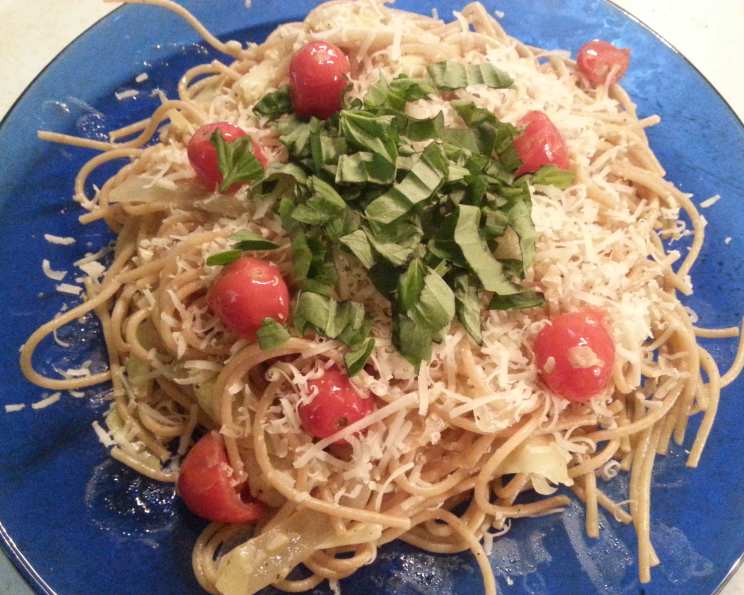
Pasta With Artichokes, Tomatoes, and Feta: A Mediterranean Delight
I remember the first time I tasted a dish like this. It was a sun-drenched afternoon in a small trattoria nestled along the Amalfi Coast. The air was thick with the scent of sea salt and blooming lemons, and the pasta, bursting with fresh tomatoes, briny olives, and salty feta, was an explosion of Mediterranean flavors that I’ve been chasing ever since. This recipe is my humble attempt to capture a sliver of that magic, bringing a taste of Italy to your table.
Recipe Overview
- Prep Time: 15 minutes
- Cook Time: 20 minutes
- Total Time: 35 minutes
- Servings: 2-3
- Dietary Type: Vegetarian
Ingredients
- 12 ounces whole wheat spaghetti
- 2 tablespoons extra virgin olive oil
- 1/2 medium onion, sliced lengthwise
- 4 minced garlic cloves
- 1/2 cup dry white wine
- 1 (13 3/4 ounce) can artichoke hearts, drained, rinsed, and quartered lengthwise
- 1 pint cherry tomatoes, halved
- 1/3 cup crumbled feta, plus more for serving or 1/3 cup parmesan cheese
- 1/2 cup fresh basil leaf, julienned
- 1/3 cup kalamata olives (optional)
- Coarse salt and pepper
Equipment Needed
- Large pot
- Large skillet
- Colander
Instructions
-
Begin by prepping all your ingredients. Slice the onion lengthwise. Mince the garlic cloves. Halve the cherry tomatoes. Julienne the fresh basil leaves. Crumble the feta (or grate the parmesan cheese, if using). Drain, rinse, and quarter the artichoke hearts lengthwise. Having everything ready to go will make the cooking process much smoother.
-
Bring a large pot of water to a rolling boil. Generously salt the water – this is crucial for seasoning the pasta from the inside out. Add the whole wheat spaghetti and cook according to package directions until al dente. Remember to stir occasionally to prevent the pasta from sticking together. Before draining, reserve 1 cup of pasta water – this starchy liquid is liquid gold and will help create a luscious sauce. Return the pasta to the pot after draining.
-
While the pasta is cooking, heat 1 tablespoon of extra virgin olive oil in a large skillet over medium-high heat. Add the sliced onion and minced garlic, then season with coarse salt and pepper to taste. Cook, stirring occasionally, for 3 to 4 minutes, or until the onion becomes translucent and slightly softened. Be careful not to burn the garlic.
-
Pour in the 1/2 cup dry white wine and cook until almost completely evaporated. This step deglazes the pan, lifting up any flavorful browned bits stuck to the bottom, and adds a layer of complexity to the sauce.
-
Add the quartered artichoke hearts to the skillet and cook, stirring occasionally, until they start to brown slightly, about 2 to 3 minutes. Browning the artichokes will enhance their flavor.
-
If using, add the kalamata olives to the skillet. Then add half of the halved cherry tomatoes. Cook until the tomatoes begin to break down and release their juices, about 1 to 2 minutes. This creates a base for the sauce.
-
Add the cooked spaghetti to the skillet with the sauce. Stir to combine, ensuring the pasta is well coated. Add the remaining halved cherry tomatoes and 1 tablespoon of extra virgin olive oil.
-
If the sauce seems too thick, thin it with some of the reserved pasta water until it reaches your desired consistency. The pasta water helps to bind the sauce and pasta together, creating a creamy emulsion.
-
Transfer the pasta to plates and garnish generously with crumbled feta cheese (or grated parmesan cheese) and julienned fresh basil. Serve immediately.
Expert Tips & Tricks
- Don’t overcook the pasta: Al dente means “to the tooth,” so the pasta should have a slight bite. Overcooked pasta will be mushy and won’t hold the sauce as well.
- Salt the pasta water generously: This is the only chance you have to season the pasta itself, so don’t skimp on the salt.
- Taste and adjust the seasoning: Before serving, taste the pasta and add more salt and pepper if needed.
- Add a pinch of red pepper flakes: For a touch of heat, add a pinch of red pepper flakes to the skillet along with the onion and garlic.
- Use fresh, high-quality ingredients: The better the ingredients, the better the final dish will taste. Especially focus on the quality of your olive oil.
- Make ahead option: You can prep all of the ingredients ahead of time and store them separately in the refrigerator. When ready to cook, simply follow the recipe as directed.
Serving & Storage Suggestions
Serve this pasta dish immediately while it’s hot and the cheese is melted and gooey. A side of crusty bread is perfect for soaking up the delicious sauce.
Leftovers can be stored in an airtight container in the refrigerator for up to 3 days. To reheat, simply microwave or heat in a skillet over medium heat until warmed through. You may need to add a splash of water to prevent the pasta from drying out. While you can freeze leftovers, the texture of the pasta and tomatoes may change slightly.
Nutritional Information
| Nutrient | Amount per Serving | % Daily Value |
|---|---|---|
| Calories | 981.1 kcal | N/A |
| Calories from Fat | N/A | 20% |
| Total Fat | 22.3 g | 34% |
| Saturated Fat | 6.3 g | 31% |
| Cholesterol | 22.2 mg | 7% |
| Sodium | 422.6 mg | 17% |
| Total Carbohydrate | 164.8 g | 54% |
| Dietary Fiber | 19.3 g | 77% |
| Sugars | 8.7 g | N/A |
| Protein | 36.6 g | 73% |
Variations & Substitutions
- Gluten-free: Use gluten-free spaghetti instead of whole wheat spaghetti.
- Vegan: Omit the feta cheese or substitute with a plant-based feta alternative.
- Different vegetables: Add other vegetables like zucchini, bell peppers, or spinach.
- Different herbs: Use other fresh herbs like oregano, thyme, or parsley instead of basil.
- Lemon zest: Add a teaspoon of lemon zest to the sauce for a bright, citrusy flavor.
- Spicy: Add a pinch of red pepper flakes for heat.
- Protein: Add grilled chicken, shrimp, or sausage for extra protein.
FAQs (Frequently Asked Questions)
Q: Can I use canned diced tomatoes instead of fresh cherry tomatoes?
A: Yes, you can substitute canned diced tomatoes. Drain them well before adding them to the skillet.
Q: Can I use dried basil instead of fresh basil?
A: While fresh basil is ideal, you can use dried basil in a pinch. Use about 1 teaspoon of dried basil for every 1/2 cup of fresh basil. Add it to the skillet along with the onion and garlic.
Q: Can I make this dish ahead of time?
A: You can prep the ingredients ahead of time. Cook the pasta just before serving to prevent it from becoming mushy.
Q: What if I don’t have white wine?
A: You can substitute chicken broth or vegetable broth for the white wine.
Q: How do I prevent the pasta from sticking together after draining?
A: Toss the drained pasta with a little bit of olive oil.
Final Thoughts
This Pasta with Artichokes, Tomatoes, and Feta is a celebration of simple, fresh ingredients that come together to create a dish that is both comforting and flavorful. I encourage you to give this recipe a try and experiment with different variations to make it your own. Don’t be afraid to get creative and add your personal touch. And please, share your feedback – I’m always eager to hear how it turns out! Pair this delightful pasta with a crisp glass of Pinot Grigio for the perfect Mediterranean meal.