
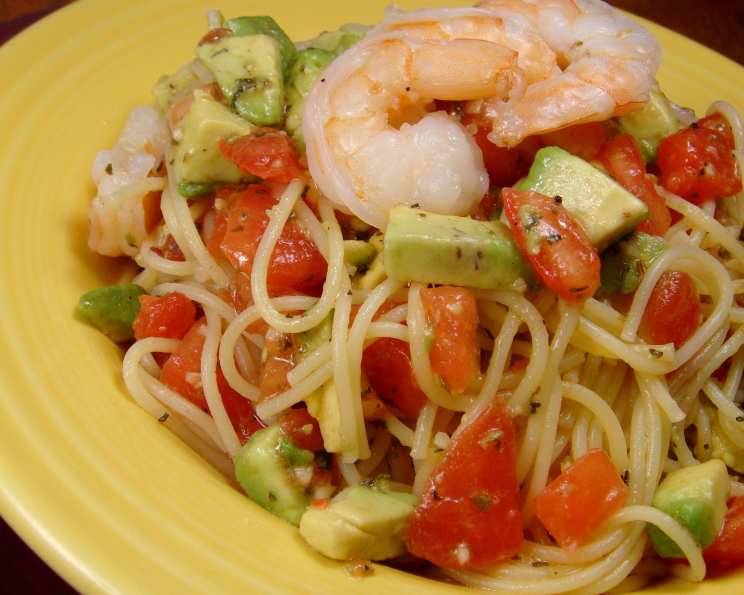
Pasta With Tomato, Avocado, and Shrimp: A Taste of Summer
I remember the first time I tasted this dish. I was on a sun-drenched patio in Italy, the air thick with the scent of basil and the sound of laughter. The simplicity of perfectly ripe tomatoes, creamy avocado, and succulent shrimp tossed with warm pasta created a flavor explosion that transported me. Ever since, I’ve recreated this summer classic, tweaking it slightly to capture that same feeling of effortless deliciousness. This recipe is more than just a meal; it’s a memory of warmth, good company, and the pure joy of simple, fresh ingredients.
Recipe Overview
- Prep Time: 15 minutes
- Cook Time: 17 minutes (includes pasta cooking time)
- Total Time: 32 minutes
- Servings: 4
- Dietary Type: Pescatarian
Ingredients
- 4 ripe tomatoes, diced
- ½ lb cooked shrimp, diced
- 1 tablespoon fresh basil, chopped
- 1 large garlic clove, finely diced
- ½ cup olive oil
- 1 ripe avocado, diced
- Salt and pepper to taste
- 1 lb pasta (Linguine recommended)
Equipment Needed
- Large bowl
- Large pot
- Colander
Instructions
-
Begin by bringing a large pot of salted water to a boil. This is crucial for perfectly cooked pasta. Use a generous amount of salt; it seasons the pasta from the inside out.
-
While the water is heating, prepare the tomato-avocado sauce. In a large bowl, combine the diced ripe tomatoes, diced cooked shrimp, chopped fresh basil, and finely diced garlic. The quality of your tomatoes is paramount here. Look for ones that are fragrant and yield slightly to the touch. Roma or plum tomatoes work well, but any ripe, juicy variety will do.
-
Drizzle the olive oil over the tomato mixture and gently toss to coat. Don’t be shy with the olive oil; it adds richness and helps to bind the ingredients together. Use a good quality extra virgin olive oil for the best flavor.
-
Season generously with salt and pepper. Taste and adjust as needed. Remember that the pasta will absorb some of the salt, so it’s better to err on the side of slightly over-seasoning the sauce.
-
Gently fold in the diced ripe avocado. Be careful not to mash the avocado, as you want it to retain its shape and creamy texture. Adding the avocado last prevents it from becoming discolored.
-
Set the sauce aside at room temperature while the pasta cooks. This allows the flavors to meld together beautifully. The tomatoes will release their juices, creating a light and refreshing sauce.
-
Once the water is boiling, add the pasta. Cook according to the package directions until al dente. For linguine, this usually takes around 8-10 minutes. “Al dente” means “to the tooth” in Italian; the pasta should be firm to the bite.
-
Reserve about 1 cup of pasta water before draining the pasta. This starchy water can be used to adjust the consistency of the sauce if needed.
-
Drain the pasta in a colander. Do not rinse the pasta unless you plan to let it sit for an extended period before saucing; rinsing removes the starch that helps the sauce cling.
-
Immediately add the hot, drained pasta to the bowl with the tomato-avocado sauce. Toss gently but thoroughly to combine. The heat from the pasta will slightly warm the sauce, enhancing the flavors. If the sauce seems too thick, add a little of the reserved pasta water until it reaches your desired consistency.
-
Serve immediately. The avocado can discolor if left to sit for too long, so it’s best to serve this dish as soon as it’s prepared.
Expert Tips & Tricks
- Shrimp Selection: Buy high-quality cooked shrimp. If possible, opt for shrimp that has been peeled and deveined to save time and effort. You can also cook your own shrimp, but be careful not to overcook it, as it will become rubbery.
- Tomato Ripening: If your tomatoes aren’t quite ripe, place them in a paper bag with a banana or apple. These fruits release ethylene gas, which helps to speed up the ripening process.
- Avocado Preparation: To prevent avocado from browning, brush it with a little lemon or lime juice.
- Garlic Flavor: For a milder garlic flavor, use the flat side of a knife to smash the garlic clove before dicing. This releases less of the pungent compounds.
- Pasta Cooking: Always cook pasta in a large pot with plenty of salted water. This allows the pasta to cook evenly and prevents it from sticking together.
Serving & Storage Suggestions
Serve this pasta dish immediately for the best flavor and texture. Garnish with extra chopped basil and a drizzle of olive oil for a beautiful presentation. This dish pairs perfectly with a crisp white wine, such as a Sauvignon Blanc or Pinot Grigio.
Leftovers can be stored in an airtight container in the refrigerator for up to 24 hours. However, the avocado may discolor and the pasta may become slightly softer. To reheat, gently warm the pasta in a skillet over low heat, adding a splash of olive oil or pasta water to prevent it from drying out. I don’t recommend freezing this dish as the avocado’s texture will degrade significantly.
Nutritional Information
| Nutrient | Amount per Serving | % Daily Value |
|---|---|---|
| Calories | 821.8 kcal | N/A |
| Calories from Fat | 332 g | 40% |
| Total Fat | 37 g | 56% |
| Saturated Fat | 5.3 g | 26% |
| Cholesterol | 110.5 mg | 36% |
| Sodium | 143 mg | 5% |
| Total Carbohydrate | 94.6 g | 31% |
| Dietary Fiber | 8.5 g | 34% |
| Sugars | 5.6 g | 22% |
| Protein | 28.9 g | 57% |
Note: Nutritional information is an estimate and may vary based on specific ingredients and portion sizes.
Variations & Substitutions
- Gluten-Free: Use your favorite gluten-free pasta. Look for pasta made from brown rice, quinoa, or a blend of gluten-free flours.
- Vegan: Omit the shrimp for a delicious vegan version. You can add grilled or pan-fried tofu or chickpeas for added protein.
- Spicy: Add a pinch of red pepper flakes to the sauce for a touch of heat.
- Herbs: Experiment with different herbs, such as oregano, parsley, or mint.
- Cheese: A sprinkle of freshly grated Parmesan cheese or Pecorino Romano adds a salty, savory note.
- Lemon: Squeeze fresh lemon juice over the pasta before serving for brightness.
FAQs (Frequently Asked Questions)
Q: Can I make this dish ahead of time?
A: While the sauce can be prepared a few hours in advance, it’s best to add the avocado just before serving to prevent browning. The pasta should be cooked and tossed with the sauce immediately for optimal texture.
Q: What kind of shrimp is best for this recipe?
A: Medium to large cooked shrimp works best. Look for shrimp that is firm and pink, with no fishy odor.
Q: Can I use frozen shrimp?
A: Yes, you can use frozen shrimp. Just be sure to thaw it completely before dicing and adding it to the sauce.
Q: What if I don’t have fresh basil?
A: You can use dried basil, but fresh basil provides a much more vibrant flavor. If using dried basil, use about 1 teaspoon.
Q: How do I know when the pasta is cooked al dente?
A: The pasta should be firm to the bite, with a slight resistance in the center. Test it by biting into a strand a minute or two before the package directions suggest.
Final Thoughts
This Pasta with Tomato, Avocado, and Shrimp is a celebration of fresh, vibrant flavors. It’s simple enough for a weeknight dinner but elegant enough to impress your guests. I encourage you to experiment with the ingredients and make it your own. Don’t be afraid to add a personal touch, whether it’s a sprinkle of red pepper flakes or a squeeze of lemon juice. Share your creations with friends and family, and most importantly, enjoy the process of cooking and savoring this delicious dish. Bon appétit!