
Pat’s Gourmet Salmon Cakes: A Culinary Delight
I can still picture my grandmother, Pat, bustling around her sunny kitchen, the air thick with the savory aroma of pan-fried deliciousness. Her salmon cakes were legendary. Not those dry, crumbly things you often find, but these were moist, flavorful, and utterly irresistible. They were always the highlight of our summer gatherings, served with a dollop of tartar sauce and a side of her famous cucumber salad. Every bite was a taste of home, a memory etched in my heart. I’ve tinkered with her recipe over the years, but always stayed true to her original vision: a salmon cake that’s anything but ordinary.
Recipe Overview
- Prep Time: 45 minutes
- Cook Time: Varies per batch
- Total Time: 45 minutes + cooking time
- Servings: 4
- Yields: 7 patties
- Dietary Type: Not specified
Ingredients
- 30 ounces canned salmon, drained, de-boned, and cleaned (two 15-ounce cans)
- 2 cups oyster crackers, whole
- 6 tablespoons mayonnaise
- 2 large eggs, beaten
- 3 tablespoons pimientos (canned, drained and diced)
- 1/3 cup fresh parsley, chopped
- 1 tablespoon fresh lemon juice, strained
- 1 teaspoon dried basil
- 1 teaspoon rice vinegar (sub., white wine vinegar)
- 1/2 teaspoon kosher salt
- 1 1/2 teaspoons prepared yellow mustard
- 1/2 teaspoon Mrs. Dash seasoning mix (sub., Italian dressing dry mix)
- 1 teaspoon Old Bay Seasoning (sprinkled on frying cakes)
- 2 cups Crisco shortening, butter flavored (for frying)
Equipment Needed
- Large mixing bowl
- Spatula
- Large skillet
- Large plate
- Paper towels
Instructions
-
Begin by meticulously preparing the salmon. Drain both 15-ounce cans of salmon thoroughly. This is crucial to prevent soggy salmon cakes. Carefully remove all bones, skin, and any dark brown material. The goal is to have only light pink salmon remaining. This step is time-consuming but essential for the best flavor and texture.
-
In a large mixing bowl, create the base for your salmon cakes. Combine the cleaned salmon with 6 tablespoons of mayonnaise (avoid using Miracle Whip for this recipe, as its sweetness can alter the flavor profile), 2 large beaten eggs, 3 tablespoons of diced pimientos, 1/3 cup of chopped fresh parsley, 1 tablespoon of strained fresh lemon juice, 1 teaspoon of dried basil, 1 teaspoon of rice vinegar (or white wine vinegar as a substitute), 1/2 teaspoon of kosher salt, 1 1/2 teaspoons of prepared yellow mustard, and 1/2 teaspoon of Mrs. Dash seasoning mix (or Italian dressing dry mix if you prefer).
-
Gently mix all the ingredients together using a spatula. Be careful not to overmix at this stage. The mixture will appear quite runny at first, but don’t worry. The next step will bind everything together.
-
Now, it’s time to add the binder. Crush the 2 cups of oyster crackers by hand. You don’t want a fine powder; aim for a slightly coarse texture. Add the crushed oyster crackers to the salmon mixture. This should stiffen the blend, making it thick enough to form into patties. The mix should be moist, not dry. Adjust the amount of cracker to reach the desire consistancy, if needed.
-
Prepare for frying. In a large skillet, heat 2 cups of Crisco shortening, butter flavored, over high heat. The amount of shortening is important, as a reduced amount may not brown the sides of the salmon cakes properly and could lead to a temperature drop, resulting in a greasy product. The oil is ready when a few drops of water flicked into the oil crackle and pop vigorously.
-
Form the salmon cakes. Gently shape the mixture into “fat” burger-like patties, about 3 inches across. Aim for 7 thick cakes. Handle them delicately to avoid squeezing them too tightly, as this can make them tough. As they fry, they will naturally flatten slightly on the tops and bottoms. Place the formed patties on a large plate.
-
Season the salmon cakes. Sprinkle 1 teaspoon of Old Bay Seasoning over the tops of the patties. This adds a classic seafood flavor and a touch of visual appeal.
-
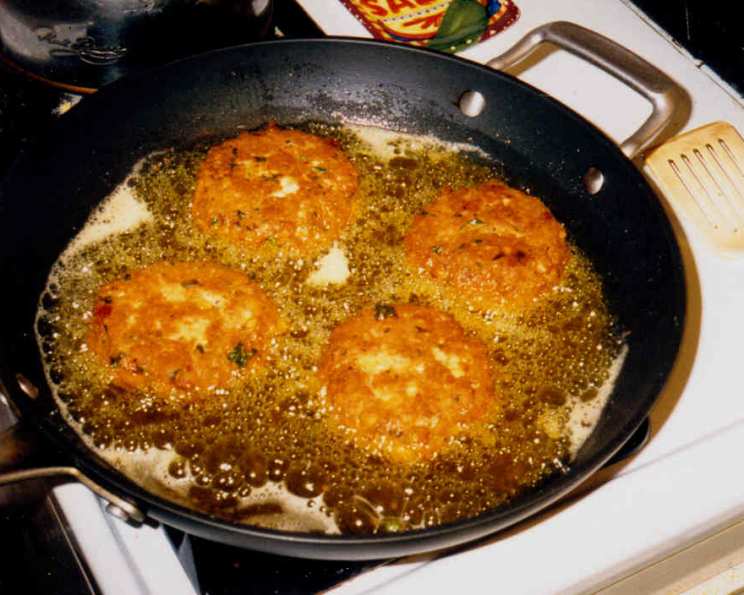
Fry the salmon cakes. When the cooking oil is sufficiently hot (the cakes should begin frying immediately upon contact; if not, the oil is not hot enough), carefully place the patties into the skillet. Avoid crowding the pan, as this will lower the oil temperature. It’s best to fry in two batches, using 3-4 patties per batch.
-
Fry for approximately 4 minutes per side, or until each side reaches a deep golden brown. Monitor the heat and adjust as needed to prevent burning. Use a spatula to carefully turn the cakes.
-
Once both sides are evenly browned, remove the salmon cakes from the skillet and place them on a plate lined with a couple of paper towels to absorb any excess oil.
-
Serve the salmon cakes immediately while they are still hot and crispy.
Important Note: Do not mash the salmon cakes with a spatula as they fry, because they will be very dry-tasting if you do.
Expert Tips & Tricks
- Don’t skimp on the fat: Using enough shortening is crucial for achieving that crispy, golden-brown exterior.
- Handle gently: Avoid overmixing or squeezing the patties too tightly, as this can make them tough.
- Temperature control: Keep a close eye on the oil temperature to prevent burning or greasy results.
- Make ahead: The salmon mixture can be prepared ahead of time and stored in the refrigerator for a few hours before frying.
- Binders: If your mixture is too wet, add a bit more crushed oyster crackers. If too dry, add a touch more mayonnaise.
Serving & Storage Suggestions
These gourmet salmon cakes are best enjoyed hot, straight from the skillet. They are delicious served with a dollop of tartar sauce, a squeeze of fresh lemon juice, or a side of creamy dill sauce. They pair perfectly with green beans, asparagus, a fresh salad, or creamy pasta.
Leftover salmon cakes can be stored in an airtight container in the refrigerator for up to 3 days. To reheat, gently pan-fry them in a little oil until heated through and crispy again. They can also be reheated in a preheated oven at 350°F (175°C) for about 10-15 minutes. Freezing is not recommended as it can alter the texture.
Nutritional Information
| Nutrient | Amount per Serving | % Daily Value |
|---|---|---|
| Calories | 1418.1 kcal | N/A |
| Calories from Fat | 1121 g | 79% |
| Total Fat | 124.7 g | 191% |
| Saturated Fat | 29.8 g | 148% |
| Cholesterol | 273.1 mg | 91% |
| Sodium | 1535.3 mg | 63% |
| Total Carbohydrate | 23.4 g | 7% |
| Dietary Fiber | 1.1 g | 4% |
| Sugars | 2.4 g | 9% |
| Protein | 54.9 g | 109% |
Note: Nutritional information is an estimate and may vary based on specific ingredients and portion sizes.
Variations & Substitutions
- Spicy Salmon Cakes: Add a pinch of cayenne pepper or a dash of hot sauce to the mixture for a spicy kick.
- Herbaceous Salmon Cakes: Experiment with different herbs, such as dill, chives, or tarragon.
- Gluten-Free Salmon Cakes: Use gluten-free crackers in place of oyster crackers.
- Smoked Salmon Cakes: Substitute some of the canned salmon with smoked salmon for a richer, smokier flavor.
- Budget friendly: If you want to reduce the cost, using a smaller amount of salmon and bulking up with a cooked and mashed potato can work well.
FAQs (Frequently Asked Questions)
Q: Can I use fresh salmon instead of canned salmon?
A: While canned salmon is traditional for this recipe, you could substitute it with cooked fresh salmon, ensuring it is thoroughly deboned and flaked.
Q: Can I bake these salmon cakes instead of frying?
A: Yes, you can bake them at 375°F (190°C) for about 20-25 minutes, or until golden brown. Baking may result in a slightly less crispy texture.
Q: What’s the best way to prevent the salmon cakes from falling apart while frying?
A: Ensure the salmon mixture is not too wet by thoroughly draining the salmon and using the correct amount of binder (oyster crackers). Also, handle the patties gently.
Q: Can I add vegetables to the salmon cakes?
A: Yes, you can add finely diced vegetables like celery, bell peppers, or onions for extra flavor and texture.
Q: Can I freeze these salmon cakes?
A: Freezing is not recommended, as it can alter the texture of the salmon cakes and make them more prone to crumbling.
Final Thoughts
I encourage you to try Pat’s Gourmet Salmon Cakes. They’re more than just a recipe; they’re a taste of tradition, a memory on a plate. Don’t be afraid to experiment with variations and make them your own. Once you’ve tried them, let me know what you think! I’d love to hear about your experience, and perhaps what sides or sauces you enjoyed with them. Consider pairing it with a crisp, dry white wine like a Pinot Grigio, just as my grandmother would have done. Bon appétit!