
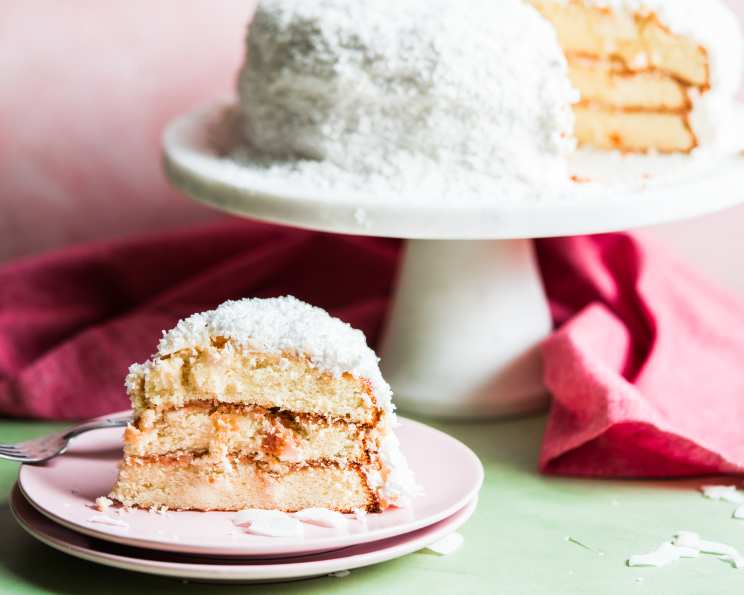
Paula Deen’s Jamie’s Coconut Cake: A Slice of Southern Comfort
The aroma of coconut cake always transports me back to my grandmother’s kitchen in Savannah. I can almost feel the humid Georgia air and hear the cicadas chirping as she’d pull one of these beauties out of the oven. Her secret? She always said it was the love she baked into every layer, but I suspect a little bit of Paula Deen’s influence played a part, too. This recipe, a favorite of Paula’s son Jamie, is a true testament to Southern baking at its finest. It’s a simple cake, made extraordinary by its moist crumb and the luscious, sweet coconut flavor.
Recipe Overview
- Prep Time: 30 minutes
- Cook Time: 25-30 minutes
- Total Time: Approximately 3 hours (including cooling and refrigeration)
- Servings: 12-16
- Yield: 1 Three-Layer Cake
- Dietary Type: Not Gluten-Free, Not Dairy-Free
Ingredients
Cake:
- 1 cup butter, at room temperature
- 2 cups sugar
- 4 eggs
- 3 cups sifted self-rising flour
- 1 cup coconut milk
- 1 teaspoon pure vanilla extract
Filling:
- ¾ cup sugar
- 1 cup sour cream
- 4 tablespoons milk
- ½ cup sweetened flaked coconut
Frosting:
- 1 ½ cups sugar
- ¼ teaspoon cream of tartar or 1 tablespoon white corn syrup
- ⅛ teaspoon salt
- ⅓ cup water
- 2 egg whites
- 1 ½ teaspoons pure vanilla extract
Garnish:
- Shredded coconut (optional)
Equipment Needed
- Electric mixer
- 3 (9-inch) cake pans
- Measuring cups and spoons
- Cooling racks
- Double boiler
- Cake plate
Instructions
-
Preheat your oven to 350 degrees F (175 degrees C). Grease and flour 3 (9-inch) cake pans. Ensuring the pans are well-prepared is crucial for easy release and a beautiful cake.
-
In a large bowl, using an electric mixer, cream the butter until light and fluffy. This can take a few minutes, so be patient.
-
Gradually add the sugar to the creamed butter and continue to cream well for 6 to 8 minutes. This step is important for incorporating air into the batter, resulting in a tender cake.
-
Add the eggs, one at a time, beating well after each addition. Make sure each egg is fully incorporated before adding the next.
-
In a separate bowl, sift the self-rising flour. This helps to create a lighter, more delicate crumb.
-
Add the flour and coconut milk alternately to the creamed mixture, beginning and ending with flour. Be careful not to overmix; mix only until just combined. Overmixing can develop the gluten in the flour, resulting in a tough cake.
-
Add the vanilla extract and continue to beat until just mixed.
-
Divide the batter equally among the prepared pans.
-
Level the batter in each pan by holding the pan 3 or 4 inches above the counter and dropping it flat onto the counter. Do this several times to release air bubbles and ensure a more level cake. This simple trick makes a huge difference in the final appearance of the cake.
-
Bake for 25 to 30 minutes, or until a toothpick inserted into the center comes out clean.
-
Cool in the pans for 5 to 10 minutes before inverting the cakes onto cooling racks to cool completely.
-
While the cake is baking, prepare the filling. In a bowl, stir together the sugar, sour cream, milk, and coconut until well blended. Set aside.
-
Once the cake layers have cooled, remove the first layer and invert it onto a cake plate.
-
Using the wrong end of a wooden spoon, poke holes approximately 1-inch apart until the entire cake layer has been poked. These holes will allow the filling to soak into the cake, making it incredibly moist and flavorful.
-
Spread 1/3 of the filling mixture evenly over the cake layer.
-
Top with the second layer and repeat the process of poking holes and spreading filling.
-
Top with the last layer and repeat the process again. If you are concerned about the layers shifting, you can secure them with toothpicks.
-
To prepare the frosting, place the sugar, cream of tartar (or corn syrup), salt, water, and egg whites in the top of a double boiler.
-
Beat with a hand-held electric mixer for 1 minute.
-
Place the pan over boiling water, being sure that the boiling water does not touch the bottom of the top pan. If this happens, it could cause the frosting to become grainy.
-
Beat constantly on high speed with the electric mixer for 7 minutes. This is what creates the fluffy meringue frosting.
-
Beat in the vanilla extract.
-
Frost the sides of the cake first, being careful not to get crumbs in the icing. A crumb coat can help with this!
-
When the cake is completely covered, gently cover the frosting with shredded coconut, if desired.
-
Cover loosely and refrigerate for at least three hours, or preferably overnight. Refrigerating for three days allows the flavors to meld together beautifully.
Expert Tips & Tricks
- Room Temperature Ingredients: Using room-temperature butter and eggs is key to achieving a smooth, emulsified batter.
- Don’t Overbake: Overbaking will result in a dry cake. Check for doneness by inserting a toothpick into the center; it should come out clean.
- Crumb Coat: Apply a thin layer of frosting before the final layer to trap any loose crumbs.
- Even Layers: Weighing the batter for each pan ensures even layers.
- Coconut Toasting: Toasting the shredded coconut before garnishing adds a nutty flavor and visual appeal.
Serving & Storage Suggestions
Serve this cake chilled for the best flavor and texture. It pairs perfectly with a scoop of vanilla ice cream or a cup of coffee.
Leftover cake should be stored in an airtight container in the refrigerator for up to 3 days. The frosting is delicate and may soften at room temperature, so refrigeration is recommended. Freezing is not recommended, as it can affect the texture of the frosting and cake.
Nutritional Information
| Nutrient | Amount per Serving | % Daily Value |
|---|---|---|
| Calories | 647.02 kcal | 39% |
| Total Fat | 51.82g | 79% |
| Saturated Fat | 34.78g | 174% |
| Cholesterol | 226.7 mg | 76% |
| Sodium | 1240.8 mg | 52% |
| Total Carbohydrate | 195 g | 65% |
| Dietary Fiber | 2.03 g | 8% |
| Sugars | 146.65 g | N/A |
| Protein | 14 g | 28% |
Note: Nutritional information is an estimate and may vary based on specific ingredients and portion sizes.
Variations & Substitutions
- Gluten-Free: Substitute the self-rising flour with a gluten-free all-purpose flour blend, adding 1 teaspoon of xanthan gum for every cup of flour.
- Dairy-Free: Use coconut oil instead of butter, and substitute the sour cream with a dairy-free alternative like coconut yogurt.
- Lemon Zest: Add 1 tablespoon of lemon zest to the cake batter for a citrusy twist.
- Pecans: Incorporate chopped pecans into the filling for added texture and flavor.
FAQs (Frequently Asked Questions)
Q: Can I use sweetened coconut milk for the cake?
A: Yes, you can, but you may want to reduce the amount of sugar in the cake batter slightly to compensate for the added sweetness.
Q: What if I don’t have self-rising flour?
A: You can make your own self-rising flour by combining 1 cup of all-purpose flour with 1 ½ teaspoons of baking powder and ¼ teaspoon of salt.
Q: Can I make the cake layers ahead of time?
A: Absolutely! You can bake the cake layers a day or two in advance and store them tightly wrapped in the refrigerator or freezer.
Q: My frosting is too thin. How can I thicken it?
A: Continue beating the frosting over the double boiler for a longer period to allow more moisture to evaporate. You can also add a small amount of powdered sugar.
Q: Why is it important to use a double boiler for the frosting?
A: Using a double boiler helps to gently cook the egg whites and sugar without scorching them, creating a smooth and stable meringue frosting.
Final Thoughts
This Jamie’s Coconut Cake is more than just a dessert; it’s a warm embrace of Southern hospitality. The combination of the moist, tender cake, the tangy-sweet filling, and the fluffy meringue frosting is simply irresistible. Don’t be intimidated by the multiple steps – each one is easy to follow and well worth the effort. I encourage you to bake this cake for your loved ones and share the joy of Southern baking. And if you have any family variations or additions to the recipe, share in the comments!