
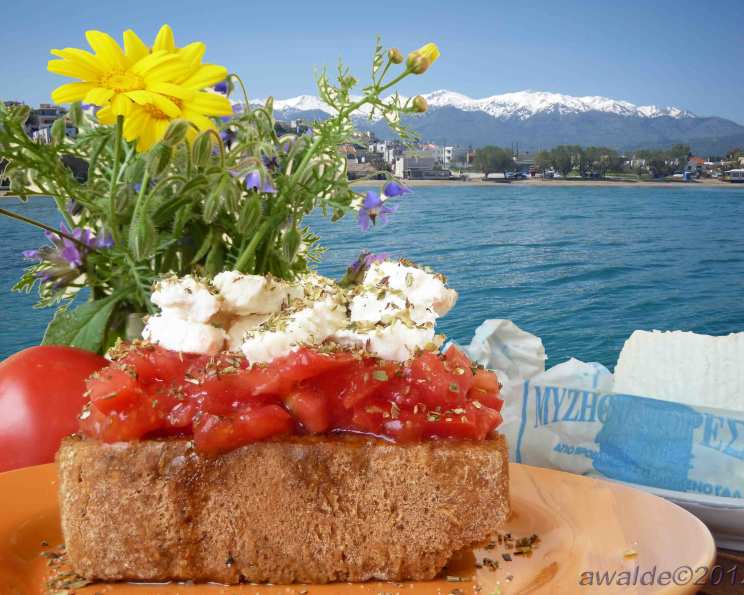
Paximadia “Bruschetta”: A Taste of Crete in Every Bite
My first encounter with paximadia was a revelation. I was backpacking through the sun-drenched island of Crete, drawn by its ancient history and vibrant food scene. In a small, family-run taverna overlooking the turquoise waters of the Aegean, I was served a simple meze: barley rusks, drizzled with olive oil, topped with ripe tomatoes and crumbled cheese. The crunch of the rusk, the burst of fresh tomato, the salty tang of the cheese, and the herbaceous aroma of oregano – it was a symphony of flavors that captured the essence of Crete. From that moment, paximadia became synonymous with the warmth, hospitality, and rustic beauty of the island. It’s a taste I’ve strived to recreate ever since.
Recipe Overview
- Prep Time: 4 minutes
- Ingredients: 6
- Serves: 1-2
- Dietary Type: Vegetarian
Ingredients
- Water
- 1 large barley rusk or 1 large whole wheat rusk
- 2 tablespoons Greek extra virgin olive oil
- 1 large tomato, chopped (or 2 smaller ones)
- 1 tablespoon mizithra cheese or 1 tablespoon feta cheese
- 1 teaspoon oregano or 1 teaspoon marjoram
Equipment Needed
- None specifically required. A small bowl for pre-soaking (optional).
Instructions
- Start by gently softening the rusk. Hold it under a running tap and sprinkle both sides with water. The goal is to moisten the rusk slightly, making it easier to chew without turning it soggy. Don’t overdo it!
- Drizzle 1 tablespoon of Greek extra virgin olive oil generously over the moistened rusk. The oil not only adds flavor but also helps to soften the rusk further.
- Top the rusk with the chopped tomato. Distribute the tomato evenly, ensuring that each bite will be a burst of fresh, juicy flavor.
- Drizzle the remaining 1 tablespoon of olive oil over the tomatoes.
- Crumble the mizithra cheese or feta cheese over the tomatoes. The amount of cheese is flexible – adjust to your preference.
- Sprinkle the oregano or marjoram over the cheese. Season with salt and pepper to taste. Remember that feta is already salty, so taste before adding more salt.
- Serve immediately. The longer the toppings sit on the rusk, the softer it will become, so it’s best enjoyed fresh.
Expert Tips & Tricks
- The Rusk is Key: The quality of the rusk significantly impacts the final product. Seek out authentic Cretan barley rusks for the best flavor and texture. If you can’t find them, whole wheat rusks are a good substitute, but the flavor will be slightly different.
- Tomato Selection: Use the ripest, most flavorful tomatoes you can find. Heirloom tomatoes are an excellent choice during their season. In the off-season, consider using cherry tomatoes, halved or quartered, as they tend to have a more consistent flavor.
- Olive Oil Matters: Don’t skimp on the olive oil! Use high-quality Greek extra virgin olive oil for the best flavor. The olive oil is a crucial component of this simple dish, so its quality will shine through.
- Cheese Variations: While mizithra and feta are traditional choices, you can experiment with other cheeses. Manouri, a creamy, mild Greek cheese, would be delicious. For a non-Greek twist, try ricotta salata or even a sprinkle of Parmesan.
- Softening Strategies: If your rusks are particularly hard, try briefly steaming them before topping. Place them on a steamer basket over boiling water for a minute or two to soften them up. Alternatively, you can lightly toast them under a broiler before adding the toppings to enhance their crunch.
Serving & Storage Suggestions
Paximadia “bruschetta” is best served immediately as a light lunch, snack, or meze (appetizer). The crispness of the rusk is ideal when freshly prepared.
- Serving: Arrange the prepared rusks artfully on a platter and garnish with fresh oregano or marjoram sprigs for an extra touch of flavor and visual appeal.
- Storage: Due to the moistened rusk, leftovers are not ideal. The rusk will become soggy. If you absolutely must store it, keep the toppings separate from the rusk and store both in airtight containers in the refrigerator for up to 1 day. Reassemble just before serving, understanding that the rusk will no longer have its original crispness.
Nutritional Information
| Nutrient | Amount per Serving | % Daily Value |
|---|---|---|
| Calories | 272 kcal | N/A |
| Total Fat | 27.4 g | 42% |
| Saturated Fat | 3.8 g | 18% |
| Cholesterol | 0 mg | 0% |
| Sodium | 9.7 mg | 0% |
| Total Carbohydrate | 7.3 g | 2% |
| Dietary Fiber | 2.3 g | 9% |
| Sugars | 4.8 g | N/A |
| Protein | 1.6 g | 3% |
Note: Nutritional information is an estimate and can vary based on specific ingredients and portion sizes.
Variations & Substitutions
- Vegan Paximadia: Omit the cheese entirely or substitute with a plant-based feta alternative. Nutritional yeast can also add a cheesy flavor.
- Gluten-Free: While traditional paximadia are made with barley or wheat, you may be able to find gluten-free rusks made from other grains. Look for options made from rice flour, corn flour, or a blend of gluten-free flours.
- Spicy Kick: Add a pinch of red pepper flakes or a drizzle of chili oil for a touch of heat.
- Mediterranean Medley: Incorporate other Mediterranean ingredients such as Kalamata olives, sun-dried tomatoes, or capers.
- Herb Garden: Experiment with different herbs. Thyme, basil, or even a sprinkle of fresh mint can add a unique twist.
- Seasonal Twist: In the fall, consider using roasted butternut squash instead of tomatoes for a seasonal variation.
FAQs (Frequently Asked Questions)
Q: Can I use regular bread instead of rusks?
A: While you can, the texture and flavor will be significantly different. Rusks are twice-baked, resulting in a much harder, drier texture than regular bread. This allows them to absorb the olive oil and tomato juices without becoming soggy. If you must use bread, opt for a crusty baguette that has been toasted.
Q: How do I know if I’ve added enough water to the rusk?
A: The rusk should be slightly softened but not completely saturated. It should still retain some of its firmness. If it becomes too soggy, it will be difficult to handle and won’t have the desired texture.
Q: Can I prepare the toppings in advance?
A: Yes, you can chop the tomatoes and crumble the cheese ahead of time. Store them separately in airtight containers in the refrigerator. However, assemble the paximadia just before serving to prevent the rusk from becoming soggy.
Q: What’s the difference between mizithra and feta cheese?
A: Mizithra is a fresh whey cheese with a mild, slightly sweet flavor. Feta is a brined curd cheese with a salty, tangy flavor. Either cheese works well in this recipe, depending on your preference.
Q: Is it necessary to use Greek olive oil?
A: While Greek olive oil is highly recommended for its authentic flavor, any high-quality extra virgin olive oil will work. Look for an olive oil with a fruity and peppery flavor profile.
Final Thoughts
Paximadia “bruschetta” is more than just a recipe; it’s a taste of the Cretan lifestyle – simple, fresh, and bursting with flavor. It’s a dish that celebrates the natural bounty of the Mediterranean and the art of transforming humble ingredients into something extraordinary. I encourage you to try this recipe and experience the magic of Crete in your own kitchen. Share your creations with friends and family, and don’t hesitate to experiment with different variations to find your perfect paximadia “bruschetta.” Pair it with a glass of crisp white wine or a refreshing herbal tea for an authentic Mediterranean experience. Kali Orexi! (Bon appétit!)