
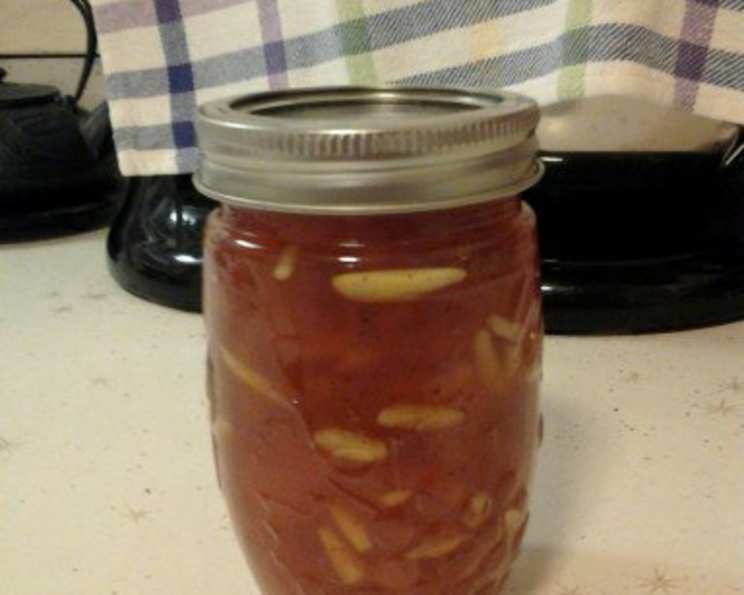
Peach-Cantaloupe-Almond Conserve: A Taste of Summer Sunshine
The aroma still lingers in my memory: sun-ripened peaches and fragrant cantaloupe simmering on the stove, transforming into a glistening, amber-hued conserve. My grandmother always had a jar of this on hand, a sweet reminder of summer’s bounty that we enjoyed on toast, scones, or even dolloped over vanilla ice cream during the colder months. It was more than just a spread; it was sunshine captured in a jar. This conserve is a love letter to those simpler times, a taste of nostalgia I’m thrilled to share with you.
Recipe Overview
- Prep Time: 20 minutes
- Cook Time: 1 hour
- Total Time: 1 hour 20 minutes
- Yields: 4-6 jars
- Serves: 48-72
- Dietary Type: Gluten-Free
Ingredients
- 4 cups chopped peaches (fully ripe)
- 4 cups chopped cantaloupe (fully ripe)
- 6 cups sugar
- 4 tablespoons lemon juice
- 1/2 teaspoon nutmeg
- 1/4 teaspoon salt
- 1 teaspoon grated orange peel
- 1/2 cup blanched sliced almonds
Equipment Needed
- Large, heavy-bottomed pot or Dutch oven
- Wooden spoon or heat-resistant spatula
- Measuring cups and spoons
- Grater or zester
- Sterilized canning jars with lids and rings
- Water-bath canner
- Jar lifter
Instructions
-
Begin by preparing your fruit. Wash, peel (if desired), and chop the peaches and cantaloupe into roughly equal-sized pieces. You want them to break down somewhat during cooking, but not completely disintegrate.
-
In a large, heavy-bottomed pot (this is crucial to prevent scorching), combine the chopped cantaloupe and peaches. Bring the mixture to a boil over medium-high heat, stirring frequently to prevent sticking. It should be a nice, steady boil – vigorous, but not uncontrollably high.
-
Once the fruit is boiling, add the sugar and lemon juice. Stir well to dissolve the sugar.
-
Reduce the heat slightly to maintain a simmer, and continue to cook, stirring frequently, until the conserve thickens. This process can take anywhere from 30 to 45 minutes, depending on the juiciness of the fruit and the strength of your stovetop. The conserve is ready when a small spoonful placed on a chilled plate sets up slightly and wrinkles when pushed with your finger. Be patient; this is where the magic happens.
-
Once the conserve has reached the desired consistency, add the nutmeg, salt, grated orange peel, and blanched sliced almonds. Stir to incorporate the spices and almonds evenly throughout the mixture.
-
Continue to cook for an additional three minutes, stirring constantly. This allows the flavors to meld together beautifully.
-
Carefully pour the hot conserve into sterilized hot canning jars, leaving 1/4-inch headspace. Wipe the rims of the jars with a clean, damp cloth to remove any residue.
-
Place the lids on the jars and screw on the bands until fingertip-tight (not too tight; you want air to be able to escape during processing).
-
Process the filled jars in a boiling water-bath canner for ten minutes. Ensure the water covers the jars by at least an inch. Start timing when the water returns to a boil.
-
After the processing time is complete, turn off the heat and let the jars sit in the hot water for five minutes before carefully removing them with a jar lifter. Place the jars on a towel-lined surface, away from drafts.
-
Listen for the “pop” as the jars seal. This usually happens within a few hours. If a jar doesn’t seal within 24 hours, store it in the refrigerator and use it within a few weeks.
Expert Tips & Tricks
- Use a heavy-bottomed pot: This is non-negotiable to prevent scorching and ensure even cooking.
- Fully ripe fruit is key: Overripe fruit can be used but be mindful of the sugar content as it will be higher.
- Stir frequently: Constant stirring is essential to prevent sticking and promote even cooking.
- Don’t overcook: Overcooking will result in a hard, candy-like conserve.
- Test for doneness: The chilled plate test is the most reliable way to check if the conserve is ready.
- Sterilize your jars properly: This is crucial for safe canning. Wash jars, lids and rings in hot soapy water, rinse well, and sterilize according to manufacturer’s instruction.
- Headspace is important: Leaving the correct headspace ensures a proper seal.
- Adjust processing time for altitude: If you live at a high altitude, you may need to increase the processing time. Refer to your local extension office for guidance.
Serving & Storage Suggestions
This Peach-Cantaloupe-Almond Conserve is incredibly versatile. It’s delicious spread on toast, biscuits, scones, or croissants. It also makes a wonderful accompaniment to cheese and crackers, or as a topping for yogurt, oatmeal, or ice cream.
Unopened jars of properly processed conserve can be stored in a cool, dark place for up to one year. Once opened, store in the refrigerator for up to three weeks.
Nutritional Information
(Estimated values per serving; actual values may vary)
| Nutrient | Amount per Serving | % Daily Value |
|---|---|---|
| Calories | 112 kcal | 6% |
| Total Fat | 0.5 g | 1% |
| Saturated Fat | 0.1 g | 1% |
| Cholesterol | 0 mg | 0% |
| Sodium | 15 mg | 1% |
| Total Carbohydrate | 28 g | 10% |
| Dietary Fiber | 0.4 g | 2% |
| Sugars | 27 g | 54% |
| Protein | 0.4 g | 1% |
Variations & Substitutions
- Other fruits: Feel free to experiment with other fruits, such as nectarines, plums, or apricots.
- Different nuts: Walnuts, pecans, or pistachios can be substituted for the almonds.
- Spice variations: Try adding a pinch of cardamom or ginger for a different flavor profile.
- Low-sugar version: Use a sugar substitute, but be aware that it may affect the consistency of the conserve. Pectin can be added if you would like a thicker set.
FAQs (Frequently Asked Questions)
Q: Can I use frozen peaches and cantaloupe?
A: While fresh fruit is preferred for the best flavor and texture, frozen fruit can be used. Be sure to thaw it completely and drain off any excess liquid before using.
Q: My conserve didn’t set up properly. What went wrong?
A: There are several reasons why a conserve might not set. It could be due to undercooking, using fruit that isn’t fully ripe, or not having enough acid (lemon juice). You can try re-cooking the conserve with additional lemon juice and pectin.
Q: Do I have to use a water-bath canner?
A: For long-term storage at room temperature, processing in a water-bath canner is essential to ensure food safety. If you plan to store the conserve in the refrigerator and use it within a few weeks, you can skip the canning process.
Q: Can I double the recipe?
A: Yes, you can double the recipe, but you may need to increase the cooking time slightly. Be sure to use a pot that is large enough to accommodate the increased volume.
Q: What kind of sugar should I use?
A: Granulated sugar works best for this recipe. Other types of sugar may affect the flavor and consistency of the conserve.
Final Thoughts
This Peach-Cantaloupe-Almond Conserve is more than just a recipe; it’s a celebration of summer’s sweetness. It’s a project that requires a little patience, but the reward is well worth the effort. Imagine the joy of opening a jar of sunshine in the middle of winter, a taste of summer that will brighten even the gloomiest day. So, gather your ingredients, roll up your sleeves, and get ready to create a batch of this delightful conserve. I encourage you to try this recipe, share it with your loved ones, and let me know how it turns out! It pairs perfectly with a crisp glass of prosecco on a warm afternoon. Happy canning!