
Peanut Butter Crème Brûlée: A Decadent Twist on a Classic
The clink of a spoon against the perfectly caramelized sugar crust of a crème brûlée always evokes a sense of quiet elegance. I remember the first time I tasted it – a sophisticated ending to a birthday dinner, the creamy vanilla custard a revelation after years of predictable chocolate cake. But what if we could take that classic elegance and inject it with a playful, utterly irresistible twist? That’s precisely what this Peanut Butter Crème Brûlée accomplishes: a symphony of smooth, rich custard infused with the comforting nutty flavor of peanut butter, all topped with that signature brittle shell just waiting to be cracked.
Recipe Overview
- Prep Time: 20 minutes
- Cook Time: 30 minutes
- Total Time: 24 hours, 50 minutes (includes chilling time)
- Servings: 6
- Yield: 6 ramekins
- Dietary Type: Not Gluten-Free (can be adapted, see variations)
Ingredients
- 1 cup whole milk
- 1 cup heavy cream
- ¾ cup sugar, divided (½ cup for custard, ¼ cup for brûléeing)
- ¼ teaspoon ground cinnamon
- 1 teaspoon vanilla extract
- 4 large egg yolks
- ½ cup peanut butter (smooth or creamy)
Equipment Needed
- Medium saucepan
- Whisk
- Mixing bowl
- Fine-mesh sieve or strainer
- Six 4-ounce ramekins
- Shallow baking pan (large enough to hold the ramekins)
- Broiler
Instructions
- Preheat your oven to 350 degrees Fahrenheit (175 degrees Celsius).
- In a medium saucepan, combine the whole milk, heavy cream, ½ cup of sugar, vanilla extract, and ground cinnamon over medium-high heat. Stir occasionally to prevent scorching.
- Heat the mixture until it is hot and steaming, but not boiling. You should see small bubbles forming around the edges of the pan. Remove from heat.
- In a separate mixing bowl, gently whisk the egg yolks until they are light and slightly frothy. This step is important to ensure a smooth custard.
- Now, temper the egg yolks. Slowly drizzle a small amount of the hot cream mixture into the whisked egg yolks, whisking constantly to prevent the yolks from scrambling. Continue to add the hot cream mixture in a slow, steady stream, whisking continuously until all of the hot cream has been incorporated. This gradual addition raises the temperature of the egg yolks without cooking them.
- Add the peanut butter to the tempered cream and egg yolk mixture. Whisk until the peanut butter is completely dissolved and the mixture is smooth and homogenous. Ensure there are no lumps of peanut butter remaining.
- Strain the mixture through a fine-mesh sieve or strainer into a pitcher or measuring cup. This step removes any lumps or cooked egg particles, resulting in an exceptionally smooth crème brûlée.
- Pour the strained mixture evenly into six 4-ounce ramekins.
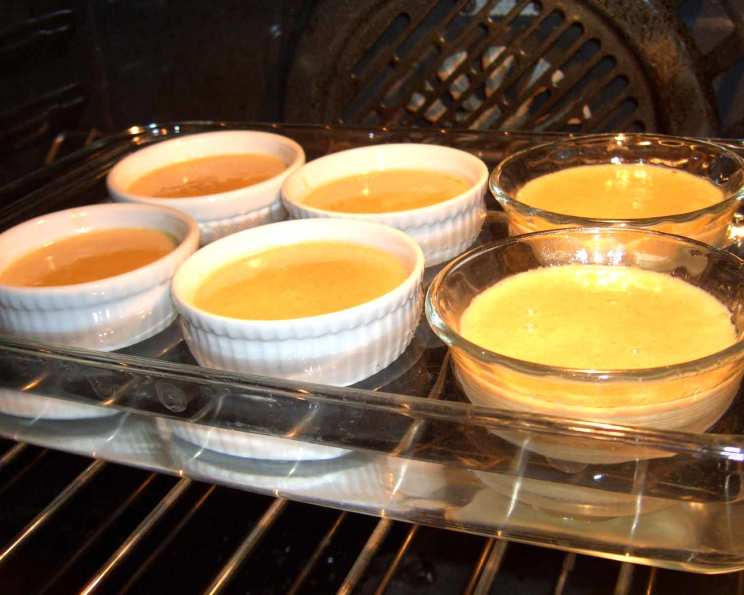
- Place the ramekins in a shallow baking pan. This will create a water bath, also known as a bain-marie, which helps the custards cook evenly and prevents them from curdling.
- Pour enough hot water into the baking pan to come halfway up the sides of the ramekins. Ensure the water doesn’t splash into the custards.
- Carefully transfer the baking pan with the ramekins to the preheated oven.
- Bake for 30 minutes, or until the custards are set around the edges but still slightly jiggly in the center. The internal temperature should reach about 170-175°F (77-79°C).
- Remove the baking pan from the oven and carefully remove the ramekins from the water bath.
- Let the custards cool to room temperature on a wire rack. This will help them to set further.
- Once cooled, cover the ramekins with plastic wrap, pressing it gently onto the surface of the custards to prevent a skin from forming.
- Refrigerate the custards overnight (or for at least 8 hours) to allow them to chill completely and fully set.
- When you are ready to serve, preheat your broiler.
- Sprinkle each custard with the remaining sugar (about 2 teaspoons per ramekin), ensuring an even layer.
- Place the ramekins on a baking sheet and position them under the broiler. Watch them very closely!
- Broil for 40-60 seconds, or until the sugar is melted and caramelized to a golden brown color. The sugar should bubble and blister, creating that characteristic hard shell. Keep a close eye on them, as they can burn quickly. Rotate the ramekins if necessary to ensure even caramelization.
- Remove the ramekins from the broiler and let them cool for a minute or two before serving. This allows the caramelized sugar to harden slightly.
Expert Tips & Tricks
- Don’t Overcook: Overcooked crème brûlée can become grainy and curdled. The custard should still have a slight jiggle in the center when you remove it from the oven.
- Even Sugar Layer: Ensure the sugar is spread evenly over the custard before brûléeing. This will result in a more consistent and visually appealing caramelized crust.
- Broiler Placement: The distance between the ramekins and the broiler element is crucial. Too close, and the sugar will burn before it caramelizes. Too far, and it may not caramelize at all. Experiment with your broiler to find the optimal distance.
- Cold Custards, Hot Sugar: Make sure the custards are well-chilled before brûléeing. This will help prevent the custard from overheating under the broiler.
- Torch It Up: If you have a kitchen torch, you can use it to caramelize the sugar instead of a broiler. Move the flame evenly over the surface of the sugar until it melts and browns.
Serving & Storage Suggestions
Serve the Peanut Butter Crème Brûlée immediately after brûléeing for the best texture and flavor. The contrast between the cold custard and the warm, brittle sugar is part of the experience. If you have leftover custards that have not been brûléed, they can be stored in the refrigerator for up to 3 days. Do not brûlée the custards until you are ready to serve them, as the caramelized sugar will soften over time. It is not recommended to freeze crème brûlée, as the texture of the custard will be compromised upon thawing.
Nutritional Information
| Nutrient | Amount per Serving | % Daily Value |
|---|---|---|
| Calories | 423 kcal | – |
| Calories from Fat | 268 kcal | – |
| Total Fat | 29.8 g | 45% |
| Saturated Fat | 13.2 g | 65% |
| Cholesterol | 198.3 mg | 66% |
| Sodium | 135.6 mg | 5% |
| Total Carbohydrate | 32.7 g | 10% |
| Dietary Fiber | 1.3 g | 5% |
| Sugars | 29.3 g | – |
| Protein | 9.3 g | 18% |
Variations & Substitutions
- Gluten-Free: While crème brûlée is naturally gluten-free, ensure your vanilla extract does not contain any gluten-based additives.
- Dairy-Free: Substitute the whole milk and heavy cream with coconut milk or a blend of cashew cream and coconut cream. The flavor will be slightly different, but still delicious.
- Peanut Butter Alternatives: If you have a peanut allergy or simply want to try something different, use almond butter, cashew butter, or sunflower seed butter in place of the peanut butter.
- Chocolate Peanut Butter: Add 2 tablespoons of unsweetened cocoa powder to the custard mixture for a chocolate peanut butter version.
- Maple Syrup: Instead of granulated sugar for brûléeing, try using maple syrup for a richer, more complex flavor. Drizzle a small amount of maple syrup over the custards before broiling.
FAQs (Frequently Asked Questions)
Q: Can I make this ahead of time?
A: Yes! The custards can be made up to 3 days in advance and stored in the refrigerator. However, it’s best to brûlée the sugar just before serving.
Q: Why is my crème brûlée grainy?
A: Overcooking the custard is the most common cause of a grainy texture. Be sure to bake it until just set around the edges, with a slight jiggle in the center. Tempering the egg yolks correctly is also important.
Q: Can I use a different type of sugar for brûléeing?
A: Granulated sugar works best for creating a hard, brittle crust. However, you can experiment with turbinado sugar for a slightly coarser texture and caramel flavor.
Q: What if I don’t have a broiler?
A: A kitchen torch is a great alternative for caramelizing the sugar. If you don’t have either, you can try using the high heat setting in your oven, but watch it very carefully to prevent burning.
Q: My crème brûlée is too sweet. Can I reduce the sugar?
A: You can reduce the sugar slightly, but keep in mind that sugar contributes to the texture and stability of the custard. Start by reducing it by 1-2 tablespoons and adjust to your taste.
Final Thoughts
This Peanut Butter Crème Brûlée is more than just a dessert; it’s an experience. The creamy, nutty custard, the satisfying crack of the caramelized sugar, and the sheer delight of each spoonful make it a memorable treat. Don’t be intimidated by the “brûlée” part – it’s easier than it looks! So, gather your ingredients, embrace the process, and prepare to impress your family and friends (or just yourself!) with this decadent and unexpected twist on a classic dessert. I encourage you to experiment with variations and make it your own. And please, share your creations and feedback – I’d love to hear how it turns out!