
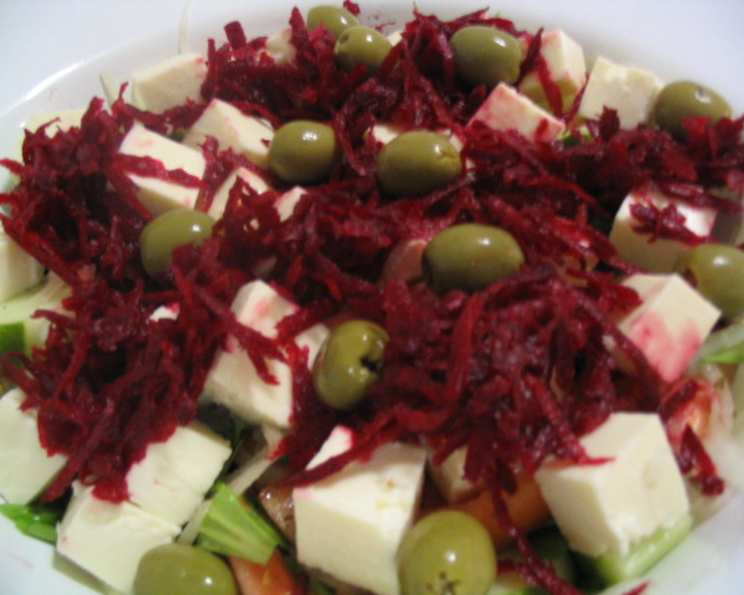
Cypriot Peasant Salad (Choriatiki): A Taste of the Mediterranean Sun
The first time I truly understood the magic of simple, fresh ingredients was during a sweltering August in Cyprus. I was staying in a tiny village near Paphos, where the air vibrated with the heat of the day, and the only sounds were the cicadas and the gentle clinking of glasses at the taverna down the street. It was there, under a vine-covered pergola, that I tasted my first Choriatiki, or Peasant Salad. The explosion of flavors – the juicy sweetness of the tomatoes, the coolness of the cucumber, the salty tang of the feta, all bathed in olive oil and sunshine – was a revelation. It wasn’t just a salad; it was the essence of summer captured in a bowl.
Recipe Overview
- Prep Time: 15 minutes
- Cook Time: 0 minutes
- Total Time: 15 minutes
- Servings: 4
- Dietary Type: Vegetarian
Ingredients
- 4 large ripe tomatoes
- 1 cucumber
- 1 large red onion (or 1 large white onion)
- 1 celery stalk
- ½ small eggplant
- 4 small fresh beetroots
- ½ lb Greek feta cheese
- 20 kalamata olives
- 1 tablespoon capers (optional)
- Oregano (preferably fresh)
- Salt
- Pepper
- Wine vinegar
- Extra virgin olive oil (preferably Greek)
Equipment Needed
- Cutting board
- Sharp knife
- Grater
- 4 serving plates
Instructions
- Begin by preparing the onion. Slice it very thinly.
- In a bowl, mix the sliced onion with 1 tablespoon of salt and let it sit for 10 minutes. This crucial step helps to mellow the onion’s sharpness.
- After 10 minutes, knead the onion with your hands until it becomes somewhat transparent. This further reduces its bitterness.
- Rinse the onion thoroughly in lots of cold water to remove the excess salt. Then, drain it well.
- Peel the cucumber.
- Cut the cucumber and tomatoes into large chunks. Don’t worry about making them perfectly uniform; the rustic nature of this salad is part of its charm.
- Cut the celery and eggplant into smaller pieces. The eggplant will be used raw, adding a slightly bitter complexity to the salad.
- Arrange the tomatoes, cucumber, celery, and eggplant attractively on four plates.
- Grate the fresh beetroots. This is best done just before serving to prevent the color from bleeding.
- Place the grated beetroots on top of the arranged vegetables. Avoid mixing them in at this stage, as they will turn the entire salad red.
- Divide the feta cheese into four pieces and place one piece on top of the beetroots on each plate.
- Garnish with kalamata olives, capers (if using), and fresh oregano. A generous sprinkle of oregano is key to capturing the authentic flavor of the salad.
- Serve immediately, with salt, pepper, wine vinegar, and extra virgin olive oil served separately. This allows each person to create their own dressing according to their preference.
Expert Tips & Tricks
- Onion Taming: Don’t skip the step of salting and kneading the onion. It drastically improves the flavor. If you’re particularly sensitive to raw onion, you can soak it in ice water for an additional 15 minutes after rinsing.
- Beetroot Beauty: Grate the beetroots right before serving. If you must prepare them in advance, store them separately in an airtight container to prevent discoloration.
- Feta Focus: Use high-quality Greek feta cheese, preferably from sheep’s milk. Its tangy, salty flavor is essential to the salad’s authenticity.
- Oil is Key: Use a good quality extra virgin olive oil. Greek olive oil, if you can find it, will transport you straight to the Mediterranean! The flavor of the oil significantly impacts the overall taste of the salad.
- Make it Ahead (Partially): You can chop the vegetables a few hours in advance and store them separately in the refrigerator. However, assemble the salad just before serving to prevent the vegetables from becoming soggy.
Serving & Storage Suggestions
- Serving: Serve the salad immediately after assembling. Offer crusty bread alongside for soaking up the delicious juices at the bottom of the plate. A chilled glass of crisp white wine or mineral water is the perfect accompaniment.
- Storage: Ideally, this salad is best eaten fresh. However, leftovers can be stored in an airtight container in the refrigerator for up to 24 hours. Be aware that the vegetables will release moisture, and the salad may become slightly soggy. It’s not recommended to freeze this salad.
Nutritional Information
| Nutrient | Amount per Serving | % Daily Value |
|---|---|---|
| Calories | 275 kcal | 14% |
| Total Fat | 15 g | 23% |
| Saturated Fat | 9 g | 45% |
| Cholesterol | 51 mg | 17% |
| Sodium | 884 mg | 37% |
| Total Carbohydrate | 27 g | 9% |
| Dietary Fiber | 7 g | 29% |
| Sugars | 16 g | 63% |
| Protein | 12 g | 24% |
Variations & Substitutions
- Vegan Choriatiki: Substitute the feta cheese with a vegan feta alternative made from tofu or nuts. Ensure it has a salty, tangy flavor to mimic the real thing.
- Add Protein: If you want a more substantial meal, consider adding grilled chicken or fish.
- Spice it Up: A pinch of red pepper flakes can add a pleasant kick to the salad.
- Seasonal Swap: In the winter months, you can use greenhouse tomatoes, but consider adding roasted root vegetables like carrots or parsnips for added depth of flavor.
FAQs (Frequently Asked Questions)
Q: Why is the onion treated with salt and kneading?
A: Salting and kneading the onion helps to draw out its moisture and reduce its pungent, bitter flavor, making it more palatable in the raw salad.
Q: Can I use regular vinegar instead of wine vinegar?
A: While you can, wine vinegar (especially red wine vinegar) provides a more authentic and complex flavor that complements the other ingredients.
Q: Is it necessary to use Greek olive oil?
A: While not strictly necessary, Greek olive oil has a distinct flavor profile that enhances the overall taste of the salad and adds to its authenticity.
Q: Can I make this salad ahead of time?
A: It’s best to assemble the salad just before serving to prevent the vegetables from becoming soggy. However, you can chop the vegetables in advance and store them separately in the refrigerator.
Q: What if I don’t like raw eggplant?
A: The raw eggplant adds a subtle bitterness, but if you’re not a fan, you can omit it or substitute it with a different vegetable like bell pepper.
Final Thoughts
This Cypriot Peasant Salad is more than just a recipe; it’s a journey to the sun-drenched shores of the Mediterranean. The simplicity of the ingredients allows their individual flavors to shine, creating a symphony of tastes that is both refreshing and satisfying. I encourage you to try this recipe and experience the magic for yourself. Feel free to experiment with different variations and share your creations. Pair it with a glass of chilled wine and some crusty bread, and you’ll be transported to a taverna in Cyprus with every bite. Kali Orexi!