
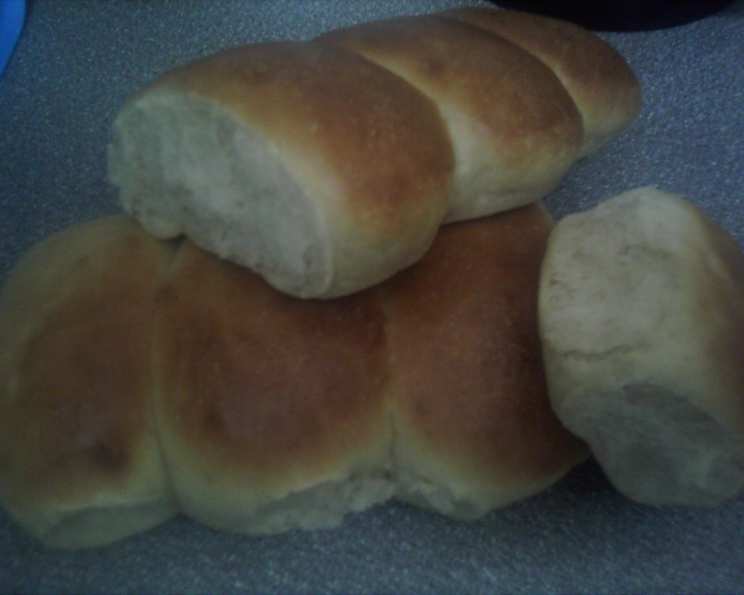
Pebetes Bread: The Remarkably Spongy Argentine Delight
The scent of warm bread has always been my personal time machine. One particular aroma instantly transports me back to a small Buenos Aires bakery I stumbled upon during my culinary travels. It was the unassuming Pebetes, those pale, oblong rolls, that stole my heart. Their pillowy texture, almost impossibly light, made them the perfect vessel for simple ham and cheese, a combination that became my daily ritual. More than just a sandwich, it was a comforting taste of Argentina, a memory I’ve longed to recreate. Now, I’m excited to share a home-baked version that captures the very essence of those unforgettable Pebetes.
Recipe Overview
- Prep Time: 25 minutes
- Cook Time: 12 minutes
- Total Time: 1 hour 37 minutes (includes rising time)
- Servings: 8 buns
- Yields: 8 buns
- Dietary Type: Vegetarian
Ingredients
- 3/4 cup water
- 1 1/2 teaspoons salt
- 1 1/2 tablespoons sugar
- 1 1/2 tablespoons melted butter
- 2 1/4 cups flour
- 1 teaspoon fast-rising yeast
For the Cornflour Wash:
- 1 cup water
- 1 teaspoon cornflour or cornstarch
Equipment Needed
- Bread machine (optional, can be made by hand)
- Baking tray
- Butter (for greasing)
- Cooling rack
Instructions
-
Measure all ingredients into your bread machine pan, following the manufacturer’s instructions for the order of addition. Generally, liquids go in first, followed by dry ingredients, with the yeast added last, ensuring it doesn’t come into direct contact with the salt.
-
Set the bread machine to the dough cycle. Press start and allow the machine to work until the kneading process is complete. This cycle typically includes kneading and a first rise.
-
Shut off the bread machine (or remove the dough if making by hand) and allow the dough to rest for 15 minutes inside the machine. This brief rest period helps the gluten relax, making the dough easier to shape.
-
Remove the dough to a lightly floured surface. Gently cut it into 8 equal pieces.
-
Shape each piece into cylindrical balls. A gentle rolling motion with your hands will help achieve the desired oblong shape. Aim for a smooth, even surface.
-
Place the shaped dough pieces side by side on a buttered oven tray. Ensure they are close together but not touching too tightly, as they will expand during the second rise.
-
Leave the dough to rise for one hour in a warm, draft-free place. Covering the tray loosely with plastic wrap or a clean kitchen towel can help prevent the surface from drying out. The dough should nearly double in size during this period.
-
While the dough is rising, prepare the cornflour wash. Dissolve the cornflour or cornstarch in cold water, ensuring there are no lumps.
-
Carefully add boiling water to the cornflour mixture, stirring constantly. The mixture will thicken quickly.
-
Leave the cornflour wash to cool completely. This wash will give the Pebetes their characteristic pale, slightly shiny crust.
-
Preheat your oven to 428°F (220°C). Ensure the oven is fully preheated before baking for optimal results.
-
Bake the Pebetes for 10 to 12 minutes, or until they are lightly golden brown. Keep a close eye on them, as baking times can vary depending on your oven.
-
Remove the baked Pebetes from the oven and immediately paint them with the prepared cornflour wash, using a pastry brush. Apply a thin, even layer.
-
Leave the Pebetes to cool completely on a cooling rack. This prevents them from becoming soggy.
-
Enjoy the freshly baked, remarkably spongy Pebetes.
Expert Tips & Tricks
- For an extra-soft crumb, consider using bread flour, which has a higher protein content than all-purpose flour.
- The water temperature is important for activating the yeast. Use lukewarm water (around 105-115°F or 40-46°C) for the best results.
- If you don’t have a bread machine, you can make the dough by hand. Combine all ingredients in a bowl, knead for 8-10 minutes until smooth and elastic, then follow the rising instructions.
- Don’t overbake the Pebetes, as this will make them dry. They should be pale in color, not deeply browned.
- The cornflour wash can be flavored with a pinch of salt or sugar for added complexity.
- A little steam in the oven can help create a softer crust. Place a pan of hot water on the bottom rack of the oven during baking.
Serving & Storage Suggestions
Pebetes are best served fresh, ideally within a few hours of baking. They are traditionally used to make simple ham and cheese sandwiches, but they are also delicious with other fillings, such as salami, tomato, and lettuce.
To store leftover Pebetes, wrap them tightly in plastic wrap or place them in an airtight container. They will keep at room temperature for 1-2 days or in the refrigerator for up to 5 days.
To reheat, wrap the Pebetes in foil and warm them in a preheated oven at 350°F (175°C) for 5-10 minutes. You can also toast them lightly for a crispier texture. Pebetes can also be frozen for longer storage. Wrap them tightly in plastic wrap and place them in a freezer bag. They will keep in the freezer for up to 2 months. Thaw them completely before reheating.
Nutritional Information
| Nutrient | Amount per Serving | % Daily Value |
|---|---|---|
| Calories | 317.9 kcal | N/A |
| Calories from Fat | 45 g | 14% |
| Total Fat | 5 g | 7% |
| Saturated Fat | 2.9 g | 14% |
| Cholesterol | 11.4 mg | 3% |
| Sodium | 906.8 mg | 37% |
| Total Carbohydrate | 59.4 g | 19% |
| Dietary Fiber | 2.1 g | 8% |
| Sugars | 4.9 g | N/A |
| Protein | 7.7 g | 15% |
Nutritional information is an estimate and may vary based on specific ingredients and cooking methods.
Variations & Substitutions
- Gluten-Free Pebetes: Substitute the all-purpose flour with a gluten-free flour blend. You may need to adjust the amount of liquid to achieve the correct dough consistency.
- Whole Wheat Pebetes: Replace up to half of the all-purpose flour with whole wheat flour for a nuttier flavor and added fiber.
- Dairy-Free Pebetes: Use a plant-based butter substitute, such as olive oil or coconut oil, instead of melted butter.
- Sweet Pebetes: Add a teaspoon of vanilla extract or a pinch of cinnamon to the dough for a sweeter flavor.
FAQs (Frequently Asked Questions)
Q: Why are my Pebetes not as spongy as they should be?
A: This could be due to over-kneading the dough or not allowing it to rise for long enough. Ensure you follow the rising times carefully and avoid overworking the dough.
Q: Can I make the dough ahead of time?
A: Yes, you can make the dough ahead of time and store it in the refrigerator for up to 24 hours. Allow it to come to room temperature before shaping and baking.
Q: What if I don’t have fast-rising yeast?
A: You can use active dry yeast, but you will need to proof it in warm water for 5-10 minutes before adding it to the other ingredients.
Q: Can I freeze the baked Pebetes?
A: Yes, you can freeze the baked Pebetes. Wrap them tightly in plastic wrap and place them in a freezer bag. They will keep in the freezer for up to 2 months. Thaw them completely before reheating.
Q: Why do I need to paint the Pebetes with a cornflour wash?
A: The cornflour wash helps to create the characteristic pale, slightly shiny crust of Pebetes. It also adds a subtle sweetness and helps to keep the bread soft.
Final Thoughts
Baking these Pebetes is more than just following a recipe; it’s an invitation to experience a small slice of Argentine culture. I encourage you to try this recipe, fill these incredibly spongy rolls with your favorite ingredients, and share them with friends and family. Let the simple pleasure of a warm, homemade Pebete transport you to a place of comfort and delicious memories. And please, let me know how they turn out – I’d love to hear your baking adventures!