
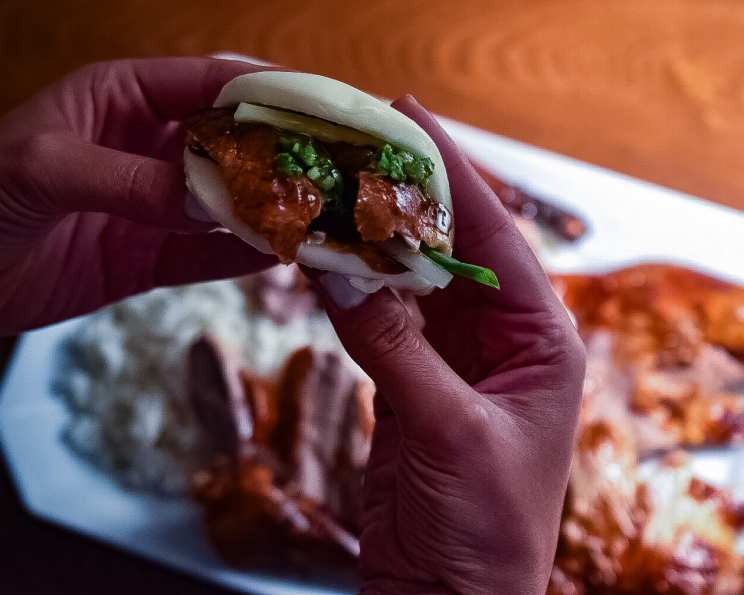
Peking Duck: A Culinary Masterpiece
The first time I truly understood Peking Duck was during a bustling Chinese New Year celebration in San Francisco’s Chinatown. The air hung thick with the scent of roasting duck, sweet sauces, and firecrackers. A master carver, with the grace of a surgeon and the speed of a seasoned chef, transformed a glistening mahogany bird into a platter of shimmering skin and succulent meat. Each bite, encased in a delicate pancake with scallions and hoisin, was an explosion of textures and flavors – a memory I’ve chased in my own kitchen ever since.
Recipe Overview
- Prep Time: 30 minutes + 4-6 hours drying time
- Cook Time: 1 hour 45 minutes
- Total Time: 6 hours 45 minutes to 8 hours 45 minutes
- Servings: 6
- Yield: 1 Duck
- Dietary Type: Not specified
Ingredients
- 1 (5 lb) Duck
- 2 tablespoons Honey
- 2 tablespoons Dry Sherry
- 1 tablespoon White Vinegar
- 3 tablespoons Cornstarch
- 10 Scallions
- ½ cup Hoisin Sauce
- 2 teaspoons Sesame Oil
- 12 Chinese Pancakes
Equipment Needed
- Sharp Knife
- Chopstick
- String
- Wok
- Roasting Pan
- Oven Rack
- Bowl
Instructions
- Begin by preparing the duck. Using a sharp knife, carefully cut off the duck wings at the second joint. Remove any excess fat and skin from the cavity of the duck. Thoroughly rinse the duck inside and out under cold water, then pat it completely dry with paper towels.
- Next, create space between the skin and the meat. Insert a chopstick through the neck opening of the duck. Carefully force the chopstick along the wing bone under the skin until it protrudes slightly at the second joint.
- Repeat this process on the other side. Push the other end of the chopstick along the other wing, ensuring you end up with a duck that has its wings extended straight out, resembling a crucifix. This is crucial for even cooking and rendering of fat.
- Tie a string onto the middle of the duck, allowing you to hang it securely. This facilitates the drying process.
- In a wok, bring 6 cups of water to a boil.
- Add 2 tablespoons of honey (or maltose if available) to the boiling water and stir until completely dissolved.
- Add 2 tablespoons of dry sherry and 1 tablespoon of white vinegar to the mixture. These additions contribute to the flavor and aid in skin browning.
- Make a slurry by whisking 3 tablespoons of cornstarch with a small amount of cold water until smooth. Add the cornstarch slurry to the wok.
- Bring the liquid back to a boil, stirring constantly to prevent lumps. This mixture will be used to baste the duck.
- Dip the duck into the boiling liquid, using a ladle or spoon to continuously spoon the liquid over the duck, ensuring it’s thoroughly moistened.
- Repeat the dunking process once more, ensuring the entire duck is evenly coated.
- Hang the duck by the string in a cool, airy place. Position a bowl underneath to catch any drips. This is a critical step for achieving crispy skin.
- Leave the duck to hang for 4-6 hours, or even overnight if possible, until the skin is completely dry and taught. The drier the skin, the crispier it will be when roasted.
- Place a roasting pan on the lower rack of your oven and fill it with 2-3 inches of water. This creates a humid environment that helps render fat without burning the duck.
- Oil the rack above the pan to prevent the duck from sticking.
- Preheat your oven to 350°F (175°C).
- Remove the chopstick and string from the duck.
- Place the duck on the oiled rack in the center of the oven, breast side up.
- Cook for 30 minutes.
- Turn the duck breast down and cook for 45 minutes.
- Turn the duck breast up again and cook for another 30 minutes, or until the skin is a deep, dark brown color and incredibly crisp. The internal temperature of the duck should reach 165°F (74°C).
- While the duck is cooking, prepare the scallion brushes.
- Trim the roots of the scallions and cut off most of the green part, leaving a 3-inch piece of the white and light green portion.
- Make several 1-inch lengthwise slits in each end of the scallion, creating a brush-like effect.
- Place the scallion brushes in ice water for 20 minutes. This will cause the ends to curl and open up. Drain the scallions and refrigerate them until ready to serve.
- Once the duck is cooked, carve it and separate the meat and skin. The skin is the prized part, so be careful to keep it intact as much as possible.
- In a small bowl, mix ½ cup of hoisin sauce with 2 teaspoons of sesame oil and 1 tablespoon of water. This will be used as a dipping sauce and spread for the pancakes.
- To serve: Use the scallion brushes to wipe the hoisin mixture onto the Chinese pancakes. Add a piece of duck skin, some duck meat, and a scallion brush. Fold one end of the pancake over and roll it up. Serve immediately and enjoy!
Expert Tips & Tricks
- Drying is Key: Don’t skimp on the drying time! The longer the duck hangs and dries, the crispier the skin will be. If you live in a humid climate, you can use a fan to help speed up the drying process.
- Temperature Control: Keep a close eye on the oven temperature. If the duck skin starts to brown too quickly, you can lower the temperature slightly or tent the duck with foil.
- Rendering the Fat: The roasting pan with water is essential for rendering the fat properly. Be sure to check the water level periodically and add more water if needed.
- Crispy Skin Boost: For extra crispy skin, you can brush the duck with a mixture of maltose and vinegar during the last 15 minutes of cooking.
- Scallion Alternative: If scallion brushes are too time-consuming, simply thinly slice the scallions on a bias.
Serving & Storage Suggestions
Peking duck is best served immediately, while the skin is still crisp and the meat is juicy. Arrange the carved duck attractively on a platter alongside the pancakes, hoisin sauce, and scallion brushes. Leftover duck can be stored in an airtight container in the refrigerator for up to 3 days. The skin will lose some of its crispness, but it can be reheated in a dry skillet or under the broiler to restore some of the texture.
Nutritional Information
| Nutrient | Amount per Serving | % Daily Value |
|---|---|---|
| Calories | 1637.8 kcal | N/A |
| Calories from Fat | 1359 g | 83% |
| Total Fat | 151.1 g | 232% |
| Saturated Fat | 50.4 g | 251% |
| Cholesterol | 288.2 mg | 96% |
| Sodium | 587.9 mg | 24% |
| Total Carbohydrate | 20.8 g | 6% |
| Dietary Fiber | 1.3 g | 5% |
| Sugars | 12.2 g | 48% |
| Protein | 44.7 g | 89% |
Variations & Substitutions
- Gluten-Free: Use gluten-free Chinese pancakes or lettuce cups for a gluten-free option. Be sure to check the hoisin sauce label to ensure it is gluten-free as well.
- Sweetness Level: Adjust the amount of honey in the basting liquid to your preference. You can also use maltose for a more authentic flavor.
- Spice It Up: Add a pinch of chili flakes to the hoisin sauce for a touch of heat.
- Duck Alternative: While not exactly Peking Duck, chicken can be prepared using the same techniques. It will yield similar results though the flavor profile is different.
FAQs (Frequently Asked Questions)
Q: Why is it important to separate the skin from the meat?
A: Separating the skin from the meat allows for better rendering of the fat and ensures that the skin becomes crispy. It also makes it easier to carve and serve.
Q: Can I skip the drying process?
A: While you can skip the drying process, it is highly recommended to achieve truly crispy skin. The drying process allows the skin to become taut and allows for optimal browning and crisping during roasting.
Q: What if I don’t have Chinese pancakes?
A: If you can’t find Chinese pancakes, you can use thin flour tortillas or lettuce wraps as a substitute.
Q: How do I know when the duck is cooked through?
A: The duck is cooked through when the internal temperature reaches 165°F (74°C). Use a meat thermometer to check the temperature in the thickest part of the thigh.
Q: Can I prepare the duck ahead of time?
A: You can prepare the duck up to the drying stage and leave it to hang in the refrigerator overnight. However, it is best to roast the duck on the same day you plan to serve it.
Final Thoughts
Embarking on the journey of making Peking Duck might seem daunting, but the reward is well worth the effort. The symphony of flavors and textures, from the crispy, mahogany-glazed skin to the succulent meat, is an experience that will impress your guests and transport you to the heart of Chinese cuisine. Don’t be afraid to experiment and personalize the recipe to your liking. Share your creations and feedback, and perhaps pair it with a crisp Sauvignon Blanc or a refreshing jasmine tea. Happy cooking!