
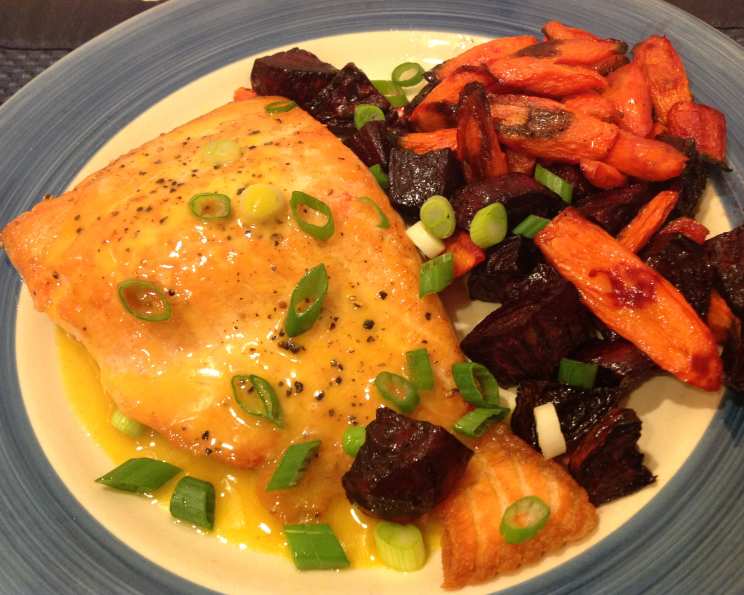
Peppered Salmon With Roasted Root Vegetables: A Symphony of Flavors
There’s a certain magic that happens when the earthy sweetness of roasted root vegetables meets the rich, delicate flavor of perfectly cooked salmon. I remember one particularly crisp autumn evening, standing at a farmer’s market, the air thick with the scent of woodsmoke and damp leaves. The vibrant colors of the carrots and beets beckoned, and I instantly knew they belonged with a beautiful fillet of salmon I had waiting at home. That night, this simple yet elegant dish was born, and it has been a family favorite ever since, a comforting reminder of the beauty of seasonal ingredients and the joy of sharing a delicious meal.
Recipe Overview
- Prep Time: 15 minutes
- Cook Time: 30 minutes
- Total Time: 45 minutes
- Servings: 4
- Dietary Type: Gluten-Free
Ingredients
- 4 medium carrots, coarsely chopped
- 2 small beets, peeled and coarsely chopped
- 3 tablespoons olive oil, divided
- 1 teaspoon sea salt or 1 teaspoon kosher salt, divided
- 4 skinless salmon fillets, 4-5 oz each
- 1 teaspoon fresh coarse ground black pepper or 1 teaspoon ground pepper blend
- ¼ cup frozen orange juice concentrate, thawed
- 2 tablespoons water
- Chopped green onion (optional)
Equipment Needed
- Roasting pan
- 12-inch skillet
- Platter
Instructions
-
Begin by preheating your oven to 425 degrees F. This high temperature ensures the root vegetables roast beautifully, developing a slightly caramelized exterior and tender interior.
-
In a roasting pan, combine the coarsely chopped carrots and beets. Drizzle with half of the olive oil (1.5 tablespoons) and sprinkle with half of the salt (0.5 teaspoon). Toss well to ensure the vegetables are evenly coated.
-
Roast the vegetables, uncovered, for about 20 minutes. Stir them halfway through to promote even cooking. Keep a close eye on them – you can roast for longer, up to 30 minutes, if you prefer a crispier texture. The roasting time will depend on the size of the vegetable pieces and your oven’s calibration.
-
Once the root vegetables are roasted to your liking, transfer them to a platter and cover with foil to keep them warm while you prepare the salmon.
-
While the vegetables are roasting, prepare the salmon fillets. Sprinkle them with the remaining salt (0.5 teaspoon) and all of the black pepper (1 teaspoon). Don’t be shy with the pepper – it adds a wonderful depth of flavor that complements the sweetness of the salmon. If you’re a fan of pepper, feel free to add a bit more!
-
In a 12-inch skillet, heat the remaining olive oil (1.5 tablespoons) over medium-high heat. Ensure the skillet is hot before adding the salmon; this will help create a beautiful sear.
-
Carefully add the seasoned salmon fillets to the hot skillet and cook for 3 minutes.
-
Turn the salmon and cook for another 3 minutes, or until the fish flakes easily with a fork. Cooking time may vary slightly depending on the thickness of the fillets and the heat of your stove. Use a spatula to gently lift a piece of salmon to check for doneness. The internal temperature should reach 145°F.
-
Once the salmon is cooked through, transfer it to the platter with the roasted root vegetables.
-
Add the thawed orange juice concentrate and water (2 tablespoons) to the skillet you used for the salmon. The orange juice adds a bright, citrusy note that ties all the flavors together.
-
Simmer the sauce, uncovered, for about 1 minute, or until it thickens slightly. Stir occasionally to prevent sticking.
-
Spoon the orange juice reduction sauce over the salmon fillets. The sauce will add a beautiful glaze and enhance the overall flavor of the dish.
-
Garnish with chopped green onions (optional) for a pop of color and fresh flavor.
-
Serve immediately and enjoy!
Expert Tips & Tricks
- Don’t overcrowd the roasting pan. If necessary, use two roasting pans to ensure the vegetables roast evenly. Overcrowding will cause them to steam instead of roast, resulting in a less desirable texture.
- Pat the salmon dry with a paper towel before seasoning. This will help it sear properly in the skillet.
- Use a meat thermometer to ensure the salmon is cooked to a safe internal temperature of 145°F.
- Deglaze the pan with a splash of white wine before adding the orange juice concentrate for an even richer sauce.
Serving & Storage Suggestions
Serve the peppered salmon and roasted root vegetables immediately while they are hot and at their best. This dish pairs beautifully with a side of quinoa or brown rice for a complete and satisfying meal. Leftovers can be stored in an airtight container in the refrigerator for up to 3 days. Reheat gently in a skillet or microwave. Freezing is not recommended as it can affect the texture of the salmon.
Nutritional Information
| Nutrient | Amount per Serving | % Daily Value |
|---|---|---|
| Calories | 559 kcal | |
| Total Fat | 24.4 g | 37% |
| Saturated Fat | 4 g | 20% |
| Cholesterol | 146.3 mg | 48% |
| Sodium | 882.3 mg | 36% |
| Total Carbohydrate | 15.5 g | 5% |
| Dietary Fiber | 2.5 g | 10% |
| Sugars | 11.5 g | |
| Protein | 66.7 g | 133% |
Note: Nutritional information is an estimate and may vary based on specific ingredients and portion sizes.
Variations & Substitutions
- For a vegan option, simply omit the salmon and enjoy the roasted root vegetables as a side dish or over a bed of grains.
- Experiment with different root vegetables such as parsnips, sweet potatoes, or turnips.
- Use lemon juice or maple syrup instead of orange juice concentrate for a different flavor profile.
- Add a pinch of red pepper flakes to the vegetables for a touch of heat.
- Substitute other types of fish such as tuna or cod, adjusting the cooking time accordingly.
FAQs (Frequently Asked Questions)
Q: Can I prepare the vegetables ahead of time?
A: Yes, you can chop the vegetables a day in advance and store them in the refrigerator. However, it’s best to roast them just before serving for optimal flavor and texture.
Q: Can I use fresh orange juice instead of concentrate?
A: While you can, the concentrate provides a more intense flavor and helps the sauce thicken more quickly. If using fresh orange juice, you may need to simmer the sauce for a longer period to achieve the desired consistency.
Q: How do I know when the salmon is done?
A: The salmon is done when it flakes easily with a fork and the internal temperature reaches 145°F. Avoid overcooking, as it will become dry.
Q: Can I use dried herbs instead of fresh green onions?
A: Yes, you can use dried herbs such as parsley, chives, or dill as a garnish. Use about 1 teaspoon of dried herbs in place of the fresh green onions.
Q: What can I serve with this dish?
A: This dish pairs well with quinoa, brown rice, couscous, or a simple green salad.
Final Thoughts
Peppered Salmon With Roasted Root Vegetables is more than just a recipe; it’s an experience. The combination of earthy sweetness, savory richness, and bright citrus creates a symphony of flavors that will tantalize your taste buds. I encourage you to try this recipe and make it your own. Experiment with different vegetables, adjust the seasoning to your liking, and don’t be afraid to get creative. I’d love to hear about your culinary adventures and any variations you come up with! Perhaps serve it with a crisp Sauvignon Blanc to further enhance the flavors of the meal. Happy cooking!