
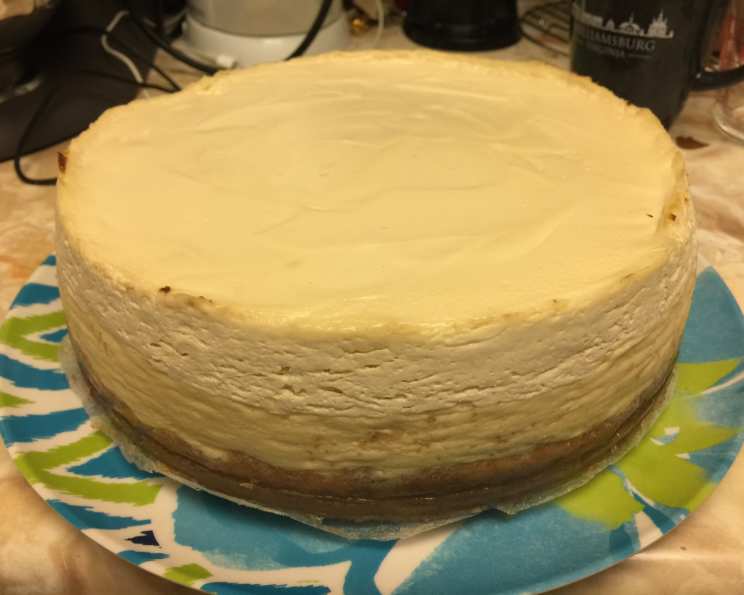
Perfect Cheesecake With Sour Cream Topping
I remember my grandmother’s cheesecakes. They weren’t fancy, no elaborate swirls or exotic toppings, but they were absolute perfection. The smooth, creamy filling, the subtle tang of the sour cream, and that buttery graham cracker crust – it was pure comfort in every bite. Every family gathering needed her cheesecake, and I’ve tried to recreate that magic ever since, finally landing on this recipe, a combination of techniques and flavors inspired by countless iterations. It’s a cheesecake that’s both impressive and surprisingly simple, sure to become a classic in your own family.
Recipe Overview
- Prep Time: 2 hours (includes crust chilling)
- Cook Time: 1 hour 25 minutes
- Total Time: 4 hours 25 minutes (includes cooling) + overnight refrigeration
- Servings: 12
- Yield: 1 (10-inch) cheesecake
- Dietary Type: Not Gluten-Free
Ingredients
For Crust:
- 1 ½ cups graham cracker crumbs (about 7 ounces)
- ¼ cup granulated sugar
- ¼ cup almond meal (can substitute ground pecans)
- 5 tablespoons butter, melted
- 1 pinch kosher salt
For Cheesecake:
- 3 (8 ounce) packages cream cheese, room temperature (it is VERY important that the cheese be at room temperature)
- 1 ¼ cups granulated sugar, divided
- 1 teaspoon kosher salt
- ¼ cup all-purpose flour, sifted
- 5 large eggs, separated
- 1 cup sour cream
- 2 ½ tablespoons lemon juice
- 1 ½ teaspoons vanilla extract (sub the ½ tsp for ½ teaspoon almond extract if you like a more nutty taste)
- ¼ teaspoon ground nutmeg
For Sour Cream Topping:
- 1 pint sour cream
- ¼ cup sugar
- 1 teaspoon pure vanilla extract
Equipment Needed
- 10-inch springform pan
- Mixing bowls
- Stand mixer or hand mixer
- Rubber spatula or offset spatula
- Cooling rack
Instructions
- Prepare the crust: In a medium bowl, combine the graham cracker crumbs, sugar, almond meal, and salt. Drizzle the melted butter over the dry ingredients and stir until evenly moistened.
- Press the crust: Press the mixture into the bottom and up the sides (as far as it’ll go) of a lightly buttered 10-inch springform pan. A flat-bottomed measuring cup can help to create an even, compacted crust.
- Chill the crust: Refrigerate the crust for at least 1 hour to set. This step is crucial for preventing the crust from crumbling when you pour in the filling.
- Preheat the oven: Preheat your oven to 325 degrees F (160 degrees C).
- Make the cheesecake filling: In a large mixing bowl or the bowl of a stand mixer fitted with the paddle attachment, combine the cream cheese, 1 cup of sugar, and salt. Beat until smooth and creamy, ensuring there are no lumps. This may take several minutes, but perfectly smooth cream cheese is the foundation of a perfect cheesecake.
- Incorporate dry ingredients: Add the sifted flour and egg yolks to the cream cheese mixture and mix thoroughly until well combined.
- Add wet ingredients: Stir in the sour cream, lemon juice, vanilla extract, and nutmeg and beat until smooth. If you want a more nutty taste, substitute ½ teaspoon of the vanilla extract for ½ teaspoon of almond extract.
- Whip egg whites: In a separate, clean bowl, beat the egg whites with the remaining ¼ cup sugar until stiff peaks form. Make sure your bowl and beaters are completely clean of any grease, as this will prevent the egg whites from whipping properly.
- Fold in egg whites: Gently but thoroughly fold the beaten egg whites into the cream cheese mixture. You don’t need to be terribly gentle, but ensure the whites are evenly incorporated to avoid streaks or pockets.
- Pour into crust: Pour the cheesecake filling into the chilled crust, spreading it evenly.
- Bake the cheesecake: Bake the cheesecake for 1 hour 15 minutes, or until the top is puffed and lightly golden brown. A few cracks are normal, and the sour cream topping will cover them.
- Cool in oven: Without opening the oven door, turn the oven off and let the cheesecake sit in the oven as it cools for 1 hour. This slow cooling process prevents the cheesecake from falling and cracking excessively.
- Increase oven temperature: After an hour of cooling, remove the cheesecake from the oven and heat the oven to 450 degrees F (232 degrees C).
- Make sour cream topping: While the cheesecake is cooling, make the sour cream topping. In a small bowl, whisk together the sour cream, sugar, and vanilla extract until smooth.
- Apply topping: Once the cheesecake has cooled for an hour, pour the sour cream topping over the top. Using a rubber spatula or offset spatula, smooth out the surface.
- Bake the topping: Place the cheesecake back into the oven (at 450 degrees F) and bake for about 10 minutes. The sour cream topping should set slightly and become a bit glossy.
- Cool completely: Remove the cheesecake from the oven and place it on a cooling rack to let it cool to room temperature.
- Refrigerate: Refrigerate the cheesecake overnight to set completely. It’s important not to put the cheesecake in the fridge until it has cooled to room temperature.
Expert Tips & Tricks
- Room Temperature Cream Cheese: Ensuring your cream cheese is truly at room temperature is the single most important factor for a smooth, lump-free cheesecake. Remove it from the refrigerator at least 2 hours before you plan to start baking.
- Water Bath (Optional): For an even more decadent and crack-free cheesecake, consider using a water bath. Wrap the bottom of your springform pan tightly in heavy-duty aluminum foil to prevent water from seeping in. Place the wrapped pan inside a larger roasting pan and add hot water to the roasting pan until it reaches about halfway up the sides of the springform pan. Bake as directed.
- Preventing a Soggy Crust: To further prevent a soggy crust, you can blind bake the crust for 10 minutes at 350°F (175°C) before adding the filling. Let it cool completely before adding the filling.
- Cracking: Minor cracks are inevitable, but you can minimize them by avoiding overbaking and allowing the cheesecake to cool slowly. The sour cream topping is your friend here!
- Almond Extract: Feel free to adjust the amount of almond extract to your liking. A little goes a long way.
Serving & Storage Suggestions
For an elegant presentation, carefully remove the sides of the springform pan after the cheesecake has been thoroughly chilled. A thin, warm knife can help release the cheesecake cleanly. Garnish with fresh berries, a dusting of cocoa powder, or a drizzle of chocolate sauce.
Leftover cheesecake should be stored in an airtight container in the refrigerator. It will keep for up to 5 days. For longer storage, you can freeze slices of cheesecake individually wrapped in plastic wrap and then placed in a freezer bag. Frozen cheesecake can be thawed in the refrigerator overnight. It is best to consume within 2 months for optimal quality.
Nutritional Information
| Nutrient | Amount per Serving | % Daily Value |
|---|---|---|
| Calories | 559 kcal | – |
| Calories from Fat | 356 kcal | 64% |
| Total Fat | 39.7 g | 61% |
| Saturated Fat | 21.5 g | 107% |
| Cholesterol | 182.6 mg | 60% |
| Sodium | 508.2 mg | 21% |
| Total Carbohydrate | 44.1 g | 14% |
| Dietary Fiber | 0.6 g | 2% |
| Sugars | 36.6 g | – |
| Protein | 8.7 g | 17% |
Variations & Substitutions
- Gluten-Free Crust: Substitute the graham cracker crumbs with gluten-free graham-style crackers or use a mixture of almond flour and gluten-free flour.
- Different Extracts: Experiment with different extracts in the filling and topping, such as lemon extract, orange extract, or even a hint of bourbon.
- Berry Swirl: Before baking, swirl a berry puree (such as raspberry or strawberry) into the cheesecake filling for a beautiful and flavorful twist.
- Chocolate Cheesecake: Add melted dark chocolate to the cheesecake filling for a rich, decadent chocolate cheesecake.
FAQs (Frequently Asked Questions)
Q: Why is my cheesecake cracking?
A: Cracking can be caused by baking at too high of a temperature, overbaking, or a sudden change in temperature. Cooling the cheesecake slowly in the oven after baking can help prevent cracking.
Q: How do I know when the cheesecake is done?
A: The cheesecake is done when the edges are set but the center still has a slight jiggle. It will continue to set as it cools.
Q: Can I use low-fat cream cheese?
A: While you can use low-fat cream cheese, the texture of the cheesecake will be different. Full-fat cream cheese provides the best flavor and texture.
Q: Why is my cheesecake grainy?
A: Grainy cheesecake is often caused by overmixing or using cold cream cheese. Ensure your cream cheese is at room temperature and mix only until just combined.
Q: Can I freeze the whole cheesecake?
A: Yes, you can freeze the whole cheesecake. Cool completely, then wrap tightly in plastic wrap and then in foil. Thaw overnight in the refrigerator before serving.
Final Thoughts
This cheesecake is more than just a dessert; it’s a celebration of simple, high-quality ingredients and patient baking. Don’t be intimidated by the steps – each one is designed to create the perfect texture and flavor. I encourage you to try this recipe, adapt it to your own preferences, and share it with those you love. And don’t forget to let me know what you think! Pair it with a cup of freshly brewed coffee or a glass of dessert wine for the ultimate indulgence. Happy baking!