
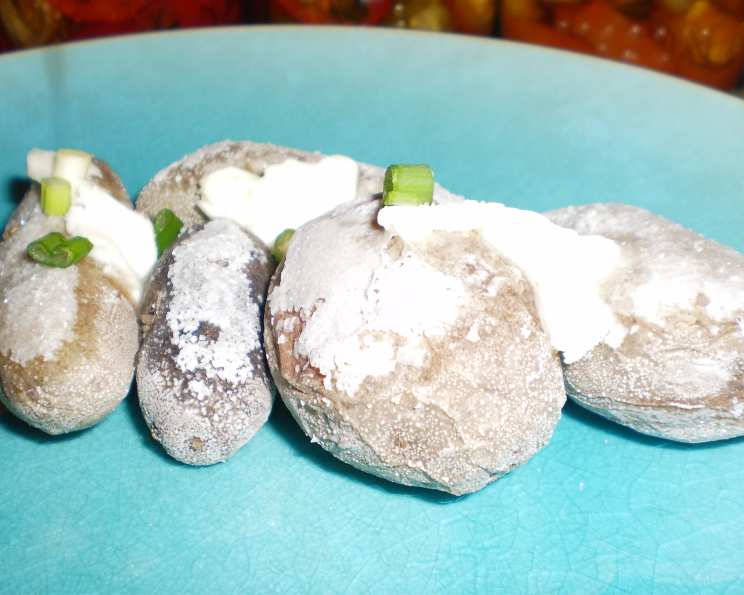
Perfect Fingerling Potatoes: A Culinary Revelation
The first time I encountered fingerling potatoes prepared this way, it was at a bustling farmers market. The vendor, a jovial woman with flour dusting her apron, offered me a warm sample. I was immediately struck by the simple elegance – the earthy potato flavor intensified by a perfectly salty crust. It wasn’t just the taste; it was the satisfying crack as you bit into the salty exterior, giving way to a creamy, tender interior. I knew I had to recreate this at home and share it with everyone. These aren’t just potatoes; they’re an experience!
Recipe Overview
- Prep Time: 5 minutes
- Cook Time: 25-30 minutes
- Total Time: 30-35 minutes
- Servings: 6
- Yield: About 2 pounds of potatoes
- Dietary Type: Gluten-Free
Ingredients
- 1 1⁄4 lbs kosher salt (or rock salt)
- 2 quarts water
- 2 lbs small fingerling potatoes, cleaned
- 4 tablespoons butter (optional)
- Fresh ground black pepper (optional)
- 1 tablespoon freshly chopped scallion, green part only (optional)
- Parmesan cheese (optional)
Equipment Needed
- Large pot
- Cooling rack
Instructions
-
In a large pot, combine the kosher salt (or rock salt), water, and fingerling potatoes. Ensure the potatoes are mostly submerged in the water. Add more water if needed.
-
Bring the mixture to a boil over high heat. Be patient; this may take a few minutes.
-
Once boiling, reduce the heat slightly to maintain a steady boil, and cook until the potatoes are fork-tender. This will typically take about 25 to 30 minutes. To check for doneness, pierce a potato with a fork. It should slide in easily without resistance. Don’t overcook the potatoes, or they will become mushy.
-
Carefully remove the potatoes from the pot using a slotted spoon or spider. Transfer them to a cooling rack, ensuring they are not overcrowded. Allow them to stand for 5 to 7 minutes. This crucial step allows the residual heat to evaporate the moisture on the surface of the potatoes, promoting the formation of beautiful salt crystals.
-
Serve the potatoes immediately. They are delicious as is, with the natural salt crust providing a perfect balance of flavors.
-
(Optional): For added richness, toss the warm potatoes with butter and season with freshly ground black pepper to taste.
-
(Optional): Garnish with freshly chopped scallions for a pop of color and a mild onion flavor.
-
(Optional): Sprinkle with grated Parmesan cheese for a savory, umami-rich finish.
Expert Tips & Tricks
- Salt Selection: While kosher salt is preferred, rock salt will also work. The key is to use a coarse salt that will readily crystallize. Avoid using fine table salt, as it will dissolve too quickly and not form the desired crust.
- Potato Size: Choose small, similarly sized fingerling potatoes for even cooking. Larger potatoes may take longer to cook, while smaller ones may become overcooked.
- Cooling is Key: Don’t skip the cooling rack step. This allows the salt to crystallize properly on the potato’s surface. The slight evaporation is essential for achieving the perfect salty crust.
- Flavor Infusions: Experiment with adding other aromatics to the boiling water, such as bay leaves, garlic cloves, or sprigs of thyme or rosemary. These will subtly infuse the potatoes with additional flavor.
- Even Cooking: Ensure that the potatoes are evenly submerged in the water for uniform cooking.
- Preheating Consideration: If you know your oven tends to cook unevenly, rotate the baking sheet halfway through to ensure even browning on all sides.
Serving & Storage Suggestions
These perfect fingerling potatoes are a versatile side dish that pairs well with a variety of main courses. They are excellent alongside roasted chicken, grilled steak, seared fish, or even vegetarian dishes like lentil loaf or grilled halloumi.
To serve, arrange the potatoes artfully on a platter or in a bowl. If you’ve opted for any of the optional garnishes, sprinkle them on just before serving for the best presentation.
Leftover potatoes can be stored in an airtight container in the refrigerator for up to 3 days. To reheat, bake them in a preheated oven at 350°F (175°C) for about 10-15 minutes, or until warmed through. You can also reheat them in a skillet over medium heat, tossing occasionally until heated. Reheating may soften the salt crust slightly, but the flavor will still be delicious. Microwaving is not recommended, as it can make the potatoes soggy.
These potatoes are best enjoyed fresh, but can be made a day ahead and reheated just before serving. The salt crust may soften slightly upon reheating, but the flavor will remain excellent.
Nutritional Information
| Nutrient | Amount per Serving | % Daily Value |
|---|---|---|
| Calories | 104 kcal | 5% |
| Total Fat | 0.1g | 0% |
| Saturated Fat | 0g | 0% |
| Cholesterol | 0mg | 0% |
| Sodium | 36692 mg | 1528% |
| Total Carbohydrate | 23.8g | 7% |
| Dietary Fiber | 3.6g | 14% |
| Sugars | 1.7g | 6% |
| Protein | 2.5g | 5% |
Note: Nutritional information is an estimate and may vary based on specific ingredients and cooking methods. The sodium content is very high due to the salt used in cooking, but much of the salt remains in the cooking water and is not absorbed by the potatoes.
Variations & Substitutions
- Herb Infusion: Add fresh herbs like rosemary, thyme, or bay leaves to the boiling water for an aromatic twist.
- Garlic Potatoes: Toss the cooked potatoes with minced garlic and olive oil for a fragrant and flavorful variation.
- Spicy Potatoes: Add a pinch of red pepper flakes to the boiling water for a subtle kick.
- Lemon Herb Potatoes: Finish the potatoes with a squeeze of fresh lemon juice and a sprinkle of chopped fresh herbs like parsley or dill.
- Vegan Option: Omit the butter and Parmesan cheese for a simple and delicious vegan side dish. A drizzle of olive oil works beautifully in place of the butter.
FAQs (Frequently Asked Questions)
Q: Can I use regular potatoes instead of fingerling potatoes?
A: While fingerling potatoes are preferred for their unique shape and texture, you can use other small potatoes like Yukon Golds or red potatoes. Just be sure to adjust the cooking time accordingly.
Q: Why is there so much salt in the recipe? Is it safe to eat?
A: The large amount of salt is necessary to create the salty crust on the outside of the potatoes. However, most of the salt remains in the cooking water and is not absorbed by the potatoes. While the sodium content listed looks alarming, it’s not entirely indicative of how much sodium you’re actually consuming.
Q: Can I make these potatoes ahead of time?
A: Yes, you can cook the potatoes ahead of time and store them in the refrigerator for up to 24 hours. Reheat them in the oven or skillet just before serving. The salt crust may soften slightly upon reheating.
Q: What if the potatoes don’t form a salt crust?
A: Make sure you’re using enough salt in the water and that you allow the potatoes to cool on a rack for the recommended time. The evaporation process is crucial for the salt crystals to form.
Q: Can I bake these potatoes instead of boiling them?
A: While you can bake fingerling potatoes, this recipe specifically calls for boiling to achieve the desired salty crust. Baking will result in a different texture and flavor.
Final Thoughts
These Perfect Fingerling Potatoes are a testament to the fact that simple ingredients, when prepared with care, can create extraordinary results. The satisfying salty crust, the creamy interior, and the endless possibilities for customization make this recipe a true winner. So, gather your ingredients, follow the steps, and prepare to be amazed. Don’t be shy about experimenting with different herbs and spices to create your own unique twist. And most importantly, share your creations with friends and family and enjoy the deliciousness together!